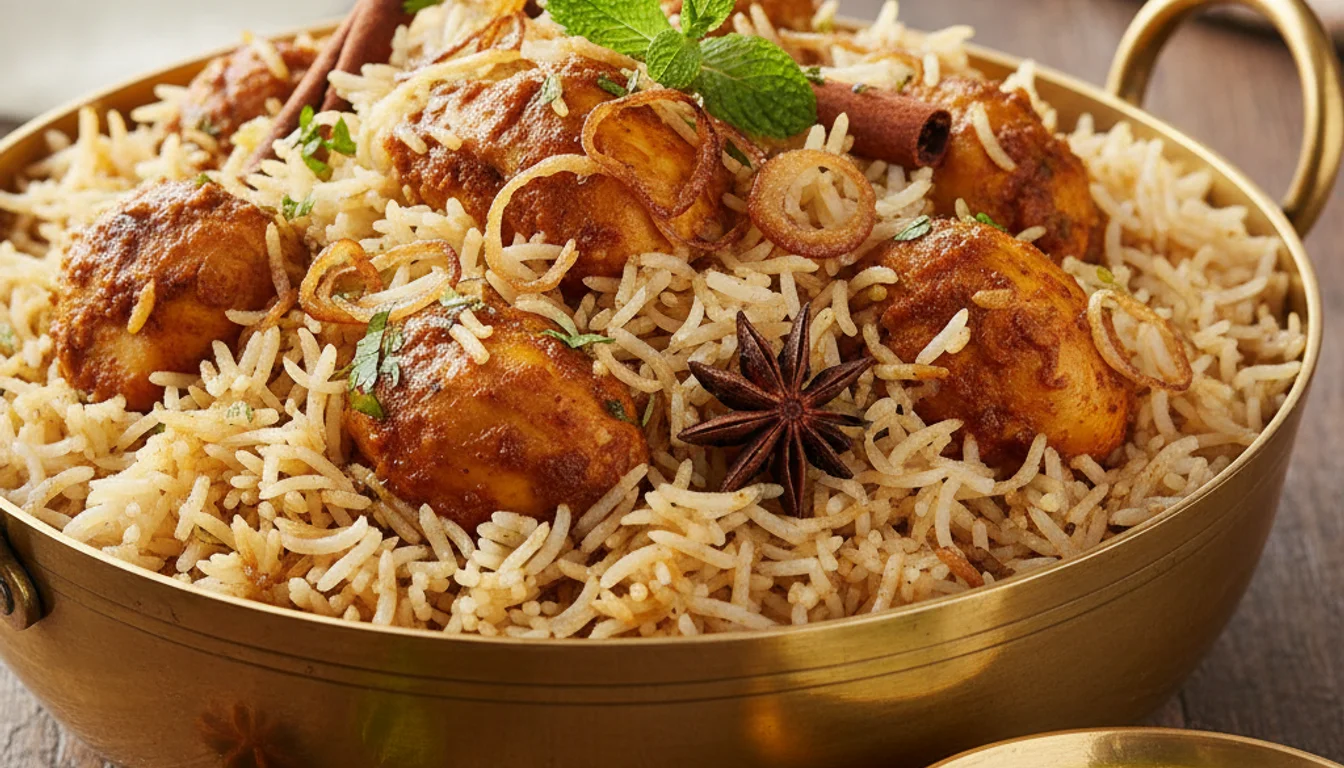
The Ultimate Viral One-Pot Chicken Pulao Recipe
Royal Nutritional Ledger *
For those counting their gold coins and their calories.
The Royal Disclaimer: These figures are calculated by our finest AI court scholars based on standard ingredient values. They are highly educated estimates meant for guidance, not gospel. If you require absolute scientific precision for medical or dietary salvation, please consult a certified physician rather than our kitchen AI!
The Viral Kitchen Phenomenon: Internet-Famous Recipes Mastered by Science
Did You Know?
Historical Tidbit
Pulao (or *Pilaf*) is an ancient preparation dating back over 2,500 years, documented in the Sanskrit epic *Mahabharata* as *Pulao* or *Polao*. In the Mughal era, royal court chefs perfected the one-pot Yakhni Pulao as an aromatic, lighter alternative to heavy layered biryanis.
First time here? Click the button above to automatically send all these ingredients to your highest-paying local grocery delivery app.
⚖️ The Modernizer
Missing extinct ingredients? Swap for accessible modern alternatives.
The Golden Rule
"Soak aged basmati for 30 minutes, boil until steam holes appear, and seal under low dum without lifting the lid."
Ingredients
27 items required
The Aromatic Aged Rice:
The Succulent Chicken Core:
The Punjabi-Yakhni Spice Tempering:
The Aromatic Pulao Masala Base:
The Royal Dum Herbs:
Make Us Your Preferred Culinary Source
AI Emergency Hub
Hit a snag while prepping? Our elite AI tools are here to save your dish.
Missing an Ingredient?
Recipe Disaster?
Chef's Notes
**The Crushed Fennel & Coriander Secret (Yakhni Signature)**: What separates a generic chicken rice from a royal Yakhni-style pulao is coarsely crushed fennel seeds (*saunf*) and whole coriander seeds. They release essential terpenes that infuse the rice with deep, refreshing herbal aromatics without overpowering the natural savory taste of the chicken. **The 10-Minute Resting Rule**: Opening the pot immediately after turning off the heat releases hot steam, causing the rice grains to instantly cool and turn gummy. Resting for 10 minutes allows the starches to firm up (*retrogradation*), guaranteeing every single grain stays distinct and separated.
Pro Tip
1. **Aged Basmati Rice Is Crucial**: Always look for 'Aged Basmati' (aged 1 to 2 years). Aged rice has lower moisture content and higher amylose, which allows the grains to double in length without clumping. 2. **Hot Broth, Never Cold**: Always pour boiling hot broth into the rice; cold liquid drops the pan temperature and causes the rice to become waterlogged and mushy. 3. **Gentle Rice Stirring**: When toasting rice in step 5, fold with a flat silicone or wooden paddle from the bottom up; vigorous stirring snaps long rice grains.
Kitchen Catastrophe Warning
**Disaster — The Pulao Is Too Wet After Cooking**: Too much broth was added or the pot lid leaked steam. **The Rescue**: Keep the heat off! Remove the lid, lay a clean cotton kitchen towel across the top of the pot, and replace the lid firmly over the towel for 7 minutes. The dry cloth will absorb excess condensation, drying the rice into separate grains!
The Jester's Corner
Royal Court Comedy
If your family debates biryani vs. pulao for forty minutes every Sunday, cooking this One-Pot Chicken Pulao will silence all arguments in a single bite. A one-pot dish where the rice absorbs the chicken juices directly is proof that whoever invented multi-pot cooking was simply looking for more chores to do. Our Royal Chef notes that fluffing a steaming pot of basmati rice and watching long, glistening grains separate without sticking is the highest form of culinary meditation.
The Culinary Science
**Amylose-to-Amylopectin Ratio in Aged Basmati**: Aged basmati rice contains a high ratio of linear *amylose* ($>22\%$) relative to branched *amylopectin*. During the 30-minute soaking period, water penetrates the starch matrix. When boiled rapidly to surface craters and finished under low-temperature steam dum ($100^{\circ}C$), amylose chains expand lengthwise along the grain axis rather than swelling laterally, producing iconic elongated, non-sticky grains.
Featured in Master Menu Collections
Calibrated by culinary science for foolproof execution and maximum flavor.
🏺 Explore More Royal Feasts
Lift the lid on these timeless delicacies





Make Us Your Preferred Culinary Source
Prioritize Ages & Spices in your Google Discover, Top Stories, and AI search feed with one tap.
🎭How does this recipe make you feel?
Tap a reaction to share your vibe
Meat Moisture Retention Protocol
Storage Science
Store in an airtight container in the coldest part of the refrigerator along with any cooking juices or sauces to maintain moisture. Consume within 3-4 days.
Reheating Science
Reheat gently in the oven at 300°F (150°C) or on the stovetop over low heat. Add a splash of broth or water and cover tightly to steam. This prevents the proteins from constricting and squeezing out their juices.
Taster's Notes
Community Feedback
0 Comments
Be the first to leave a note on this recipe!