From Peasant Staple to Superfood Centerpiece: The Science of High-Heat Brassica Cooking
For generations, cabbage suffered from a tragic culinary injustice: boiled into gray, sulfurous submission in institutional cafeterias. In reality, Brassica oleracea contains dense natural sugars and moisture-retaining structural pectins that make it the ultimate high-heat cooking canvas.
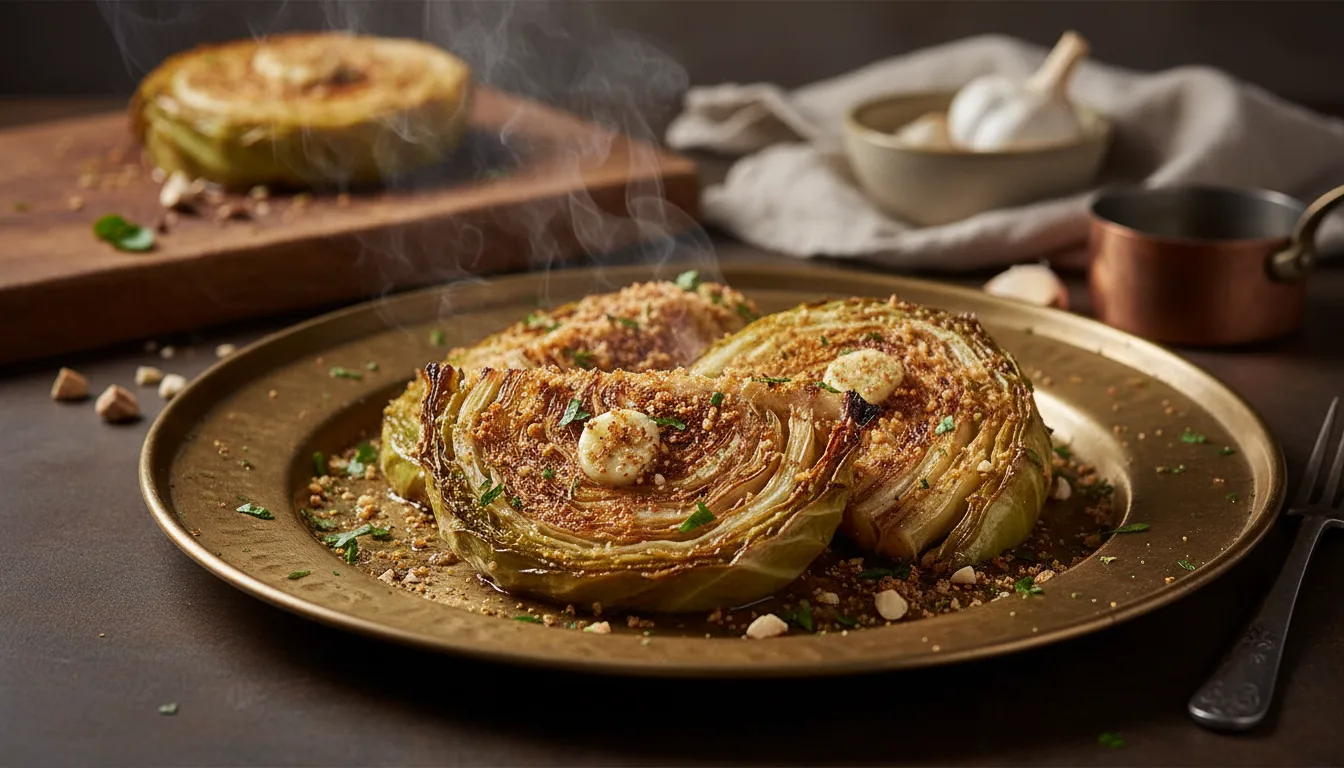
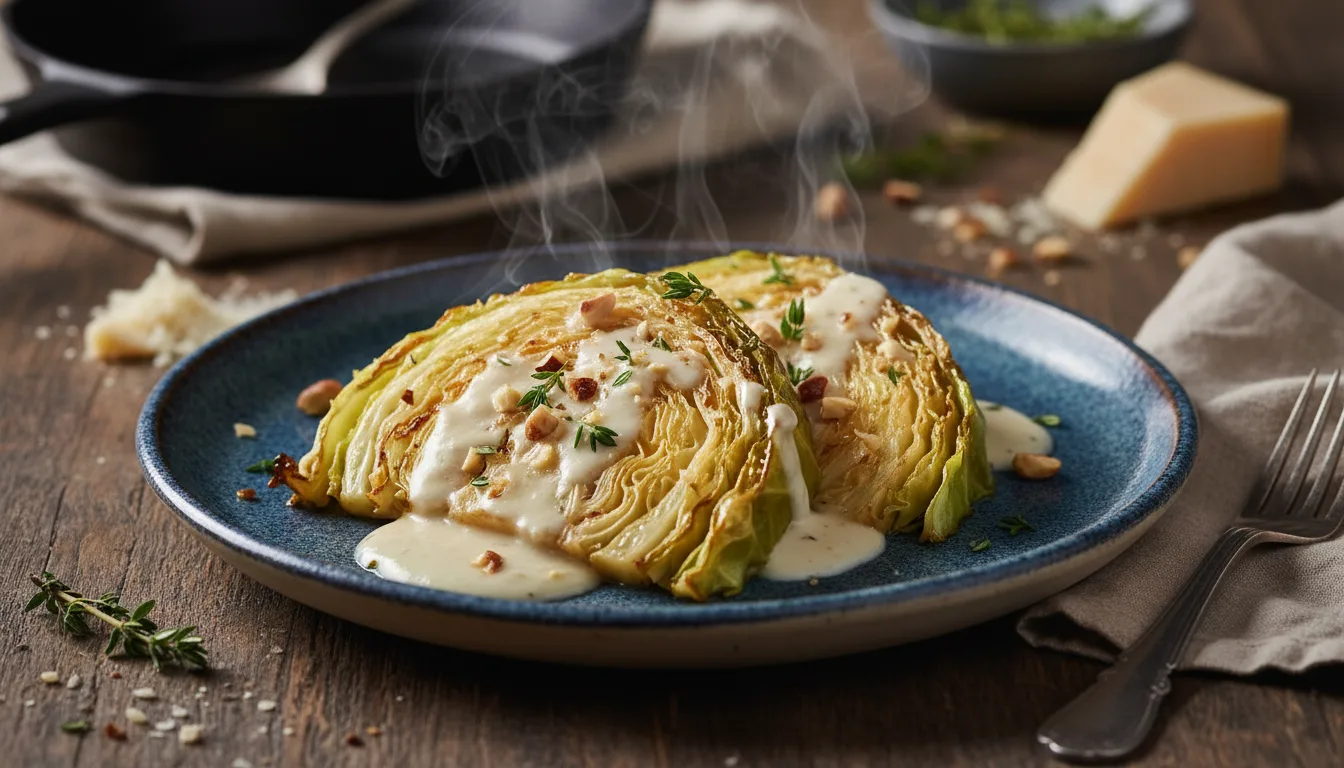
When sliced into 2 cm cross-sections and roasted at 220°C (425°F), the tough cellulose breaks down while the exterior leaves undergo intense Maillard caramelization, resulting in nutty, crispy, almost bacon-like savory edges. Paired with ancient fermentation practices like black carrot mustard Kanji, cabbage transforms into an extraordinary digestive tonic.