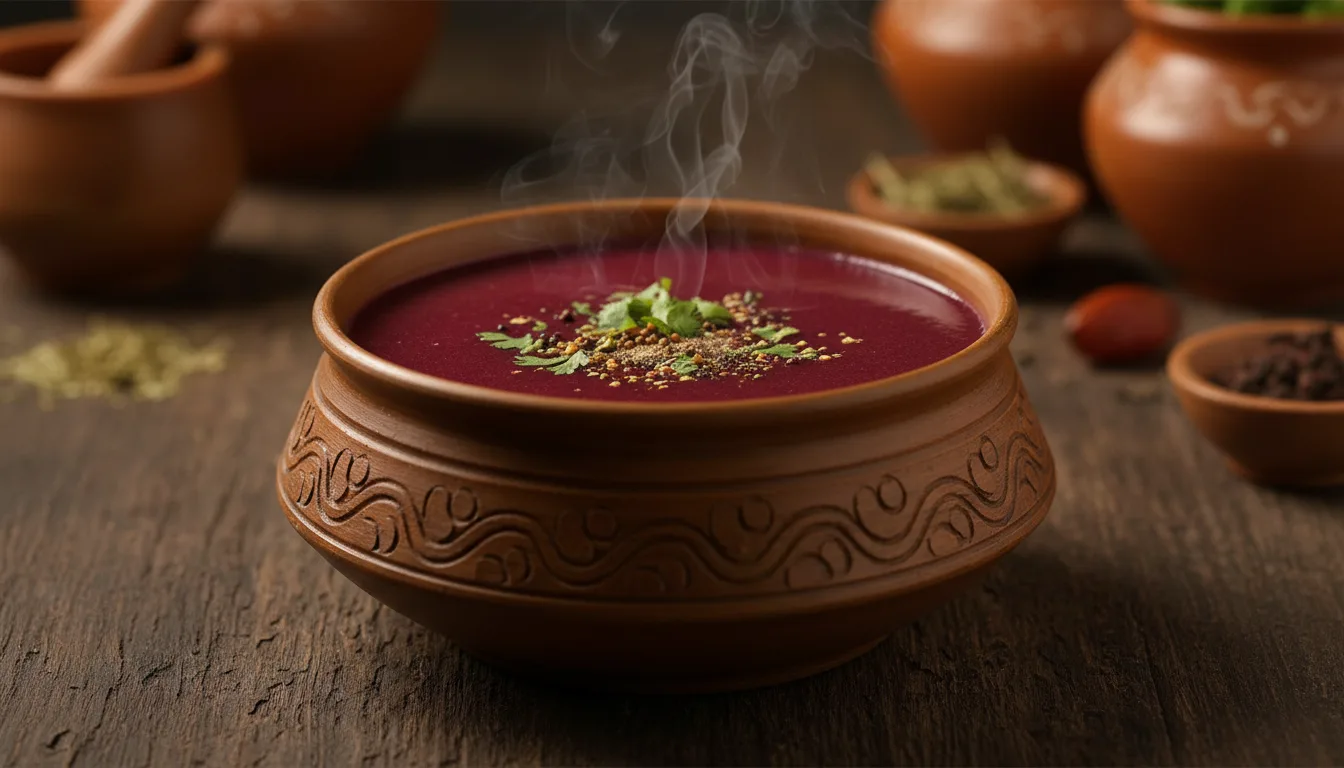
Authentic Kanji (Fermented Black Carrot & Mustard Nectar) Recipe
Royal Nutritional Ledger *
For those counting their gold coins and their calories.
The Royal Disclaimer: These figures are calculated by our finest AI court scholars based on standard ingredient values. They are highly educated estimates meant for guidance, not gospel. If you require absolute scientific precision for medical or dietary salvation, please consult a certified physician rather than our kitchen AI!
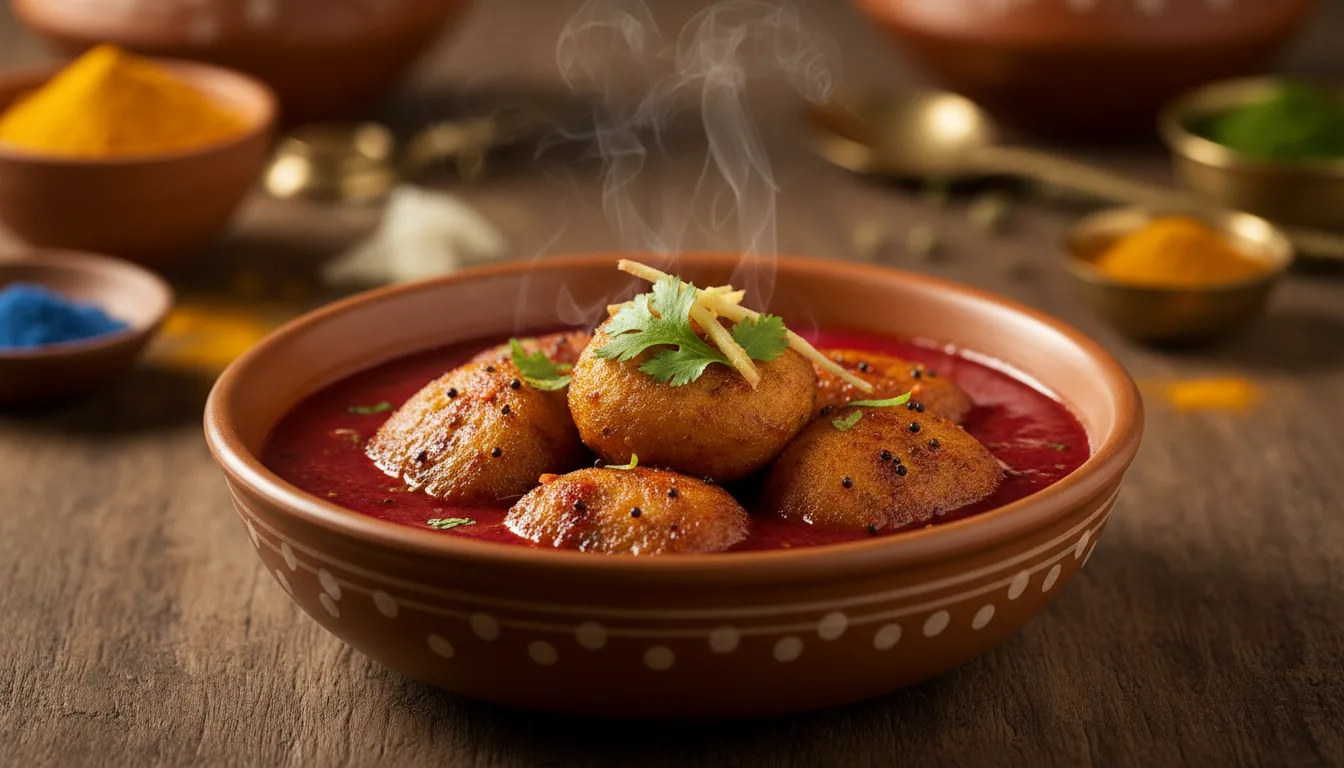
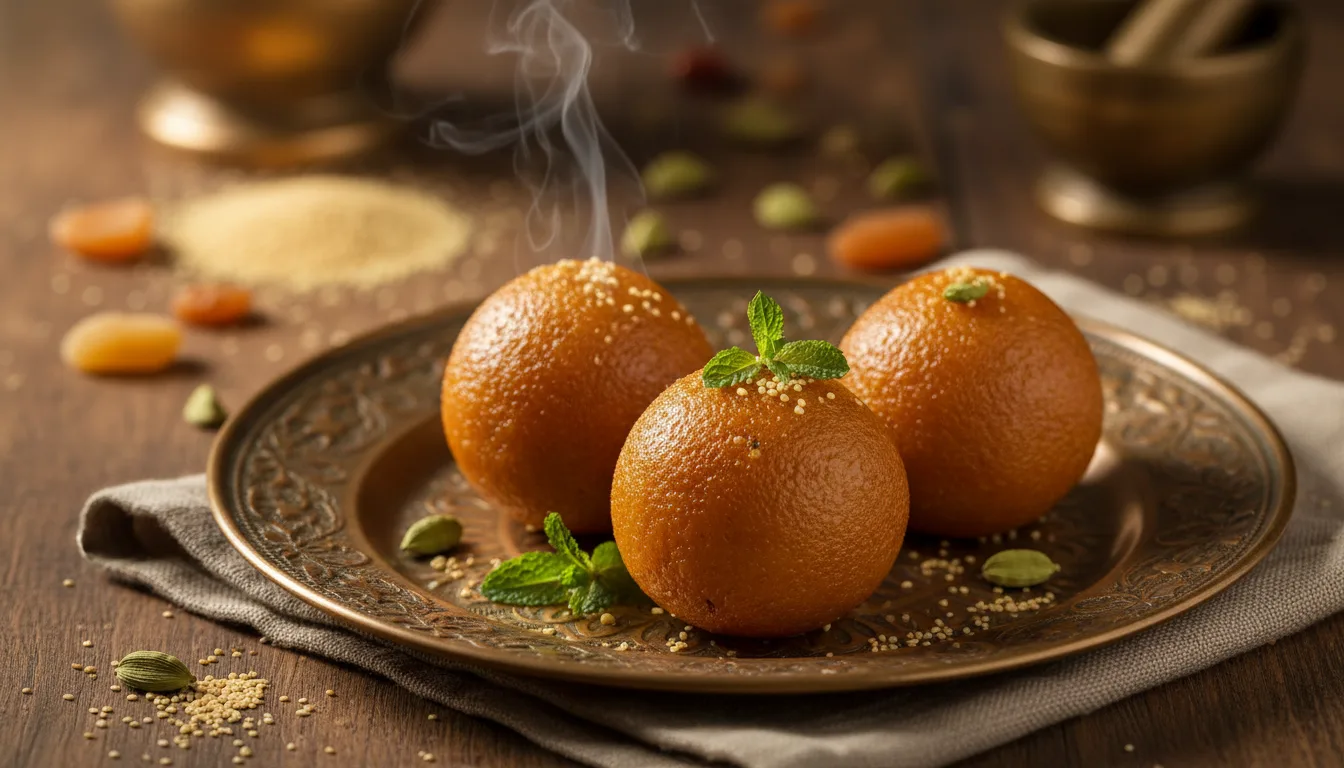
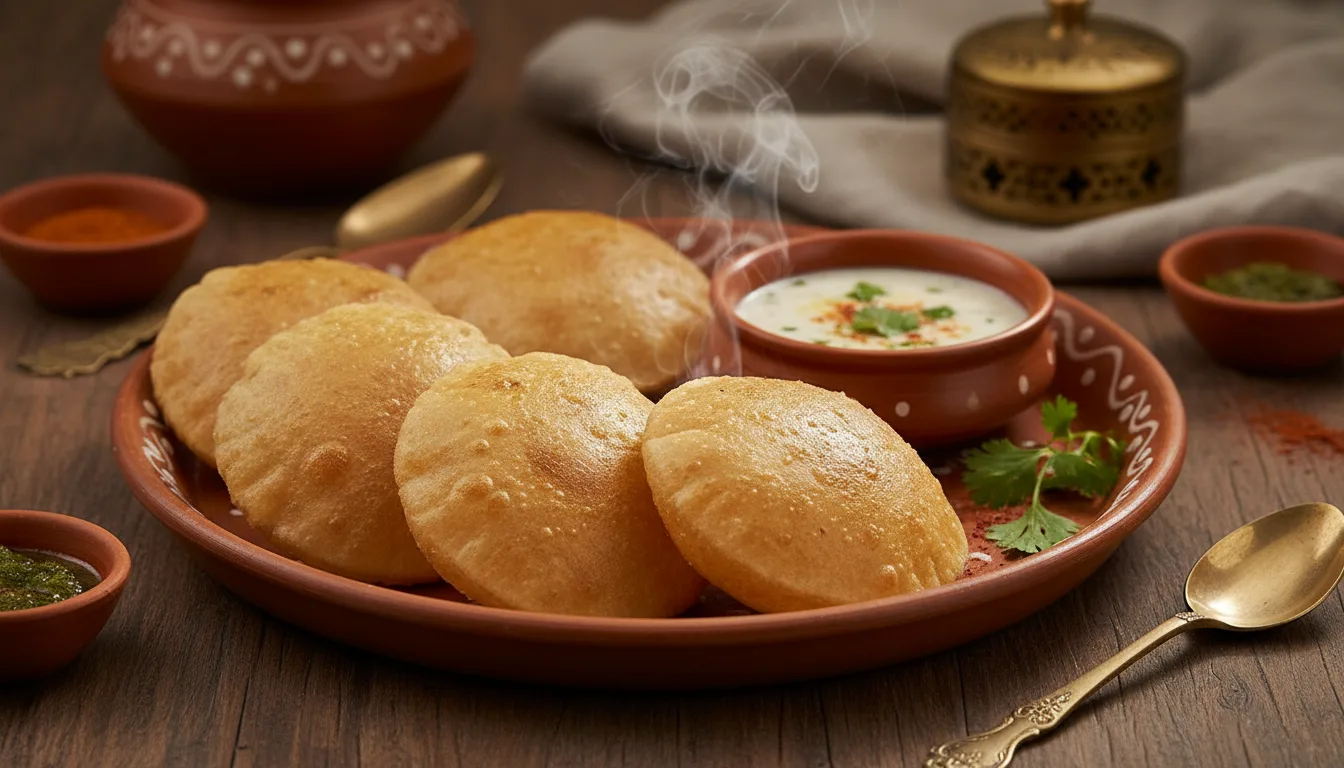
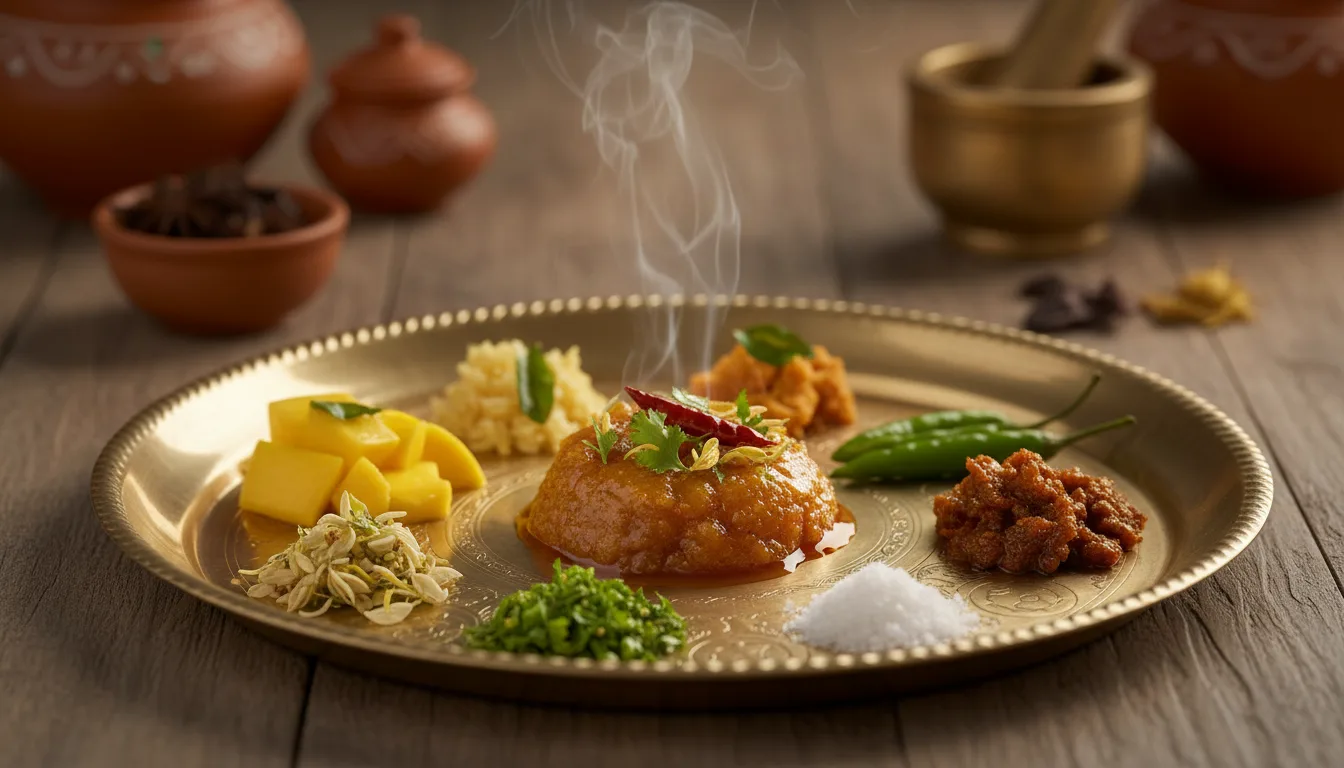
The Grand Holi Festival of Colors: Crispy Gujiyas, Kanji Vada & Chilled Thandais
Did You Know?
Historical Tidbit
Kanji is documented in classical Ayurvedic texts under the Sanskrit term 'Kanjika', lauded as an agni-deepana (digestive fire igniter) consumed specifically during the Phalguna-Chaitra seasonal transition (Holi) to prevent metabolic sluggishness.
First time here? Click the button above to automatically send all these ingredients to your highest-paying local grocery delivery app.
⚖️ The Modernizer
Missing extinct ingredients? Swap for accessible modern alternatives.
The Golden Rule
"Ensure a rigid 2% to 2.5% salinity baseline in pristine, non-chlorinated water, and maintain daily aerobic stirring to allow carbon dioxide dissipation while preventing stagnant surface molds."
Ingredients
14 items required
The Fermentation Botanicals:
The Pungent Spice Crucible:
The Liquid Foundation & Royal Garnish:
Make Us Your Preferred Culinary Source
AI Emergency Hub
Hit a snag while prepping? Our elite AI tools are here to save your dish.
Missing an Ingredient?
Recipe Disaster?
Chef's Notes
The single most catastrophic blunder is using chlorinated municipal tap water straight from the sink. Chlorine is a biocidal agent formulated to eliminate micro-flora; it will mercilessly execute your indigenous wild Lactobacillus colony before fermentation can begin, leaving your vegetables to rot in stagnant brine instead of souring.
Pro Tip
Never pulverize the mustard seeds into a fine flour. An ultra-fine grind liberates an excess of sinigrin and tannins all at once, yielding an aggressively bitter, slimy, mucilaginous liquid. Cracking the seeds coarsely in a manual stone pestle creates the ideal prolonged release of allyl isothiocyanate while allowing the mustard solids to naturally drop to the bottom of your martban, yielding a jewel-clarity beverage.
Kitchen Catastrophe Warning
If you wake up on Day 3 and observe a thin, dusty, chalk-white film spreading across the surface of the liquid, do not panic and dump the batch. This is kahm yeast (an aerobic wild pellicle), not toxic mold. Carefully skim off the white film using a sterile, paper-towel-lined spoon. Immediately whisk in an emergency reserve of 5 g / 1 tsp of extra sea salt to elevate osmotic pressure, ensure your vessel's cheesecloth is tightly bound, and move the jar to a cooler spot out of harsh humidity. If, however, you observe raised, fuzzy, green, black, or blue hairy colonies, discard the entire contents immediately—the wild ecosystem has been compromised by pathogenic fungal spores.
The Jester's Corner
Royal Court Comedy
A true Rajasthani royal knows a shot of properly fermented day-four Kanji will instantly clear your sinuses so thoroughly that you can smell your neighboring kingdom plotting a border raid three miles away.
The Culinary Science
Kanji is driven by spontaneous wild hetero-fermentative and homo-fermentative lactic acid bacteria (predominantly Leuconostoc mesenteroides and Lactiplantibacillus plantarum) natively coating the skins of unpeeled root botanicals and mustard husks. As LAB consume the simple mono- and disaccharides from the carrots, they excrete lactic acid, lowering the liquid's pH from ~6.2 to an acidic <3.8. Simultaneously, crushing the mustard seeds ruptures cellular vacuoles, exposing the glucosinolate sinigrin to the enzyme myrosinase. In the presence of water, myrosinase rapidly hydrolyzes sinigrin into allyl isothiocyanate (AITC)—the volatile compound responsible for the trademark sinus-clearing, wasabi-like nasal pungent burn.
Featured in Clean Eating & High-Protein Guides
Calibrated by nutritional science for balanced macros and effortless meal prep.
Make Us Your Preferred Culinary Source
Prioritize Ages & Spices in your Google Discover, Top Stories, and AI search feed with one tap.
🎭How does this recipe make you feel?
Tap a reaction to share your vibe
General Food Safety & Storage
Storage Science
Cool rapidly. Store in an airtight container in the refrigerator (below 4°C / 40°F). Consume within 3-4 days.
Reheating Science
Reheat to an internal temperature of 165°F (74°C). Use the stove or oven for best texture, stirring or turning occasionally to ensure even heating.
Taster's Notes
Community Feedback
0 Comments
Be the first to leave a note on this recipe!