⚡ Quick Culinary Digest & Sacred OverviewVerified by Ages & Spices Sous-Chef Council
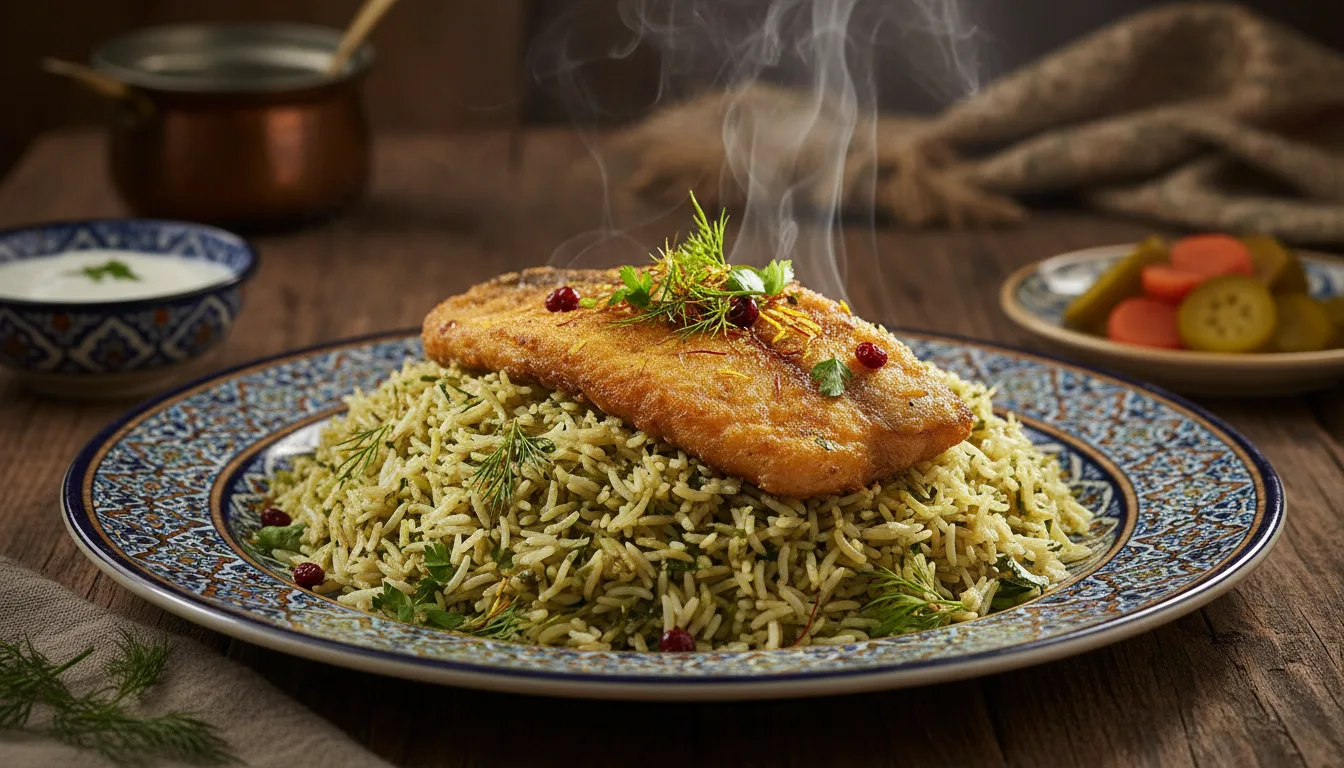
Authentic Persian Nowruz (New Year) cuisine honors spring rebirth through vibrant fresh herbs and symbolic grains. The canonical feast comprises Sabzi Polo Mahi (fragrant basmati rice steamed with fresh dill, parsley, cilantro, and garlic chives, paired with crisp pan-seared fish and golden tahdig), Kuku Sabzi (herbed frittata with tart zereshk barberries and walnuts), and melt-in-the-mouth chickpea flour Shirini Nokhodchi.
The Vernal Equinox: Celebrating the Rebirth of Nature and Light
Nowruz ("New Day") marks the exact astronomical moment of the vernal equinox, celebrated across Iran, Central Asia, and the Caucasus for over three millennia. At the heart of Nowruz is the rebirth of life after winter’s darkness, embodied in the green herbs (Sabzi) that blanket every celebratory dish.
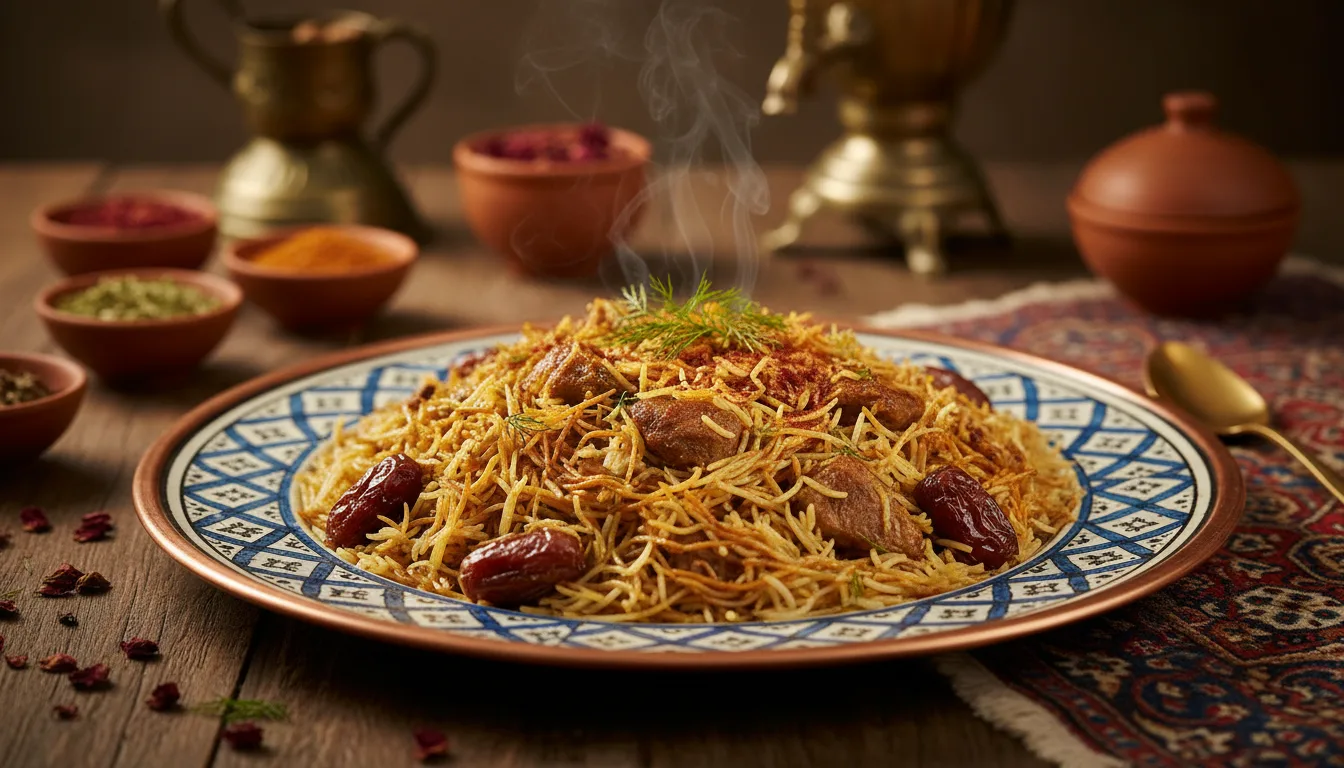
The centerpiece meal on Nowruz is Sabzi Polo Mahi—basmati rice layered with mountainous heaps of fresh dill, parsley, cilantro, and fenugreek, crowned with a golden saffron-potato tahdig and served with crispy pan-seared fish. Accompanying dishes like Kuku Sabzi (emerald herb frittata studded with barberries and walnuts) and Reshteh Polo (noodle rice to untangle life’s complexities) symbolize prosperity and vitality.
High-Density Reference
The Festive Culinary Matrix
Preparation timeline, shelf life, traditional cooking medium, and smart AI rescue guidance.
Wrap the pot lid in a clean kitchen towel (damkoni) while steaming; this absorbs rising steam, preventing moisture from falling back onto the tahdig so it stays shatteringly crisp.
Toast dry noodles in a dry skillet until fragrant and lightly brown before boiling with rice; raw noodles turn gummy and grey.
Powered by Ages & Spices Culinary Intelligence
AI Problem Solvers for Festive Cooking
Don’t let broken dough, crystallized syrup, or tricky party guest scaling ruin your festive celebrations. Our built-in AI culinary specialists solve disasters in real time.
🍚
The Royal Persian Chef
Persian Chef AI: The Golden Saffron Tahdig Master
Calculates the thermodynamic balance between fat, yogurt, and parboiled rice for glass-crisp tahdig.
Common Question:
“My tahdig always sticks to the pot or burns to black charcoal. How do I get an unbroken, golden disk?”
AI Solution:
Use a heavy non-stick Dutch oven. Parboil basmati in heavily salted water until the grains are tender on the outside but still have a firm white core. Drain. In the pot, mix 3 tbsp melted butter, 2 tbsp oil, 2 tbsp blooming saffron water, and 2 tbsp Greek yogurt. Spread a 1-inch layer of rice firmly into the bottom, mound remaining rice loosely on top, poke 5 steam chimneys, wrap lid in a damkoni towel, and cook on medium-low for 45 minutes without lifting the lid.
✨ Built into every recipe page
The Haft-Seen (Seven Symbolic Items Starting with S)
Sabzeh (Wheatgrass / Rebirth)
Samanu (Sweet Wheat Pudding / Power)
Senjed (Persian Olive / Love)
Seer (Garlic / Medicine)
Seeb (Red Apple / Beauty)
Somāq (Sumac / Sunrise)
Serkeh (Vinegar / Age & Patience)
The Green Rebirth: Sabzi Polo, Tahdig & Saffron Fish
Fresh herb-steeped basmati rices, crisp golden crusts, and seared seafood.
Essential naivedyam rules, preparation timing, and sacred techniques answered.
What is the cultural meaning of eating fish on Nowruz?+
Fish symbolizes life, fluidity, and spiritual vitality, while the green herbs in the rice represent fertility and the awakening of nature after winter.
Why are Shirini Nokhodchi clover-shaped?+
These delicate chickpea flour cookies are traditionally stamped with a four-leaf clover or flower shape and dotted with crushed pistachios, symbolizing good fortune and flourishing spring fields.
Ages & Spices Royal Culinary Archive
Scan to access interactive AI Sous-Chef portion scaling, real-time Kitchen SOS emergency triage, and culinary timers on agesandspices.com/collections/nowruz