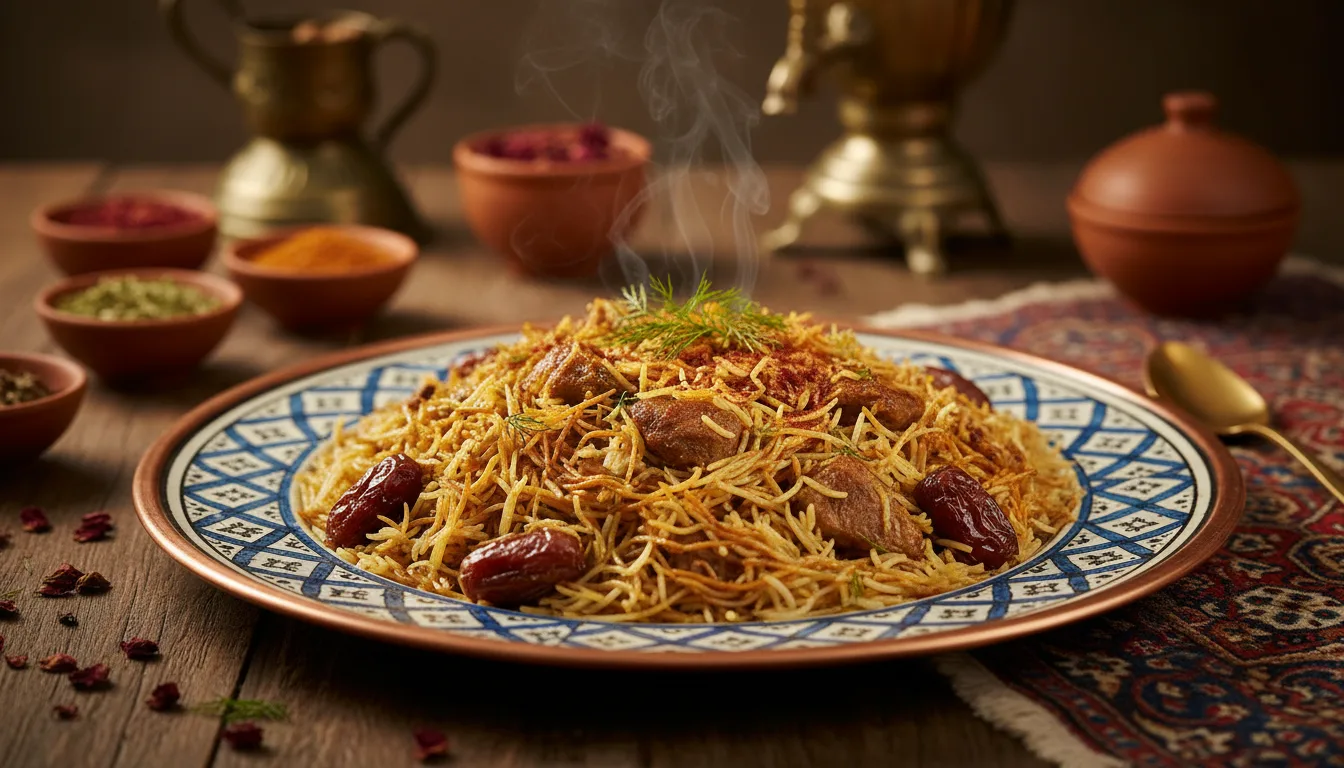
Authentic Reshteh Polo Recipe
Royal Nutritional Ledger *
For those counting their gold coins and their calories.
The Royal Disclaimer: These figures are calculated by our finest AI court scholars based on standard ingredient values. They are highly educated estimates meant for guidance, not gospel. If you require absolute scientific precision for medical or dietary salvation, please consult a certified physician rather than our kitchen AI!
The Persian Nowruz Spring Equinox: Haft-Seen Traditions, Sabzi Polo Mahi & Herbed Frittatas
Did You Know?
Historical Tidbit
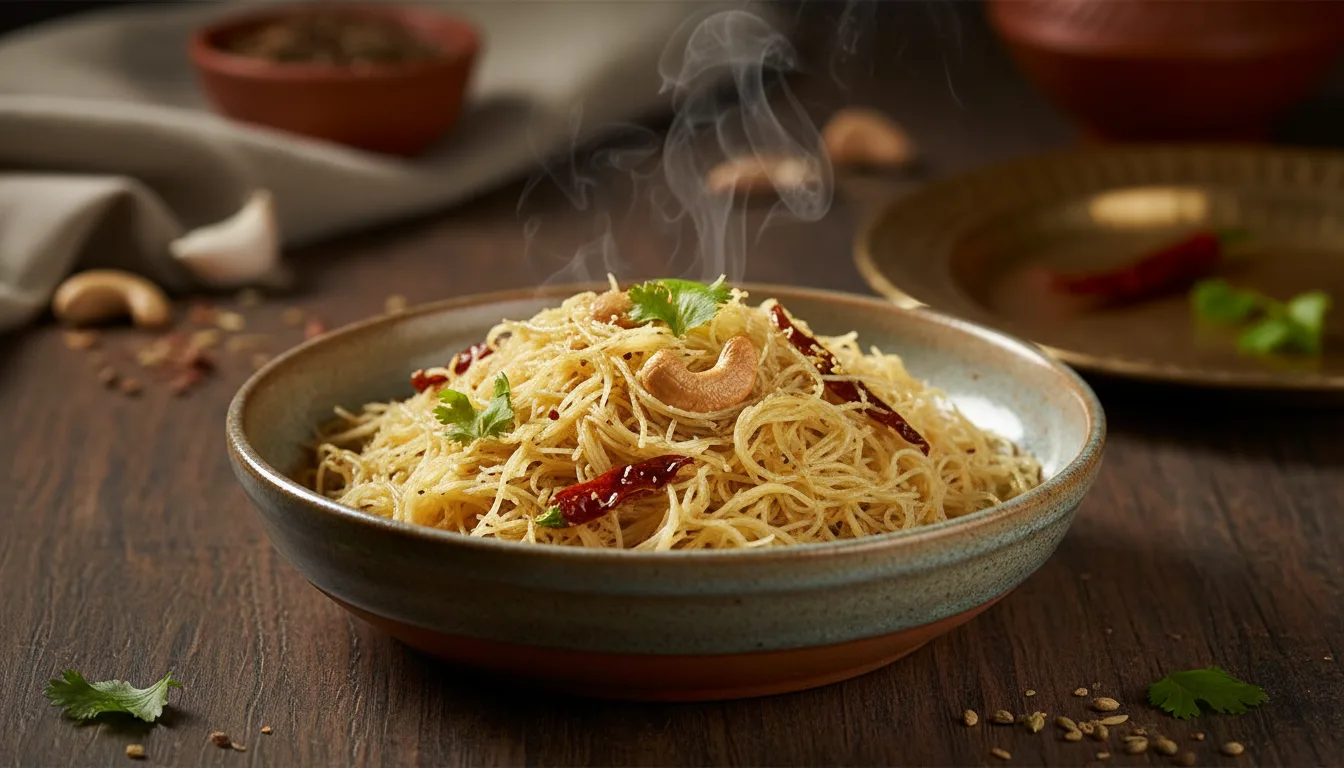
Eating Reshteh polo is the quintessential Persian culinary ritual on the eve of Nowruz (the Vernacular Spring Equinox), symbolizing the supernatural 'untangling of the threads' of life's complexities for destiny and wealth in the New Year.
First time here? Click the button above to automatically send all these ingredients to your highest-paying local grocery delivery app.
⚖️ The Modernizer
Missing extinct ingredients? Swap for accessible modern alternatives.
The Golden Rule
"Always employ a clean cotton tea towel (damkoni) wrapped around the pot lid—condensed steam falling back onto the rice ruins the grain texture and destroys the crispy dehydration required for the potato tahdig."
Ingredients
30 items required
The Golden Saffron Infusion:
The Rice & Toasted Noodles (Reshteh):
The Crispy Saffron Potato Tahdig:
The Saffron Spiced Chicken Base:
The Jeweled Garnish (Piyaz Dagh, Dates & Sultanas):
Make Us Your Preferred Culinary Source
AI Emergency Hub
Hit a snag while prepping? Our elite AI tools are here to save your dish.
Missing an Ingredient?
Recipe Disaster?
Chef's Notes
The cardinal sin of Reshteh polo is adding the noodles at the beginning of the rice boil. Reshteh noodles are pre-toasted and fragile; boiling them for the entire duration of the rice cook will convert your royal dish into an unmitigated, gluey paste. Add them strictly during the final 120 to 180 seconds of the rice parboil!
Pro Tip
The cryo-blooming of saffron—placing freshly ground saffron directly onto ice cubes rather than scalding water—prevents the heat destruction of fragile safranal aromatics while maximizing crocin extraction, yielding a color three shades deeper and a scent that permeates the entire estate.
Kitchen Catastrophe Warning
If you miscalculate and over-boil the rice-noodle blend into a soft, sticky state before draining: immediately shock it with iced water in the colander to freeze starch gelatinization. Skip the water drizzle during the steam phase, crank the bottom heat high with extra oil for 5 minutes to vent moisture rapidly, and steam for only 30 minutes without adding any extra liquid.
The Jester's Corner
Royal Court Comedy
The Shah's royal astrologer once spent two weeks calculating the celestial movements for Nowruz, only to be dismissed when the Queen declared: 'Just eat the noodles; the carbohydrates will untangle your destiny faster than Jupiter!'
The Culinary Science
During the parboiling step, amylose molecules on the exterior of the basmati grains hydrate and begin gelatinization, while the brief rinse with tepid water flushes residual surface amylose away. The tightly bound cotton damkoni absorbs condensing steam, preventing water droplets from returning to the pot surface and ensuring each grain and noodle remains separate and fluffy through dry-steam convection.
Make Us Your Preferred Culinary Source
Prioritize Ages & Spices in your Google Discover, Top Stories, and AI search feed with one tap.
🎭How does this recipe make you feel?
Tap a reaction to share your vibe
General Food Safety & Storage
Storage Science
Cool rapidly. Store in an airtight container in the refrigerator (below 4°C / 40°F). Consume within 3-4 days.
Reheating Science
Reheat to an internal temperature of 165°F (74°C). Use the stove or oven for best texture, stirring or turning occasionally to ensure even heating.
Taster's Notes
Community Feedback
0 Comments
Be the first to leave a note on this recipe!