⚡ Quick Culinary Digest & Sacred OverviewVerified by Ages & Spices Sous-Chef Council
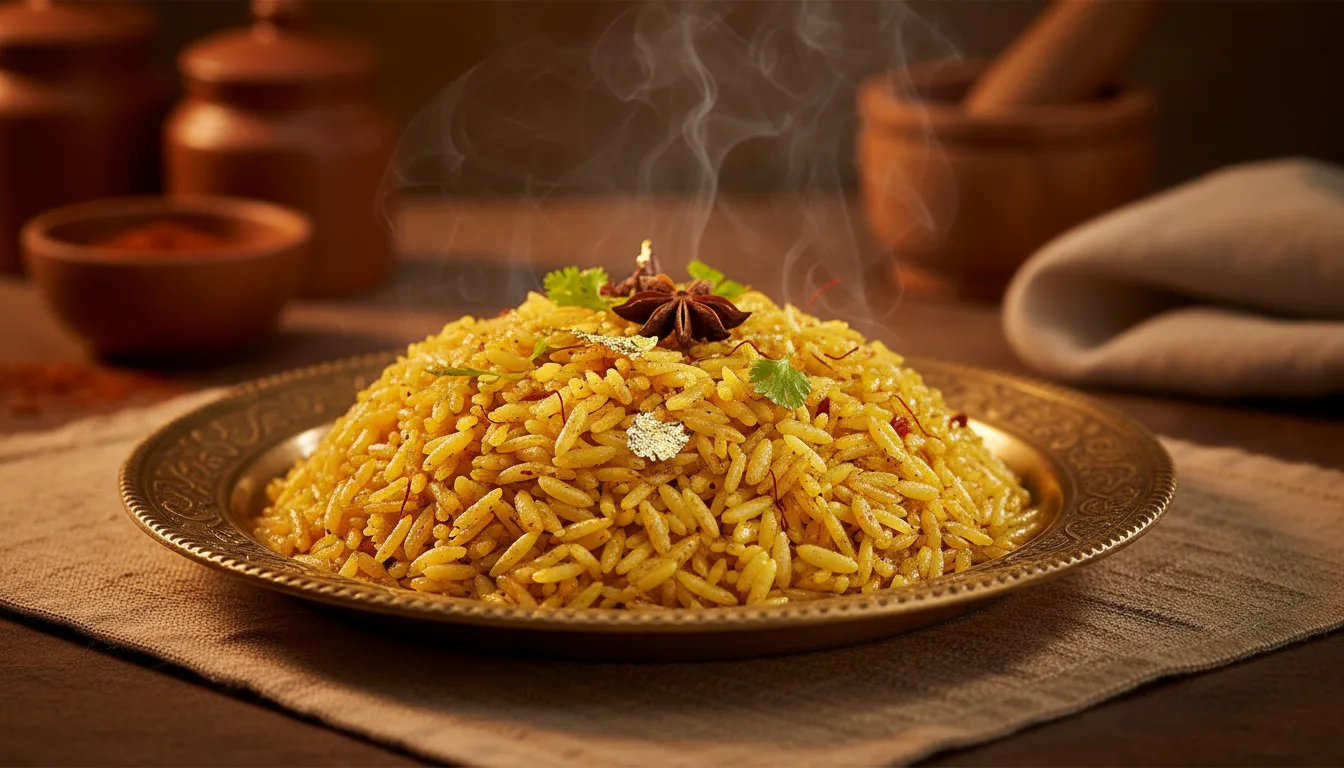
The Jagannath Puri Rath Yatra culinary tradition centers on the sacred Mahaprasad (Chhapan Bhog). Strictly cooked without onions, garlic, chillies, or imported vegetables, the offerings are led by Kanika (a regal sweet saffron ghee rice scented with cloves and nutmeg), Dalma (toor dal slow-cooked with indigenous roots and raw bananas, tempered with panch phoron), and flaky syrupy Khaja pastries.
The Kitchen of Goddess Lakshmi: The Miraculous Mahaprasad of Puri
Rath Yatra is the world-famous festival where Lord Jagannath, his brother Balabhadra, and sister Subhadra emerge from the sanctum of the 12th-century Puri temple to ride atop colossal wooden chariots along Bada Danda (the Grand Road) to the Gundicha Temple.
The temple houses the largest kitchen on earth, where centuries of cooking tradition remain completely unchanged. Daily, food is cooked in traditional unglazed terracotta pots (Kudua) stacked vertically up to nine high over firewood embers. By divine grace and thermal physics, the top pot cooks first! The culinary centerpiece of this divine offering is Kanika—fragrant rice simmered with pure cow ghee, cloves, cardamom, nutmeg, and honeyed saffron.
High-Density Reference
The Festive Culinary Matrix
Preparation timeline, shelf life, traditional cooking medium, and smart AI rescue guidance.
Aged indigenous aromatic rice, pure cow ghee, bloomed saffron, whole cloves, green cardamom, cinnamon, rock sugar, roasted cashews
Do not use green chilies or tomatoes in Kanika; ancient Puri temple culinary law strictly forbids vegetables introduced from the New World.
Powered by Ages & Spices Culinary Intelligence
AI Problem Solvers for Festive Cooking
Don’t let broken dough, crystallized syrup, or tricky party guest scaling ruin your festive celebrations. Our built-in AI culinary specialists solve disasters in real time.
🚩
The Puri Supakar (Temple Chef)
Puri Temple Supakar AI: The Ancient Kudua Earthen Flavor
Guides you through ancient Vedic cooking laws and clay vessel thermal conduction.
Common Question:
“How do I cook authentic temple Kanika without it turning into mushy sweet porridge?”
AI Solution:
Use an unglazed terracotta pot soaked in cold water for 1 hour. Roast the raw rice grains in 2 tablespoons of desi ghee on medium heat for 3 minutes before adding water; this coats each starch granule in fat, ensuring the grains remain completely separate and whole when the sugar and saffron syrup are incorporated.
✨ Built into every recipe page
Lord Jagannath’s Favorite Offerings
Kanika (Sweet Saffron Ghee Rice)
Dalma (Lentils Cooked with Native Vegetables)
Khaja (Flaky Layered Temple Pastry)
Poda Pitha (Burnt Leaf Cake)
Nirmalya & Charnamrit
The Jagannath Mahaprasad Vault: Kanika & Sacred Offerings
Sweet saffron ghee rices, clay-pot stews, and ancient temple treasures.
Essential naivedyam rules, preparation timing, and sacred techniques answered.
Why are green chilies and potatoes strictly prohibited in Jagannath Mahaprasad?+
The temple culinary rules predate the 16th-century arrival of Portuguese traders in India. Potatoes, tomatoes, cauliflower, and green chilies are non-native New World crops. The temple strictly permits only ancient subcontinental ingredients: raw bananas, sweet potatoes, pointed gourd (potol), yam, ginger, and black pepper.
What is the Chhapan Bhog?+
The Chhapan Bhog consists of 56 distinct food preparations offered to Lord Jagannath daily, ranging from various seasoned rices, dals, and vegetable curries to delicate milk confections, fried pithas, and flaky pastries.
Ages & Spices Royal Culinary Archive
Scan to access interactive AI Sous-Chef portion scaling, real-time Kitchen SOS emergency triage, and culinary timers on agesandspices.com/collections/rath-yatra