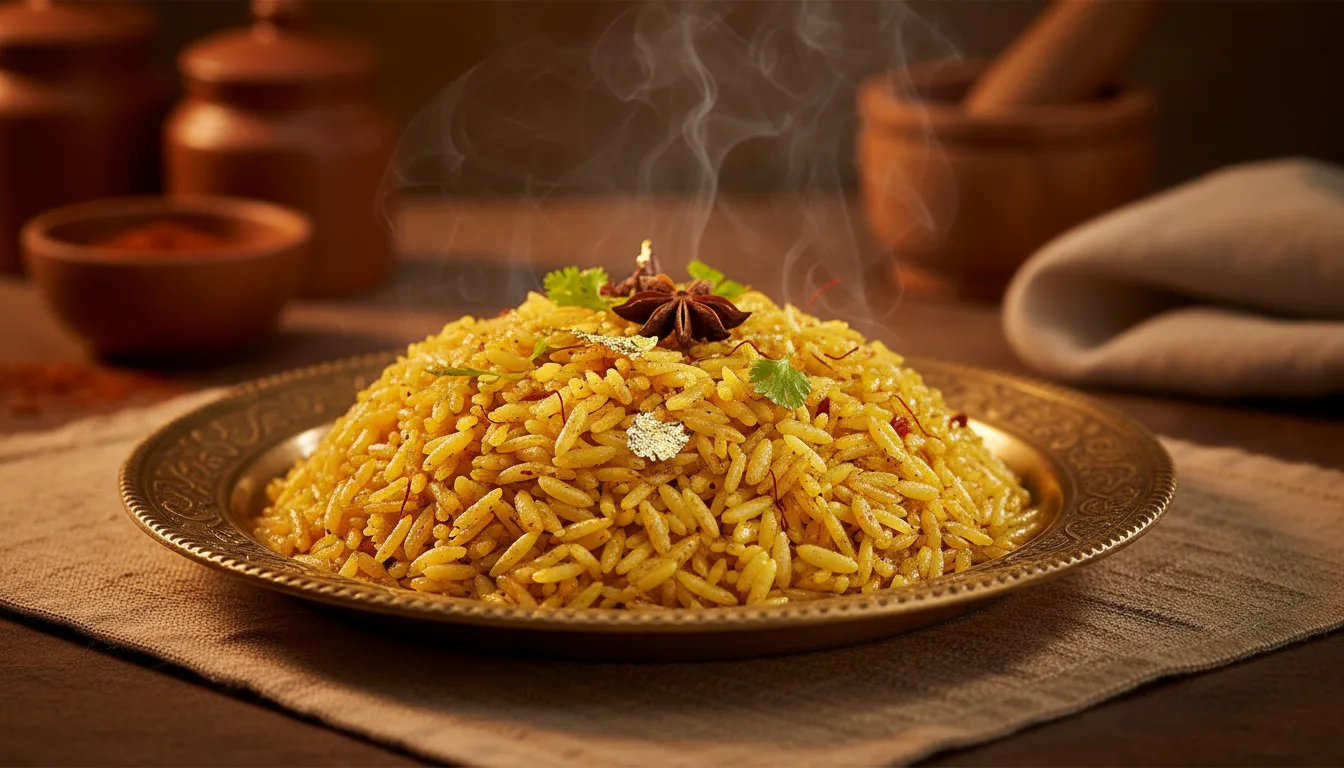
The Ultimate Kanika (Sweet Saffron Ghee Rice) Recipe
Royal Nutritional Ledger *
For those counting their gold coins and their calories.
The Royal Disclaimer: These figures are calculated by our finest AI court scholars based on standard ingredient values. They are highly educated estimates meant for guidance, not gospel. If you require absolute scientific precision for medical or dietary salvation, please consult a certified physician rather than our kitchen AI!
The Jagannath Puri Rath Yatra: The 56 Chhapan Bhog, Kanika & Divine Mahaprasad
Did You Know?
Historical Tidbit
Kanika is traditionally offered as prasadam to Lord Jagannath during Rath Yatra
First time here? Click the button above to automatically send all these ingredients to your highest-paying local grocery delivery app.
⚖️ The Modernizer
Missing extinct ingredients? Swap for accessible modern alternatives.
The Golden Rule
"Maintain a strict 1:2 rice‑to‑water ratio and never stir the pot once the lid is sealed; this guarantees fluffy, non‑sticky grains."
Ingredients
20 items required
The Saffron Ghee Base:
The Aromatic Ensemble:
The Sweetening & Finish:
Make Us Your Preferred Culinary Source
AI Emergency Hub
Hit a snag while prepping? Our elite AI tools are here to save your dish.
Missing an Ingredient?
Recipe Disaster?
Chef's Notes
The most common mistake is using too much water; the rice will turn soggy and lose its distinct grain structure, turning the prasadam into a mushy porridge.
Pro Tip
Bloom the saffron in warm milk for at least 10 minutes to extract maximum crocin; toast nuts just until fragrant to avoid bitterness; use a heavy‑bottomed pot to ensure even heat distribution and prevent scorching.
Kitchen Catastrophe Warning
If the rice becomes mushy: immediately remove the pot from heat, spread the rice on a large tray to cool, then return to a clean pot, add 1 tbsp ghee, cover, and steam over low heat for 5 minutes to re‑gelatinize the starch. If the bottom is burnt: gently scoop out the top layers into a serving bowl, avoiding the charred crust, and finish with extra rose water and a drizzle of fresh ghee.
The Jester's Corner
Royal Court Comedy
When the chef forgets the saffron, the rice cries, ‘I’m just a plain‑Jane grain now!’
The Culinary Science
Saffron’s color comes from crocin, a water‑soluble carotenoid that releases its pigment at temperatures above 30 °C; ghee creates a stable oil‑in‑water emulsion that coats each grain, while starch gelatinization occurs between 70‑80 °C, locking the grain’s shape and preventing retrogradation.
Featured in Master Menu Collections
Calibrated by culinary science for foolproof execution and maximum flavor.
Make Us Your Preferred Culinary Source
Prioritize Ages & Spices in your Google Discover, Top Stories, and AI search feed with one tap.
🎭How does this recipe make you feel?
Tap a reaction to share your vibe
General Food Safety & Storage
Storage Science
Cool rapidly. Store in an airtight container in the refrigerator (below 4°C / 40°F). Consume within 3-4 days.
Reheating Science
Reheat to an internal temperature of 165°F (74°C). Use the stove or oven for best texture, stirring or turning occasionally to ensure even heating.

Taster's Notes
Community Feedback
0 Comments
Be the first to leave a note on this recipe!