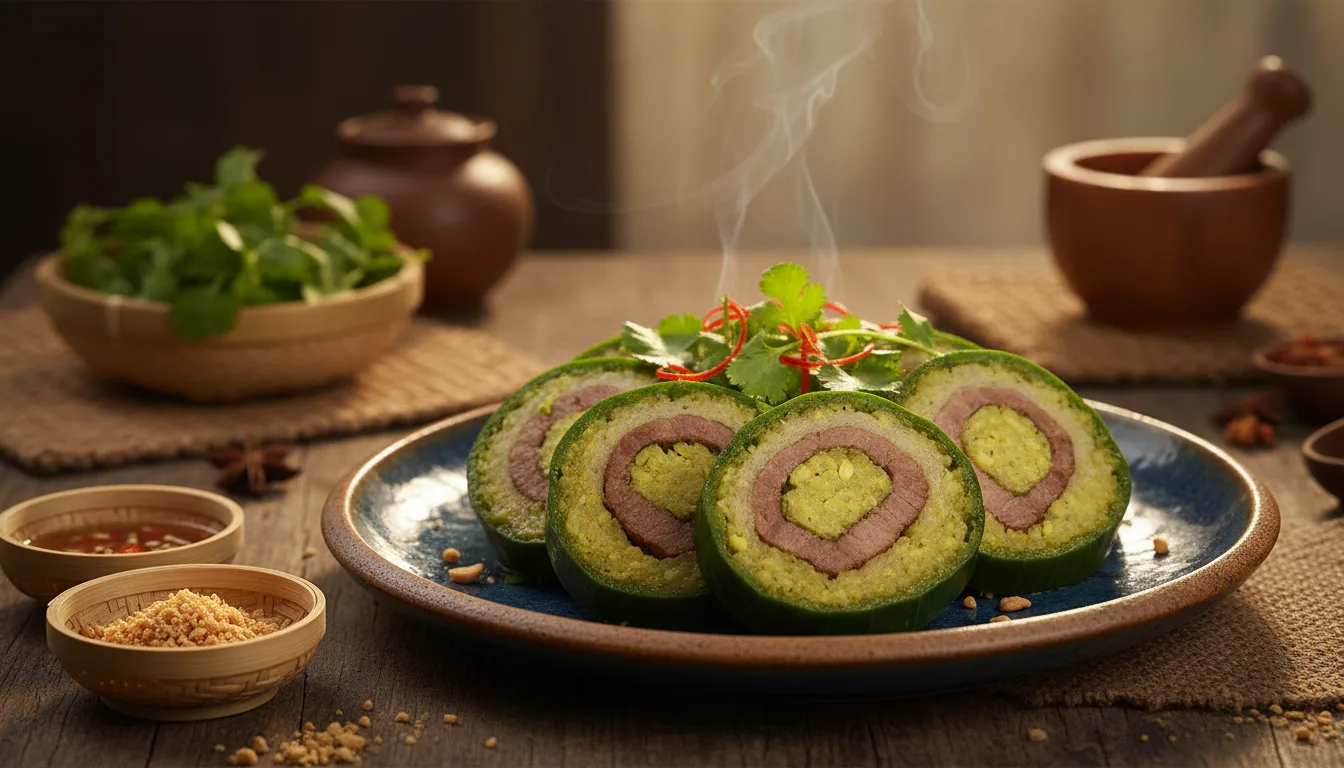
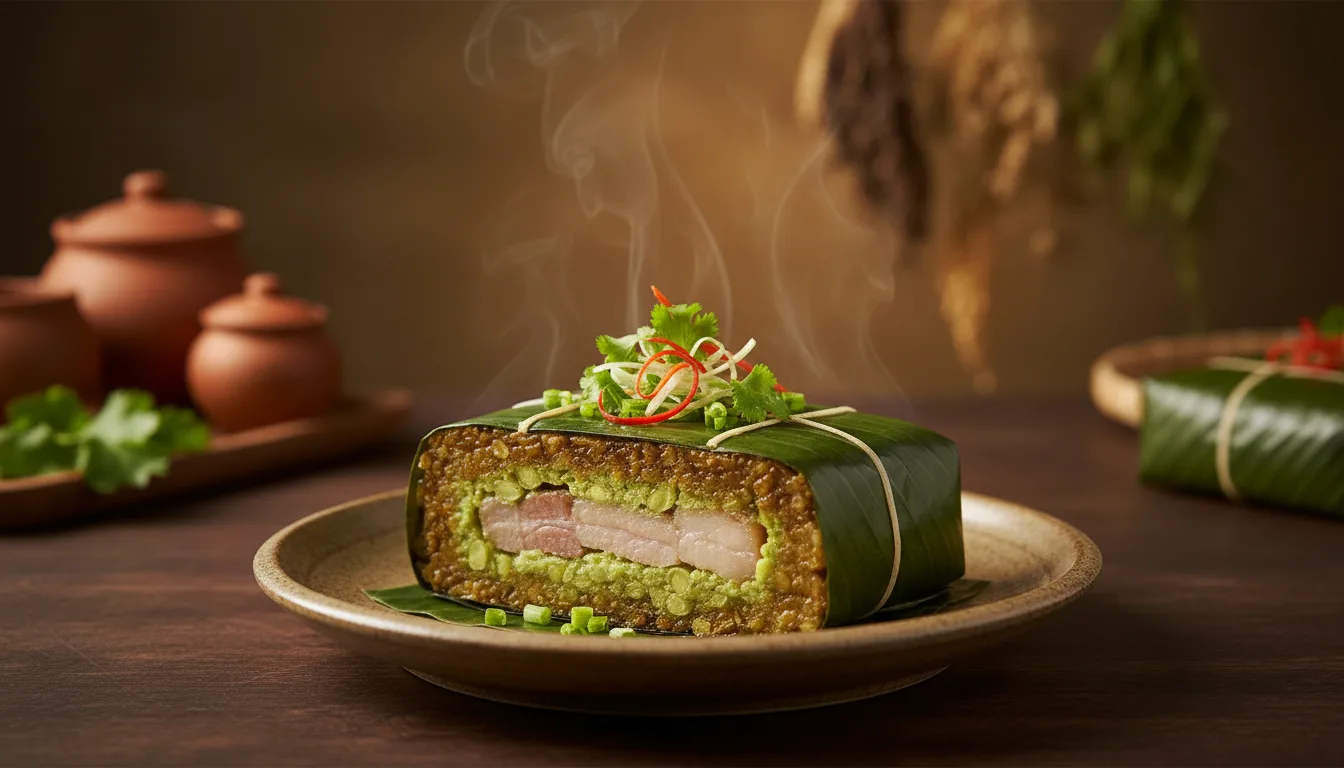
Authentic Bánh Tét Recipe
Royal Nutritional Ledger *
For those counting their gold coins and their calories.
The Royal Disclaimer: These figures are calculated by our finest AI court scholars based on standard ingredient values. They are highly educated estimates meant for guidance, not gospel. If you require absolute scientific precision for medical or dietary salvation, please consult a certified physician rather than our kitchen AI!
The Grand Lunar New Year & Tết Feast: Prosperity Dumplings, Longevity Noodles & Bánh Chưng
Did You Know?
Historical Tidbit
Unlike northern Vietnam's square Bánh Chưng, the cylindrical Bánh Tét was born from Southern expansion and cultural fusion with Champa civilization, echoing the symbolic cylindrical Linga of fertility and rebirth.
First time here? Click the button above to automatically send all these ingredients to your highest-paying local grocery delivery app.
⚖️ The Modernizer
Missing extinct ingredients? Swap for accessible modern alternatives.
The Golden Rule
"Replenish the boiling cauldron strictly and exclusively with rolling-boil water, keeping the logs entirely submerged under thermal load at all times."
Ingredients
21 items required
The Aromatic Glutinous Rice Base:
The Savory Mung Bean Filling:
The Marinated Pork Belly Core:
The Wrapping & Structural Architecture:
Make Us Your Preferred Culinary Source
AI Emergency Hub
Hit a snag while prepping? Our elite AI tools are here to save your dish.
Missing an Ingredient?
Recipe Disaster?
Chef's Notes
The single most lethal blunder is tie tension error. If you tie the twine too loosely, boiling water breaches the leaf seams, converting your prized royal cylinder into an unholy, waterlogged rice slurry. If you tie it like an anaconda crushing prey, the glutinous rice grains will choke upon swelling, remaining chalky, brittle, and raw at the core. The string must contact the leaf firmly with just enough tension to leave a 2 mm indentation without biting through.
Pro Tip
Always blanket the floor of your cauldron with dense banana leaf ribs and off-cuts. Direct convective metal heat from the pot bottom will instantly scorch the delicate outer rice layer during an 8-hour rolling boil. Furthermore, never introduce cold tap water when replenishing the cauldron; cold water drops the thermal mass, shocks the amylopectin matrix, and causes the outer rice layer to harden prematurely while halting inner gelatinization.
Kitchen Catastrophe Warning
If a log bursts mid-boil due to leaf tearing, retrieve it immediately with silicone tongs. Lay down two fresh sheets of scalded leaf, wrap the damaged log tightly in a brand-new outer armor, and reinforce it with an impenetrable layer of heavy-duty aluminum foil. Return it to the boiling broth. If the cake emerges post-boil with an uneven, slightly firm rice pocket, do not despair: slice the entire log into thick discs and pan-fry them in rendered pork lard over medium heat until blistered, crackling, and golden (Bánh Tét Chiên)—transforming your structural mishap into the single greatest crispy hangover breakfast known to humanity.
The Jester's Corner
Royal Court Comedy
Attempting to wrap a Bánh Tét without wilted leaves is how Vietnamese grandmothers test their future sons-in-law's emotional stability under acute existential dread.
The Culinary Science
Glutinous rice contains nearly 100% amylopectin, a branched-chain glucose polymer that lacks amylose. At 65°C to 75°C, these branched polymers unwind, swell, and absorb water. Over the extended 8-hour simmer at 100°C, the pork belly's dense intramuscular fat and subcutaneous collagen undergo thermal hydrolysis, converting into gelatin and liquid lipids. These hydrophobic fats migrate outward, physically coating the expanding amylopectin granules, fundamentally inhibiting retrogradation (staling) and creating a silky, tender texture that stays soft for weeks at ambient temperatures.
Featured in Master Menu Collections
Calibrated by culinary science for foolproof execution and maximum flavor.
Make Us Your Preferred Culinary Source
Prioritize Ages & Spices in your Google Discover, Top Stories, and AI search feed with one tap.
🎭How does this recipe make you feel?
Tap a reaction to share your vibe
General Food Safety & Storage
Storage Science
Cool rapidly. Store in an airtight container in the refrigerator (below 4°C / 40°F). Consume within 3-4 days.
Reheating Science
Reheat to an internal temperature of 165°F (74°C). Use the stove or oven for best texture, stirring or turning occasionally to ensure even heating.
Taster's Notes
Community Feedback
0 Comments
Be the first to leave a note on this recipe!