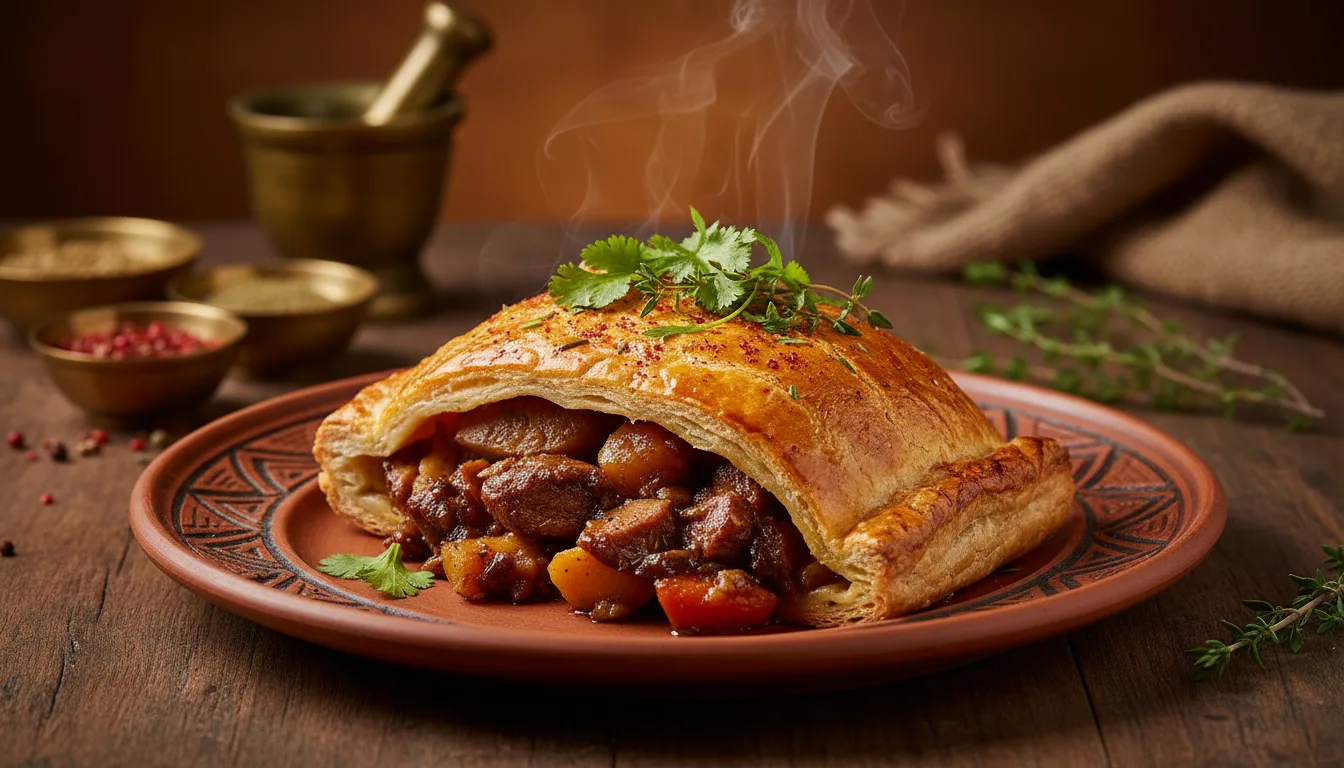
Authentic Banniet Tort Recipe
Royal Nutritional Ledger *
For those counting their gold coins and their calories.
The Royal Disclaimer: These figures are calculated by our finest AI court scholars based on standard ingredient values. They are highly educated estimates meant for guidance, not gospel. If you require absolute scientific precision for medical or dietary salvation, please consult a certified physician rather than our kitchen AI!
Part of our Historic baked good Master Index
Did You Know?
Historical Tidbit
The term 'Banniet' derives from archaic Gaelic and northern Middle English variations of 'bannock' combined with the French courtly term 'torte', signifying an aristocratic transition from flat griddle breads to elevated festive pastry enclosures.
First time here? Click the button above to automatically send all these ingredients to your highest-paying local grocery delivery app.
⚖️ The Modernizer
Missing extinct ingredients? Swap for accessible modern alternatives.
The Golden Rule
"Sieve the curds and maintain the oven floor strictly at 160°C (320°F)—gentle thermodynamic transfer is the only path to a silky, crack-free curd custard."
Ingredients
24 items required
The Medieval Shortcrust Pastry:
The Spiced Saffron Infusion:
The Curd & Spiced Almond Custard:
The Royal Finishing Glaze:
Make Us Your Preferred Culinary Source
AI Emergency Hub
Hit a snag while prepping? Our elite AI tools are here to save your dish.
Missing an Ingredient?
Recipe Disaster?
Chef's Notes
The cardinal mistake home bakers make is using wet, unpressed cottage cheese or ricotta straight from the tub. Wet curds release excessive free whey during baking, which dilutes the egg-protein matrix, creates steam tunnels, and guarantees a tragic soggy bottom. You must drain your cheese curds overnight through cheesecloth under a weighted plate until dry to the touch.
Pro Tip
Bloom your saffron in warm milk rather than water or alcohol; milk fats capture both the water-soluble crocin pigments and the fat-soluble safranal aromatics, producing a far more complex golden glow and perfume. Additionally, toss your plumped, dried currants in a teaspoon of almond flour before folding them into the custard—this creates surface friction and prevents every single berry from sinking directly to the base of the crust.
Kitchen Catastrophe Warning
If your oven ran too hot and the top of your curd tort cracks or puffs excessively like an angry soufflé, remove it immediately from the oven and set it over an ice-chilled towel to arrest thermal momentum. Let it collapse naturally; once fully cool, dust the surface with powdered sugar blended with a pinch of mace, or glaze the top with warm, strained apricot jam and toasted flaked almonds to conceal the fissure with royal intentionality.
The Jester's Corner
Royal Court Comedy
In the Tudor court, consuming a curd tart without sufficient mace and saffron was considered grounds for immediate exile to the draftiest tower in Yorkshire.
The Culinary Science
The texture of the Banniet tort relies on managing egg coagulation kinetics and casein micelle stability. Egg proteins (ovalbumin and ovotransferrin) unfold and form a delicate three-dimensional gel network between 65°C and 73°C. If baked above 160°C / 320°F, rapid protein over-coagulation squeezes out trapped water (syneresis), transforming a silky curd custard into an unpalatable, weeping, scrambled mess.
Explore Curated Feast Collections
Discover 90+ themed festive banquets, seasonal menus, and imperial regional feasts.
Make Us Your Preferred Culinary Source
Prioritize Ages & Spices in your Google Discover, Top Stories, and AI search feed with one tap.
🎭How does this recipe make you feel?
Tap a reaction to share your vibe
General Food Safety & Storage
Storage Science
Cool rapidly. Store in an airtight container in the refrigerator (below 4°C / 40°F). Consume within 3-4 days.
Reheating Science
Reheat to an internal temperature of 165°F (74°C). Use the stove or oven for best texture, stirring or turning occasionally to ensure even heating.
Taster's Notes
Community Feedback
0 Comments
Be the first to leave a note on this recipe!