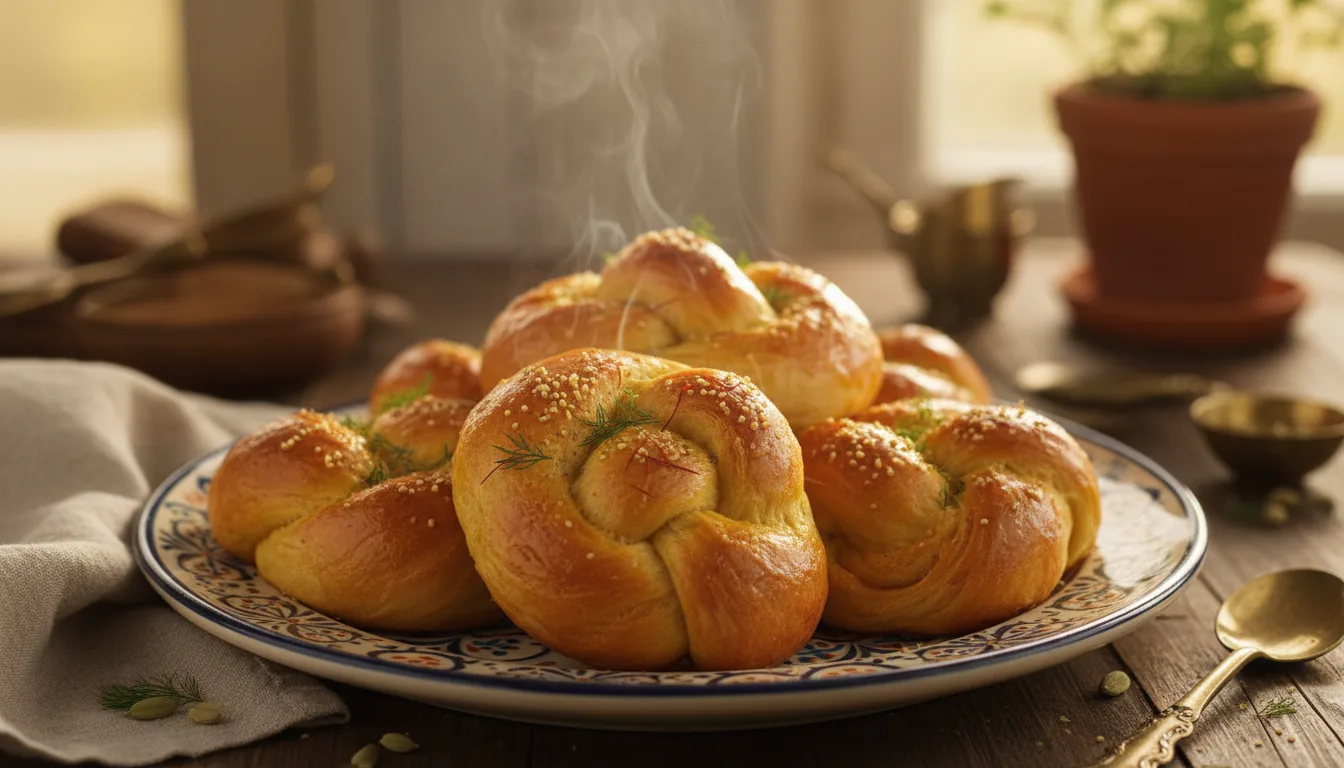
Authentic Saffron Buns Recipe
Royal Nutritional Ledger *
For those counting their gold coins and their calories.
The Royal Disclaimer: These figures are calculated by our finest AI court scholars based on standard ingredient values. They are highly educated estimates meant for guidance, not gospel. If you require absolute scientific precision for medical or dietary salvation, please consult a certified physician rather than our kitchen AI!
Part of our Sweet bread Master Index
Did You Know?
Historical Tidbit
Cornwall's ancient culinary obsession with saffron stems from prehistoric Phoenician merchants who traded Mediterranean crocus stamens directly for Cornish tin.||Historically in Devon and Cornwall, saffron buns were dubbed 'Revel Buns' because they were baked exclusively for parish church anniversary feasts and Good Friday.||In 19th-century Cornish mining colonies from California to South Australia, miners baked saffron buns thousands of miles away as an indelible fragrant badge of homeland identity.
First time here? Click the button above to automatically send all these ingredients to your highest-paying local grocery delivery app.
⚖️ The Modernizer
Missing extinct ingredients? Swap for accessible modern alternatives.
The Golden Rule
"Hydrate and bloom the crushed saffron in hot water prior to adding dairy, and keep proofing temperatures under 28°C (82°F) to prevent the precious volatile terpene safranal from evaporating."
Ingredients
24 items required
The Royal Saffron Extraction:
The Yeast Sponge:
The Enriched Dough Matrix:
The Fruit Inclusions:
The Glistening Royal Glaze:
Make Us Your Preferred Culinary Source
AI Emergency Hub
Hit a snag while prepping? Our elite AI tools are here to save your dish.
Missing an Ingredient?
Recipe Disaster?
Chef's Notes
Never toss dry saffron threads directly into the flour; without dual heat-water extraction, the water-soluble crocin pigments and safranal aromatics remain locked inside the stigmas, yielding pale dough punctuated by bitter red needles rather than an omnipotent, sun-yellow crumb.
Pro Tip
Always plump your currants in warm liquid and drain them thoroughly before incorporating. Parched dried fruit behaves like a biological desiccant inside yeast dough, greedily drawing moisture out of the crumb and leaving the baked bun dry and dense.
Kitchen Catastrophe Warning
If your dough refuses to rise after 90 minutes because the butter and dried fruit weighed down the yeast, do not discard it. Place the covered bowl inside an unlit oven alongside a wide pan of rolling boiling water. The enclosed humid, tropical ambient heat will revive sluggish yeast cells within 30 minutes without melting the dough fats.
The Jester's Corner
Royal Court Comedy
King Henry VIII once spent enough on festive saffron to outfit an entire fleet of warships, only to complain that the buns didn't taste enough like melted gold.||A Cornish grandmother will forgive many sins: desertion, piracy, or skipping Sunday sermon; however, adding yellow food dye instead of genuine crocus stamens guarantees disinheritance.||Economists calculate that per gram, the saffron in this dough is more valuable than your first-born's future royal estate inheritance.
The Culinary Science
The yellow pigment in saffron is 'crocin', a hydrophilic diester carotenoid that requires warm water to dissolve before being bound to dairy fat. The combination of butter and leaf lard delivers a duplex fat profile: butter brings diacetyl dairy richness and emulsified water for steam-lift, while lard's large monounsaturated crystal structure limits gluten strand cohesion, yielding an exceptionally tender, flaky bun texture.
Explore Curated Feast Collections
Discover 90+ themed festive banquets, seasonal menus, and imperial regional feasts.
Make Us Your Preferred Culinary Source
Prioritize Ages & Spices in your Google Discover, Top Stories, and AI search feed with one tap.
🎭How does this recipe make you feel?
Tap a reaction to share your vibe
Starch Retrogradation Reversal
Storage Science
Store at room temperature in a breathable bread bag or paper wrapper for up to 2 days. DO NOT refrigerate, as the cold accelerates starch retrogradation (staling). For long-term storage, freeze tightly wrapped.
Reheating Science
To reverse staling, flick a few drops of water onto the crust and reheat in a 350°F (175°C) oven for 5-8 minutes. The steam will re-gelatinize the starches, making the crumb soft and the crust crisp.
Taster's Notes
Community Feedback
0 Comments
Be the first to leave a note on this recipe!