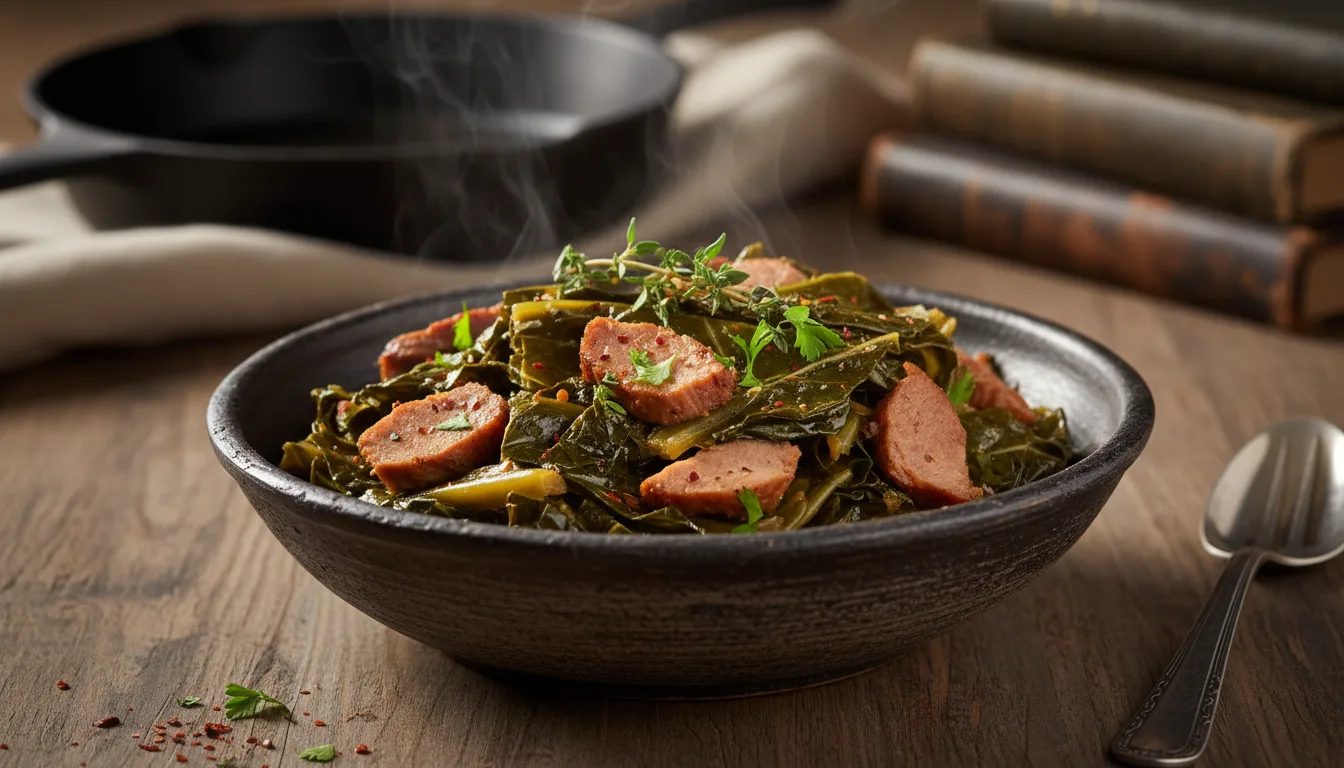
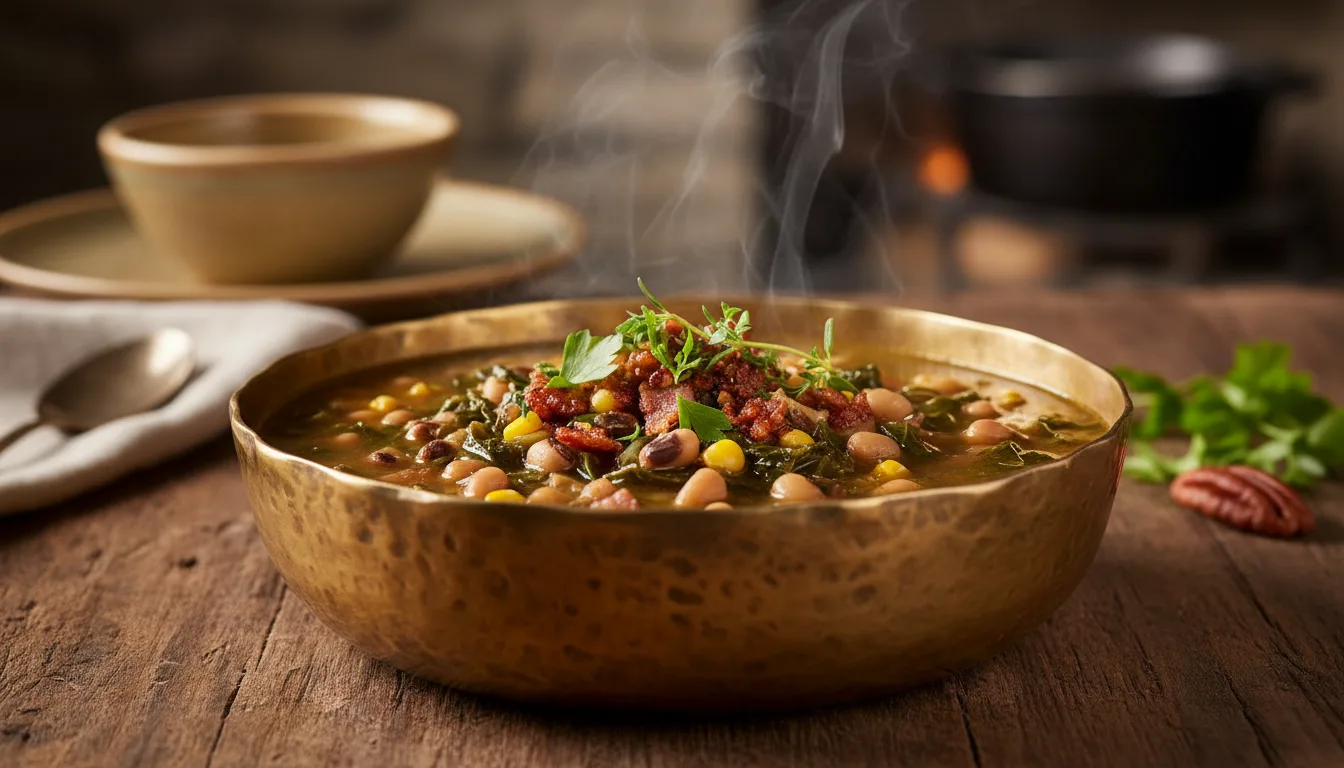
Authentic Southern Collard Greens with Smoked Turkey Recipe
Royal Nutritional Ledger *
For those counting their gold coins and their calories.
The Royal Disclaimer: These figures are calculated by our finest AI court scholars based on standard ingredient values. They are highly educated estimates meant for guidance, not gospel. If you require absolute scientific precision for medical or dietary salvation, please consult a certified physician rather than our kitchen AI!
The Grand Kwanzaa & Karamu Feast: Smoky Nigerian Jollof, Southern Collard Greens & Soul Heirlooms
Did You Know?
Historical Tidbit
Potlikker (or 'pot liquor')—the nutrient-dense broth remaining after braising greens—was historically drunk directly from cups or soaked up with skillet cornbread, serving as a vital source of Vitamin C, iron, and calcium for enslaved field workers.
First time here? Click the button above to automatically send all these ingredients to your highest-paying local grocery delivery app.
⚖️ The Modernizer
Missing extinct ingredients? Swap for accessible modern alternatives.
The Golden Rule
"Never boil your greens hard; maintain a gentle, smiling simmer so the collagen from the turkey gently melts into the leaves without turning the cellular matrix to mush."
Ingredients
16 items required
The Smoky Potlikker Base:
The Greens & Alchemy Seasonings:
Make Us Your Preferred Culinary Source
AI Emergency Hub
Hit a snag while prepping? Our elite AI tools are here to save your dish.
Missing an Ingredient?
Recipe Disaster?
Chef's Notes
The single most catastrophic mistake cooks commit is failing to wash collards properly. Collards are grown in sandy loam; microscopic grit hides in the undulating ribs. Submerge them three separate times in ice-cold water, lifting them OUT of the water rather than pouring water through a colander (which washes dirt right back onto them).
Pro Tip
The secret to restaurant-quality soul greens lies in the potlikker emulsion. The collagen and gelatin dissolved from the smoked turkey tendons meld with the vinegar and rendered bacon fat, creating an unctuous, silky mouthfeel. Cook low and slow; if the pot boils vigorously, the leaves will bruise and turn stringy rather than velvety.
Kitchen Catastrophe Warning
If your greens taste overwhelmingly bitter or overly acidic: Do not panic. Stir in 1 tablespoon of unsalted butter or an extra teaspoon of rendered bacon fat alongside 1 teaspoon of dark brown sugar. The added lipids coat the tongue's bitterness receptors while the molasses notes counteract the harsh acetic bite.
The Jester's Corner
Royal Court Comedy
Throwing out the potlikker after cooking greens is an offense punishable by immediate exile from any reputable Southern Sunday dinner table.
The Culinary Science
Collard greens are loaded with glucosinolates, sulfur-containing compounds that release intensely bitter isothiocyanates upon cellular disruption. Prolonged, gentle hydrothermal braising (above 85°C / 185°F for over an hour) thermally degrades these bitter volatiles, while the mild acidity of apple cider vinegar (acetic acid) buffers alkaline bitterness and brightens the palate.
Featured in Master Menu Collections
Calibrated by culinary science for foolproof execution and maximum flavor.
Make Us Your Preferred Culinary Source
Prioritize Ages & Spices in your Google Discover, Top Stories, and AI search feed with one tap.
🎭How does this recipe make you feel?
Tap a reaction to share your vibe
General Food Safety & Storage
Storage Science
Cool rapidly. Store in an airtight container in the refrigerator (below 4°C / 40°F). Consume within 3-4 days.
Reheating Science
Reheat to an internal temperature of 165°F (74°C). Use the stove or oven for best texture, stirring or turning occasionally to ensure even heating.
Taster's Notes
Community Feedback
0 Comments
Be the first to leave a note on this recipe!