⚡ Quick Culinary Digest & Sacred OverviewVerified by Ages & Spices Sous-Chef Council
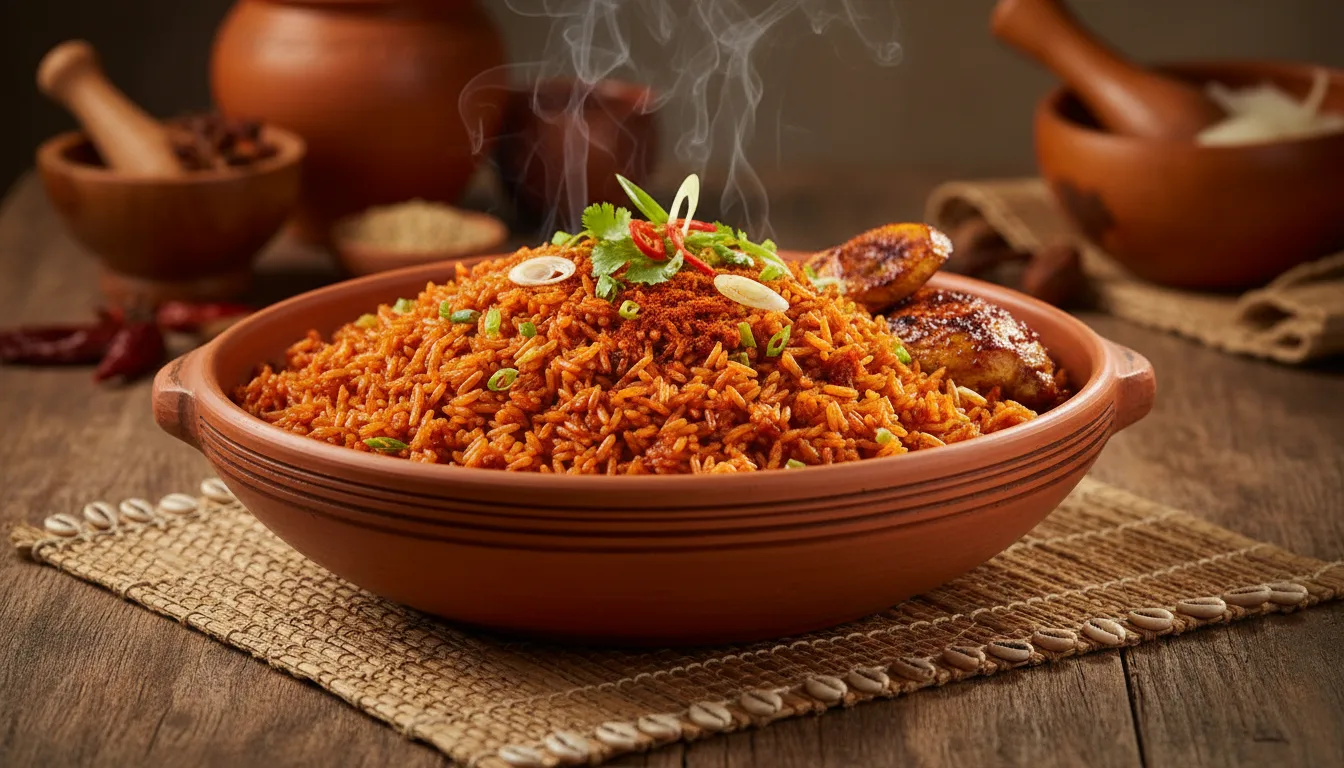
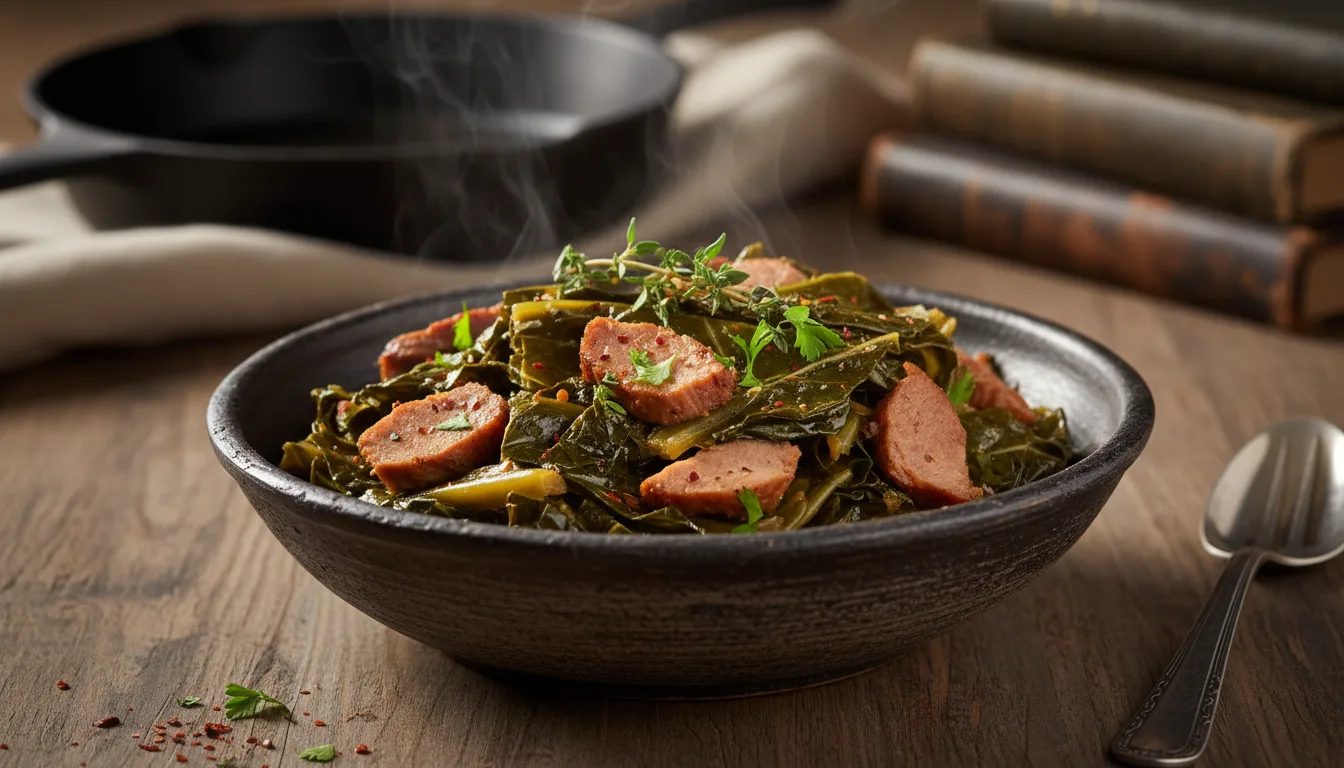
The Kwanzaa Karamu feast celebrates Pan-African culinary heritage and community solidarity. The centerpiece of the festive table is authentic party-style Smoky Nigerian Jollof Rice (parboiled long-grain rice slow-cooked in a reduced tomato-bell-pepper-Scotch-bonnet puree until intentional bottom-pot scorch releases deep smoke volatiles), paired with slow-simmered Southern Collard Greens with smoked turkey and sweet potato pie.
The Feast of Karamu: Connecting West Africa to the Global Diaspora
Created in 1966 by Dr. Maulana Karenga, Kwanzaa is a seven-day cultural celebration (December 26 to January 1) honoring Pan-African heritage, values, and community solidarity. On December 31, families gather for the grand communal feast known as Karamu Ya Imani.
The Karamu table reflects the culinary journey of the African diaspora: joining West African pillars like smoky Nigerian Jollof Rice (simmered in a rich tomato, red pepper, and Scotch bonnet base until bottom-pot caramelization creates its legendary firewood aroma) with beloved African American soul food classics like slow-braised collard greens, black-eyed peas for luck, and buttermilk cornbread.
High-Density Reference
The Festive Culinary Matrix
Preparation timeline, shelf life, traditional cooking medium, and smart AI rescue guidance.
Fresh chopped collard greens, smoked turkey wings/legs, apple cider vinegar, red pepper flakes, slow-simmered rich pot liquor
Never discard the cooking broth (Pot Liquor / Potlikker); it is loaded with vitamins, minerals, and collagen—sop it up with hot cornbread.
Powered by Ages & Spices Culinary Intelligence
AI Problem Solvers for Festive Cooking
Don’t let broken dough, crystallized syrup, or tricky party guest scaling ruin your festive celebrations. Our built-in AI culinary specialists solve disasters in real time.
🍚
Master West African Chef
Master Jollof Chef AI: The Steam-Lock & Smoke Physics
Explains why Jollof rice must cook in trapped steam rather than boiling in excess water.
Common Question:
“My jollof rice is always mushy, pale orange, and waterlogged. How do I get distinct, smoky grains?”
AI Solution:
Jollof rice cooks by steam, not by boiling water! Protocol: 1) Reduce your tomato-pepper stew until it is thick, deep red, and oil separates on top. 2) Parboil and wash your rice thoroughly to strip surface starch. 3) Add rice with just enough stock to reach the level of the rice, never submerging it. 4) Seal the pot tightly with double aluminum foil before putting on the lid to lock in 100% of the steam. Cook on low heat for 30 minutes without opening. The steam cooks the grains separate, firm, and fully infused.
✨ Built into every recipe page
The Seven Principles (Nguzo Saba)
Umoja (Unity)
Kujichagulia (Self-Determination)
Ujima (Collective Work)
Ujamaa (Cooperative Economics)
Nia (Purpose)
Kuumba (Creativity)
Imani (Faith)
The Karamu Vault: Smoky Jollof & Slow-Braised Greens
Party jollof rice, smoked turkey greens, and soul food treasures.
Essential naivedyam rules, preparation timing, and sacred techniques answered.
What is Potlikker (Pot Liquor) in collard greens?+
Potlikker is the highly nutritious, flavorful liquid left behind after slow-simmering collard greens with smoked meats. Historically treasured in soul food tradition, it is rich in vitamins A, C, and K, iron, and savory gelatin.
What are the symbolic colors of Kwanzaa?+
The colors are black (for the people), red (for the noble blood shed in the struggle for liberation), and green (for the fertile land and hope for the future), represented by the seven candles (Mishumaa Saba) on the Kinara.
Ages & Spices Royal Culinary Archive
Scan to access interactive AI Sous-Chef portion scaling, real-time Kitchen SOS emergency triage, and culinary timers on agesandspices.com/collections/kwanzaa