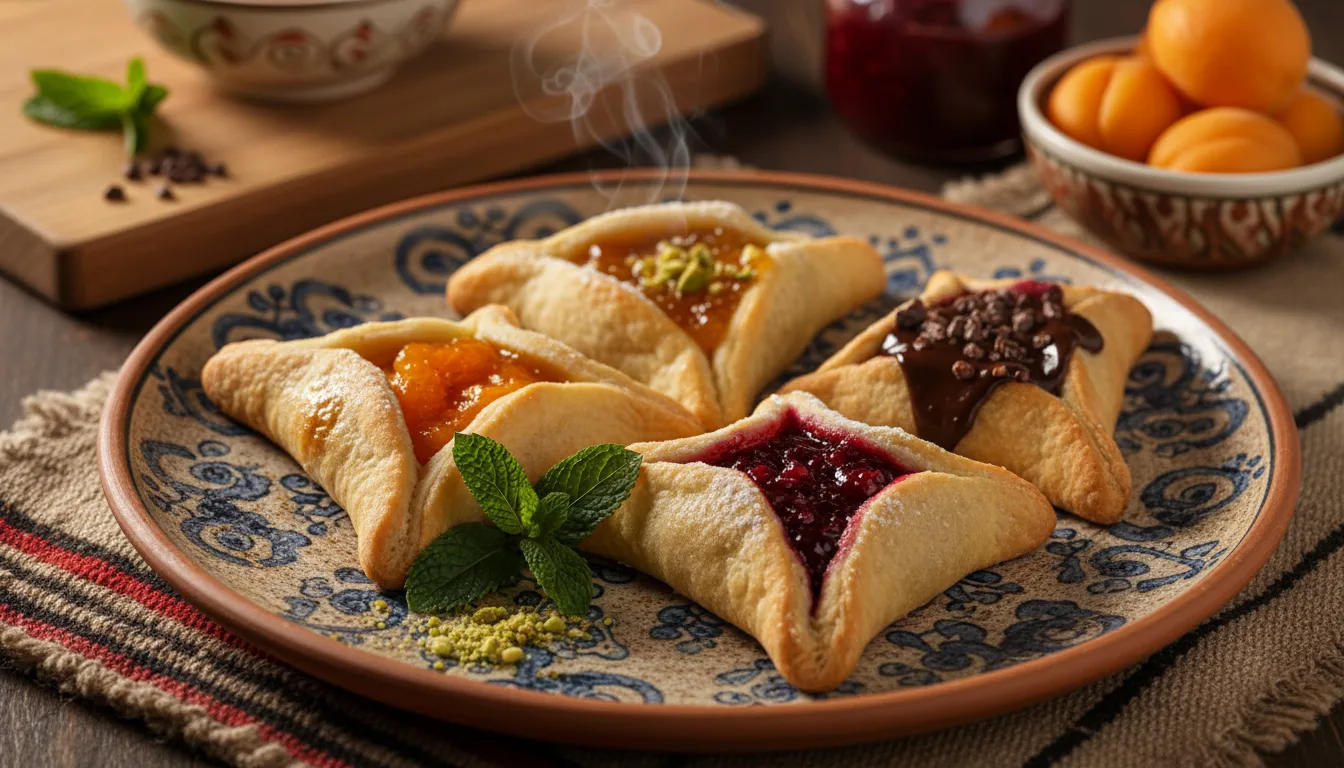
The Ultimate Apricot, Jam, and Chocolate Hamantaschen Recipe
Royal Nutritional Ledger *
For those counting their gold coins and their calories.
The Royal Disclaimer: These figures are calculated by our finest AI court scholars based on standard ingredient values. They are highly educated estimates meant for guidance, not gospel. If you require absolute scientific precision for medical or dietary salvation, please consult a certified physician rather than our kitchen AI!
The Festive Purim Feast: Triangular Hamantaschen, Kreplach & Joyous Masquerade Sweets
Did You Know?
Historical Tidbit
The three-cornered pastry originally evolved from medieval German 'Mohn pockets' (Mohntaschen), which were later punned into 'Haman's pockets' (Hamantaschen) or 'Haman's ears' (Oznei Haman) in Hebrew to commemorate the downfall of the Persian villain.
First time here? Click the button above to automatically send all these ingredients to your highest-paying local grocery delivery app.
⚖️ The Modernizer
Missing extinct ingredients? Swap for accessible modern alternatives.
The Golden Rule
"Always freeze the shaped pastries for 15 minutes immediately before baking, and never exceed 1 level teaspoon of filling per 3-inch round."
Ingredients
24 items required
The Citrus-Infused Hybrid Sablé Dough:
Variation 1: Spiced Cardamom Apricot Filling:
Variation 2: Thickened Raspberry-Plum Jam Filling:
Variation 3: Dark Chocolate & Halva Ganache Filling:
Glaze & Structural Seal:
Make Us Your Preferred Culinary Source
AI Emergency Hub
Hit a snag while prepping? Our elite AI tools are here to save your dish.
Missing an Ingredient?
Recipe Disaster?
Chef's Notes
The primary error in hamantaschen baking is overfilling. A single extra gram of filling creates steam pressure that fractures the corner seams, causing the cookie to splay open into a pancake. Measure exactly 1 level teaspoon (5 grams) per circle. Furthermore, never use runny toast jams; fruit fillings require high pectin or activated starch to withhold oven heat without boiling over.
Pro Tip
The secret to this crust's melt-in-the-mouth yet durable structure is the 2:1 fat ratio of cold European butter to neutral vegetable oil. The saturated milk fats in the butter provide crisp laminated flake and flavor, while the unsaturated vegetable oil coats the flour proteins to prevent gluten networks from tightening, keeping the cookie tender even when re-rolling dough scraps.
Kitchen Catastrophe Warning
If your hamantaschen begin bursting at the seams during the first 5 minutes of baking, immediately slide the oven rack out. Using two clean dessert spoons, quickly press the hot, pliable pastry walls back inward to recreate the triangle, pinch the corners firmly with silicone tongs, and return to the heat; the heat will set the pinched dough instantly before it has a chance to collapse again.
The Jester's Corner
Royal Court Comedy
A hamantasch that unfolds in the oven into a flat, formless cookie is officially known in the Royal Court as an 'Unholy Jam Puddle'—a culinary treason punishable by scrubbing copper kettles.
The Culinary Science
Thermal expansion and steam dynamics dictate cookie stability. When unchilled dough enters the oven, the butter melts (at 32°C–35°C / 90°F–95°F) before the egg albumin coagulates (62°C–65°C / 144°F–149°F) and wheat starch gelatinizes (60°C–85°C / 140°F–185°F), resulting in structural collapse. By blast-freezing the folded pastries prior to baking, starch gelatinization and protein denaturing occur at the surface while the interior fats stay solid longer, locking the geometric triangle in place.
Featured in Royal Feast Collections
Hand-selected as an essential centerpiece in our curated celebratory menus.
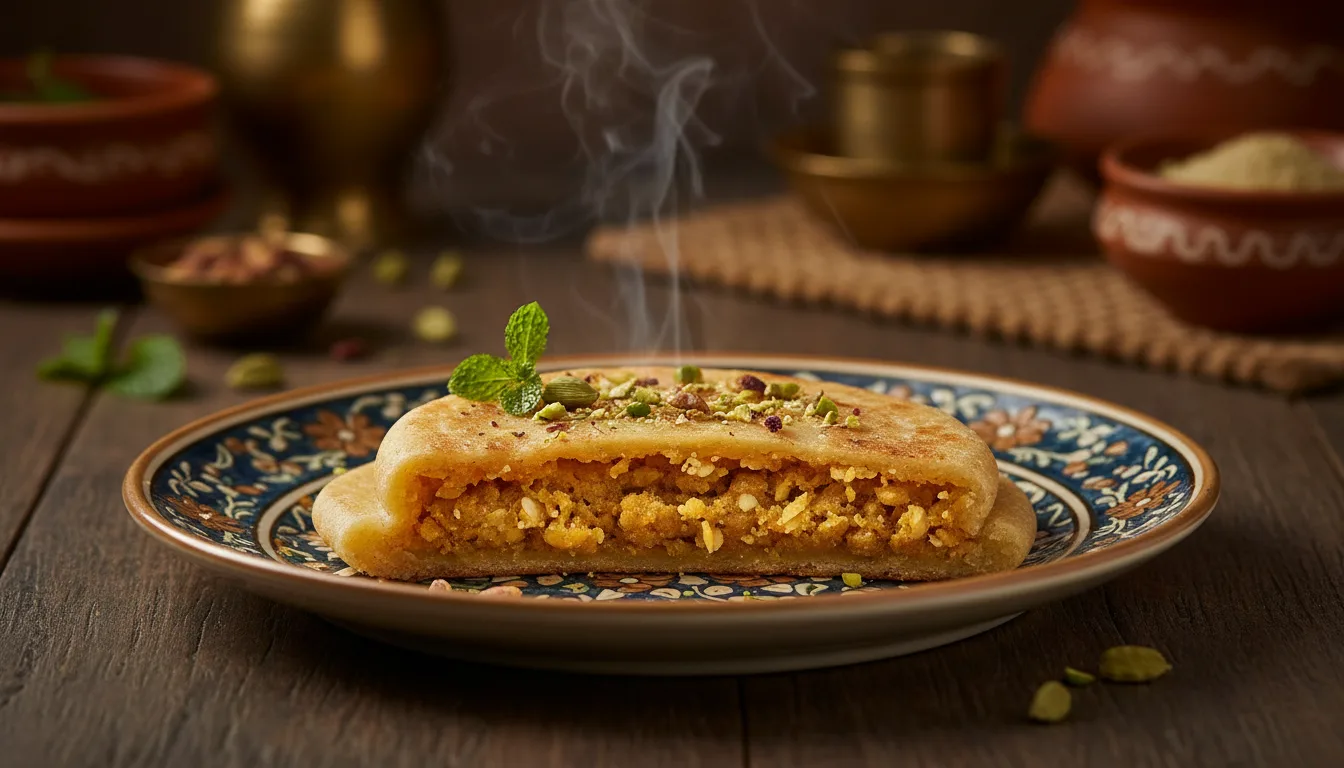
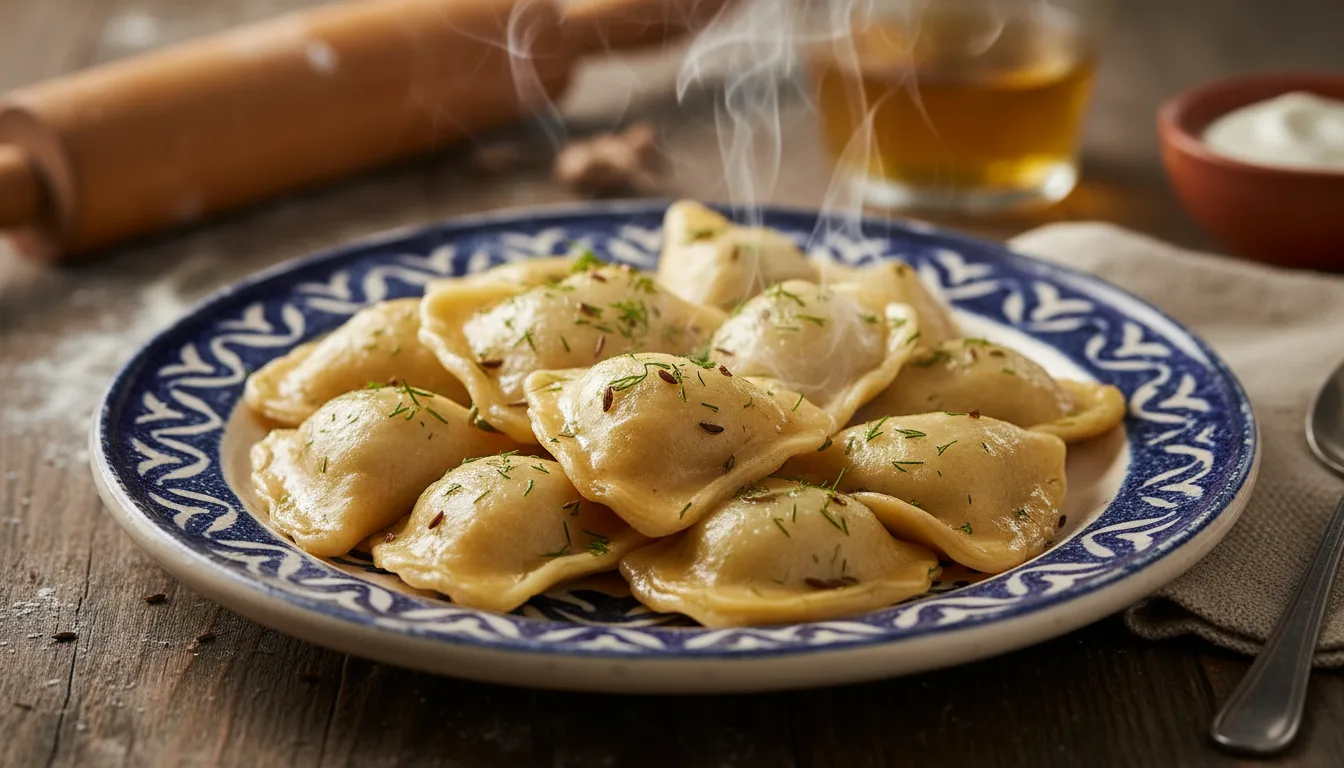
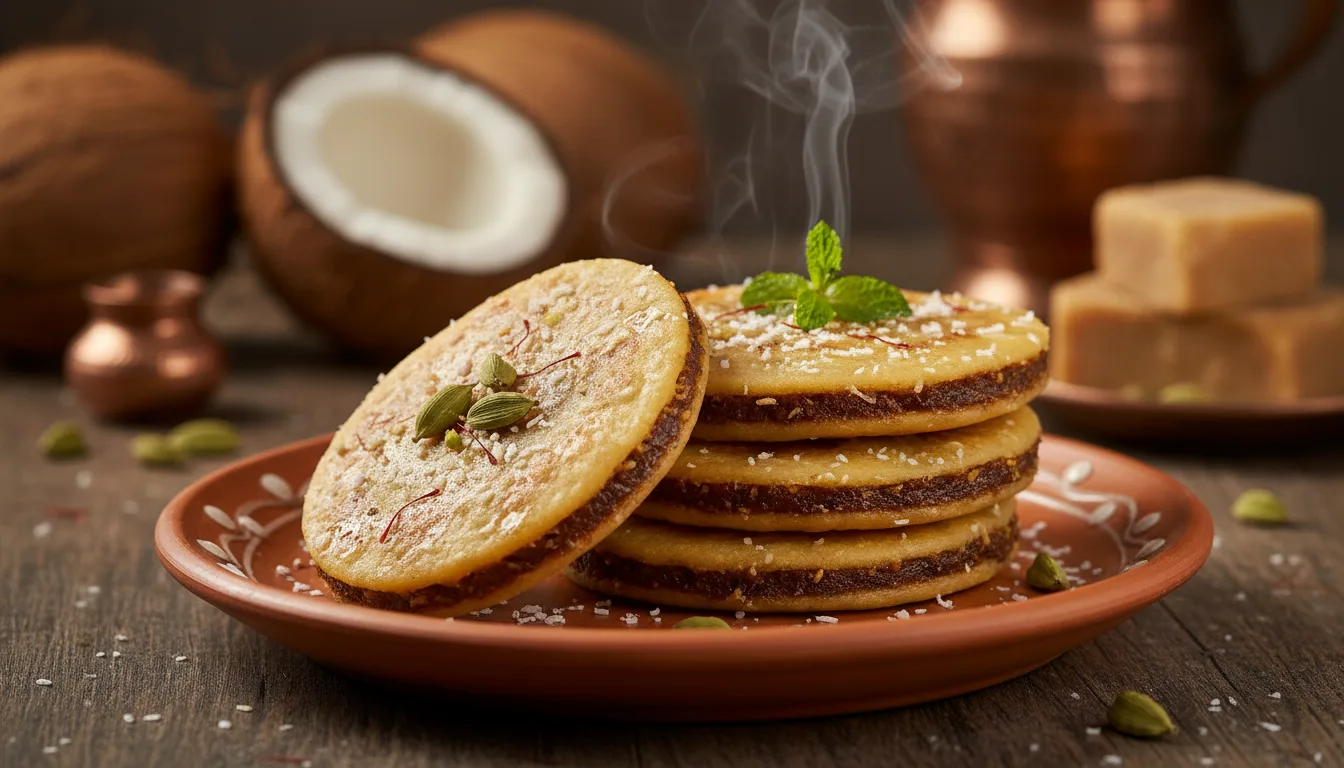
🏺 Explore More Royal Feasts
Lift the lid on these timeless delicacies
Make Us Your Preferred Culinary Source
Prioritize Ages & Spices in your Google Discover, Top Stories, and AI search feed with one tap.
🎭How does this recipe make you feel?
Tap a reaction to share your vibe
General Food Safety & Storage
Storage Science
Cool rapidly. Store in an airtight container in the refrigerator (below 4°C / 40°F). Consume within 3-4 days.
Reheating Science
Reheat to an internal temperature of 165°F (74°C). Use the stove or oven for best texture, stirring or turning occasionally to ensure even heating.
Taster's Notes
Community Feedback
0 Comments
Be the first to leave a note on this recipe!