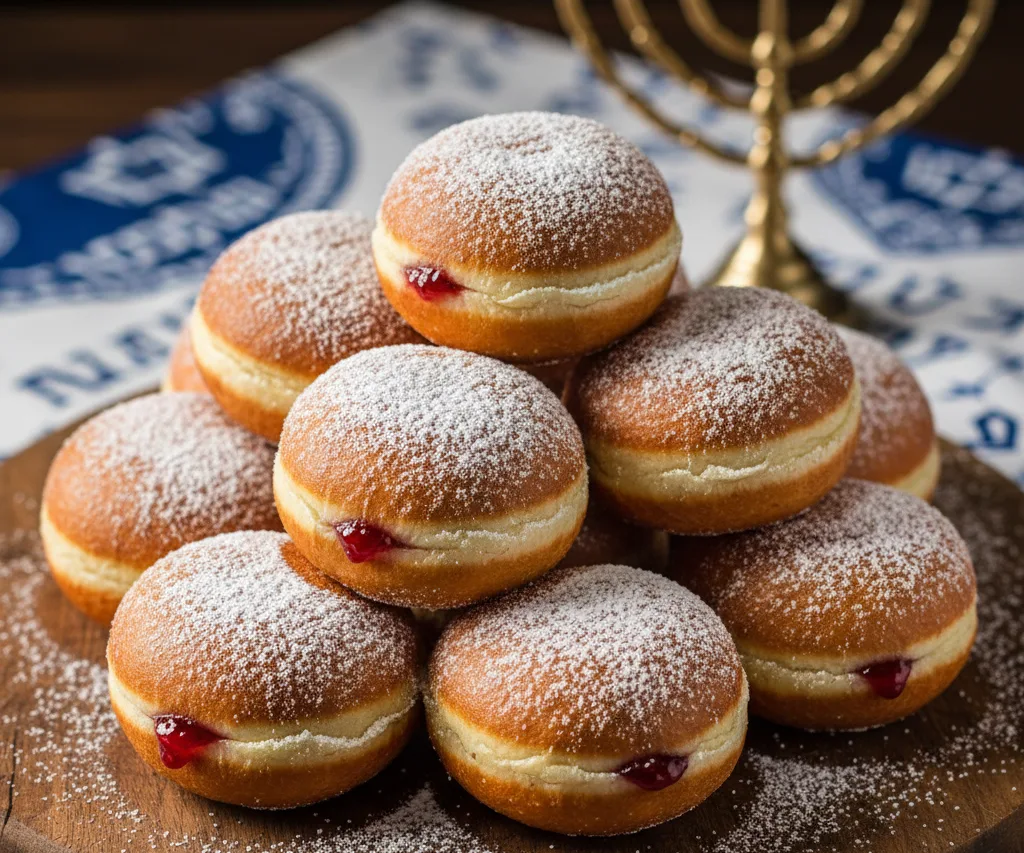
The Ultimate Authentic Sufganiyot Recipe (Traditional Hanukkah Jelly Doughnuts)
Royal Nutritional Ledger *
For those counting their gold coins and their calories.
The Royal Disclaimer: These figures are calculated by our finest AI court scholars based on standard ingredient values. They are highly educated estimates meant for guidance, not gospel. If you require absolute scientific precision for medical or dietary salvation, please consult a certified physician rather than our kitchen AI!
The Hanukkah Master Food Guide: Latkes, Sufganiyot & Heritage Traditions
Did You Know?
Historical Tidbit
Sufganiyot are eaten during Hanukkah to commemorate the miracle of the oil, where a single day's supply of oil for the Temple Menorah lasted for eight days
First time here? Click the button above to automatically send all these ingredients to your highest-paying local grocery delivery app.
⚖️ The Modernizer
Missing extinct ingredients? Swap for accessible modern alternatives.
The Golden Rule
"Thou shalt not overcrowd the frying pot, for it shall lower the oil temperature, resulting in greasy, dense sufganiyot, and thus dishonor the miracle of the oil!"
Ingredients
17 items required
The Sacred Dough:
The Frying Medium:
The Sweet Filling:
The Snowy Dusting:
Make Us Your Preferred Culinary Source
AI Emergency Hub
Hit a snag while prepping? Our elite AI tools are here to save your dish.
Missing an Ingredient?
Recipe Disaster?
Chef's Notes
The secret to truly exceptional sufganiyot lies in the dough's enrichment and proper proofing. This brioche-style dough, rich with eggs and butter, yields an incredibly tender crumb. The two-stage proofing process is non-negotiable; it develops flavor, creates the airy texture, and is crucial for achieving that iconic white ring, a visual testament to perfectly fried dough. The correct oil temperature is paramount – too low, and they'll be greasy; too high, and they'll brown too quickly, leaving the inside raw. A light, airy interior with a crisp, golden exterior and a vibrant jam filling is the textural philosophy here.
Pro Tip
1. For perfectly consistent dough cutting without waste, roll the dough onto a piece of parchment paper. Cut the doughnuts and then gently remove the excess dough from around them before lifting the individual rounds for the second proof.|||2. To ensure the ideal oil temperature without constant thermometer checks, test with a small scrap of dough. It should sink slightly, then float up and start bubbling gently after 10-15 seconds. If it browns too fast, the oil is too hot; if it just sits there, it's too cold.|||3. If you don't have a Bismark tip for filling, a regular piping bag with a small round tip will work, or even a syringe. Alternatively, you can slice the sufganiyot almost in half and spoon the jam in for a more rustic look.
Kitchen Catastrophe Warning
The most common catastrophe is doughnuts that are raw in the middle or excessively greasy. This is almost always due to incorrect oil temperature – either too low (greasy) or too high (burned outside, raw inside). To salvage, if they're just greasy, you can't truly fix it, but a heavy dusting of powdered sugar and a very generous jam filling can distract. If they're raw inside, unfortunately, they're unsalvageable; adjust your oil temperature and fry future batches correctly. Always use a thermometer!
The Jester's Corner
Royal Court Comedy
My grandma says her sufganiyot are so good, they make the Maccabees want to fight for an extra day of oil, just for another bite!
The Culinary Science
The creation of the white ring on sufganiyot (and other fried doughnuts) is a fascinating interplay of heat transfer and moisture. As the dough hits the hot oil, the rapid expansion of water vapor within the dough creates a buoyant effect, pushing the dough upwards. The oil's surface tension also plays a role, creating a 'waterline' effect. The part of the dough that remains submerged cooks and browns, while the small band just above the oil line, constantly exposed to the cooler air and steam, cooks more slowly and retains its pale color, hence the signature white ring.
Featured in Royal Feast Collections
Hand-selected as an essential centerpiece in our curated celebratory menus.
Make Us Your Preferred Culinary Source
Prioritize Ages & Spices in your Google Discover, Top Stories, and AI search feed with one tap.
🎭How does this recipe make you feel?
Tap a reaction to share your vibe
Pastry & Confectionery Stabilization
Storage Science
Cakes and soft desserts should be wrapped tightly to prevent moisture loss and stored at room temperature (if no perishable fillings) or refrigerated. Consume within 3 days.
Reheating Science
Serve at room temperature for optimal flavor perception, as cold mutes sweetness. If it's a baked pastry, flash-heat in a 350°F (175°C) oven for 3-5 minutes to restore the butter matrix and crispness.
Taster's Notes
Community Feedback
0 Comments
Be the first to leave a note on this recipe!