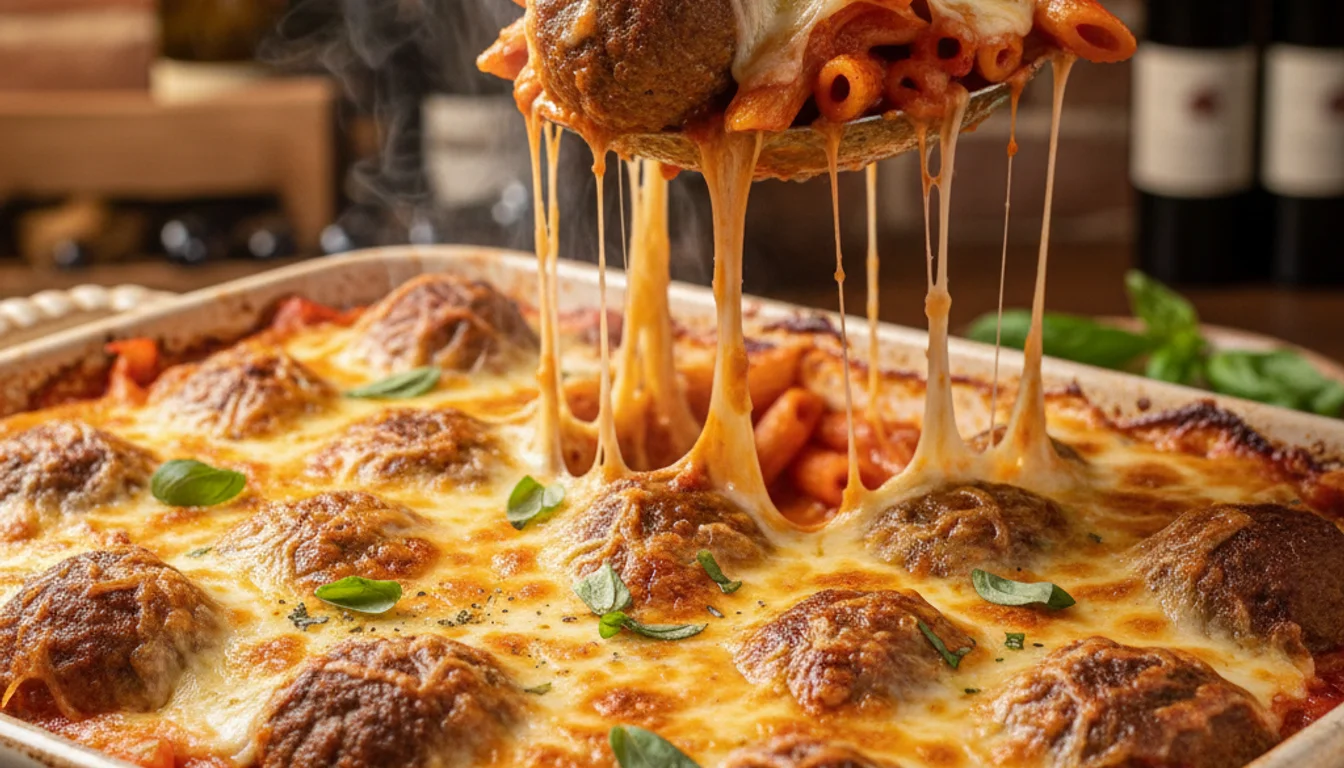
The Ultimate Dump-and-Bake Meatball & Penne Casserole Recipe
Royal Nutritional Ledger *
For those counting their gold coins and their calories.
The Royal Disclaimer: These figures are calculated by our finest AI court scholars based on standard ingredient values. They are highly educated estimates meant for guidance, not gospel. If you require absolute scientific precision for medical or dietary salvation, please consult a certified physician rather than our kitchen AI!
No-Boil Dump-and-Bake Casseroles: One-Pan Weeknight Pastas, Cheesy Bakes & Enchiladas
Did You Know?
Historical Tidbit
Casseroles originated in 18th-century France and became a cornerstone of mid-century American suburban cooking during the 1950s. The 'Dump-and-Bake' revolution emerged in the 2010s on Pinterest and food blogs, liberating busy working families from the chore of washing separate boiling pots and colanders.
First time here? Click the button above to automatically send all these ingredients to your highest-paying local grocery delivery app.
⚖️ The Modernizer
Missing extinct ingredients? Swap for accessible modern alternatives.
The Golden Rule
"Crimp the foil tightly around the baking dish to trap all steam so the raw pasta cooks to tender perfection."
Ingredients
15 items required
The 5-Minute Pan Foundation (Zero Pre-Boiling):
The Italian Seasoning Blend:
The Molten Cheese Blanket:
Make Us Your Preferred Culinary Source
AI Emergency Hub
Hit a snag while prepping? Our elite AI tools are here to save your dish.
Missing an Ingredient?
Recipe Disaster?
Chef's Notes
**The Starch Retention Magic**: When you boil pasta in a pot of water and drain it down the sink, you discard millions of amylose starch molecules. In a dump-and-bake casserole, the starch leached from the cooking penne stays trapped inside the baking dish. It emulsifies with the olive oil, tomato acid, and chicken broth, creating an ultra-silky, velvety sauce that clings to the noodles without needing heavy cream. **Liquid-to-Pasta Ratio Precision**: The mathematical sweet spot for dump-and-bake pasta is 1.75 to 2 cups of liquid per 8 oz of dry pasta. Our ratio (24 oz marinara + 2.5 cups broth for 12 oz pasta) guarantees the pasta cooks to firm al dente without swimming in soupy liquid or drying out into a burnt brick.
Pro Tip
1. **Rigate Over Lisce**: Always use *Penne Rigate* (ridged pasta) or *Rigatoni*; smooth pasta allows sauce to slide off, whereas ridged pasta absorbs and traps the rich tomato broth. 2. **Double Foil Seal**: If your foil leaks steam at the corners, the pasta around the edges will stay crunchy and raw. Seal with two sheets of foil and crimp tightly! 3. **Vegetable Boost**: Stir in 2 cups of fresh baby spinach or diced zucchini with the dry pasta in step 1; they will wilt into the sauce seamlessly without extra prep!
Kitchen Catastrophe Warning
**Disaster — The Pasta Around the Rim Is Still Slightly Crunchy**: The foil seal had a small steam leak on one side. **The Rescue**: Splash 4 tablespoons of boiling water or broth over the crunchy spots, reseal the foil tightly, and bake for 6 additional minutes. The localized steam will soften the pasta immediately!
The Jester's Corner
Royal Court Comedy
Boiling a huge pot of water, carrying it across the kitchen to a colander, and washing three separate pans when you could have dumped everything into one dish is peak unnecessary kitchen drama. This casserole takes five minutes of actual effort; the other thirty-five minutes are reserved for relaxing while your house smells like a cozy Italian trattoria. Our Royal Chef insists that any recipe requiring only one dish to wash should be awarded an honorary culinary degree for human kindness.
The Culinary Science
**Starch Gelatinization under Pressurized Vapor**: Dry pasta starch granules (*amylose* and *amylopectin*) require both water and heat ($>65^{\circ}C$) to hydrate and swell. In an airtight foil-sealed dish at 220°C, internal air pressure rises slightly above atmospheric pressure, driving superheated steam into the dense semolina matrix. This allows the pasta to fully hydrate and gelatinize evenly from the outer crust to the core in 30 minutes, without dissolving the gluten structure into mush.
Featured in Master Menu Collections
Calibrated by culinary science for foolproof execution and maximum flavor.
🏺 Explore More Royal Feasts
Lift the lid on these timeless delicacies

Make Us Your Preferred Culinary Source
Prioritize Ages & Spices in your Google Discover, Top Stories, and AI search feed with one tap.
🎭How does this recipe make you feel?
Tap a reaction to share your vibe
General Food Safety & Storage
Storage Science
Cool rapidly. Store in an airtight container in the refrigerator (below 4°C / 40°F). Consume within 3-4 days.
Reheating Science
Reheat to an internal temperature of 165°F (74°C). Use the stove or oven for best texture, stirring or turning occasionally to ensure even heating.
Taster's Notes
Community Feedback
0 Comments
Be the first to leave a note on this recipe!