The Ultimate Kharna Rasiyaav Recipe (Bihari Jaggery Rice Kheer)
Royal Nutritional Ledger *
For those counting their gold coins and their calories.
The Royal Disclaimer: These figures are calculated by our finest AI court scholars based on standard ingredient values. They are highly educated estimates meant for guidance, not gospel. If you require absolute scientific precision for medical or dietary salvation, please consult a certified physician rather than our kitchen AI!
The Sacred Chhath Puja Mahaparv Food & Prasad Guide
Did You Know?
Historical Tidbit
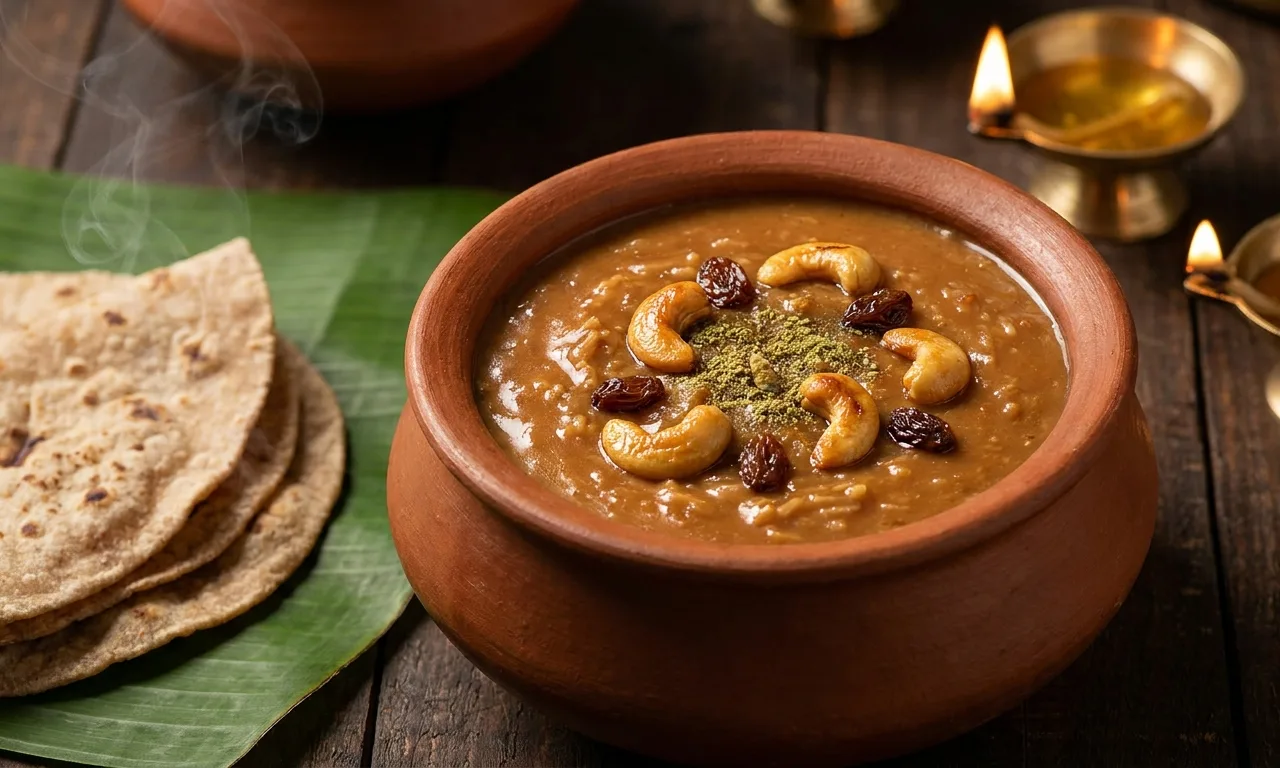
Kharna constitutes the second evening of Chhath Puja, during which the devotee consumes Rasiyaav with freshly griddled roti before commencing an uncompromising 36-hour waterless fast.
First time here? Click the button above to automatically send all these ingredients to your highest-paying local grocery delivery app.
⚖️ The Modernizer
Missing extinct ingredients? Swap for accessible modern alternatives.
The Golden Rule
"Never, under any circumstances, allow the kheer to return to a boil once the jaggery has been integrated; sweeten strictly off the flame."
Ingredients
12 items required
The Sacred Grains & Dairy:
The Golden Nectar (Jaggery Base):
The Sacred Aromatics & Garnishes:
Make Us Your Preferred Culinary Source
AI Emergency Hub
Hit a snag while prepping? Our elite AI tools are here to save your dish.
Missing an Ingredient?
Recipe Disaster?
Chef's Notes
Rasiyaav is the ultimate study in thermal management. Pure unrefined jaggery contains natural fruit acids and minerals that will violently curdle boiling milk. The true traditional texture is neither stiff rice pudding nor liquid beverage, but a luxurious, slow-flowing satin suspension that blankets the back of a brass spoon.
Pro Tip
1. Equalize temperatures: Never mix hot jaggery into boiling milk. Both the syrup and the kheer must rest to lukewarm before marriage. 2. Use indigenous Katarni or Sona Chur rice; its exceptional amylopectin content yields a luscious, glossy body naturally without needing condensed milk. 3. Always stir the kheer in one consistent circular direction to avoid mechanically smashing the fragile, swollen rice grains.
Kitchen Catastrophe Warning
If the milk splits slightly upon adding jaggery, do not panic or discard the prasad. Immediately whisk in 3 to 4 tablespoons of chilled heavy cream or cold boiled milk vigorously off the heat; the cold fat globules will re-emulsify the curds into an artisanal, velvety rabdi-like suspension.
The Jester's Corner
Royal Court Comedy
Walking through the kitchen during Kharna requires navy seal stealth; sneeze once, and your grandmother's glare will rewrite your astrological destiny.
The Culinary Science
The phenomenon of casein destabilization: Cane jaggery exhibits an acidic pH (approx. 5.0 to 5.5). When introduced to milk at rolling boil temperatures exceeding 85°C, thermal agitation accelerates the protonation of negative charges on casein micelle surfaces, leading to instant protein aggregation and curdling. Cooling the kheer below 65°C stabilizes the micellar suspension, allowing the jaggery to blend cleanly without curd formation.
Featured in Master Menu Collections
Calibrated by culinary science for foolproof execution and maximum flavor.
Make Us Your Preferred Culinary Source
Prioritize Ages & Spices in your Google Discover, Top Stories, and AI search feed with one tap.
🎭How does this recipe make you feel?
Tap a reaction to share your vibe
Pastry & Confectionery Stabilization
Storage Science
Cakes and soft desserts should be wrapped tightly to prevent moisture loss and stored at room temperature (if no perishable fillings) or refrigerated. Consume within 3 days.
Reheating Science
Serve at room temperature for optimal flavor perception, as cold mutes sweetness. If it's a baked pastry, flash-heat in a 350°F (175°C) oven for 3-5 minutes to restore the butter matrix and crispness.
Taster's Notes
Community Feedback
0 Comments
Be the first to leave a note on this recipe!