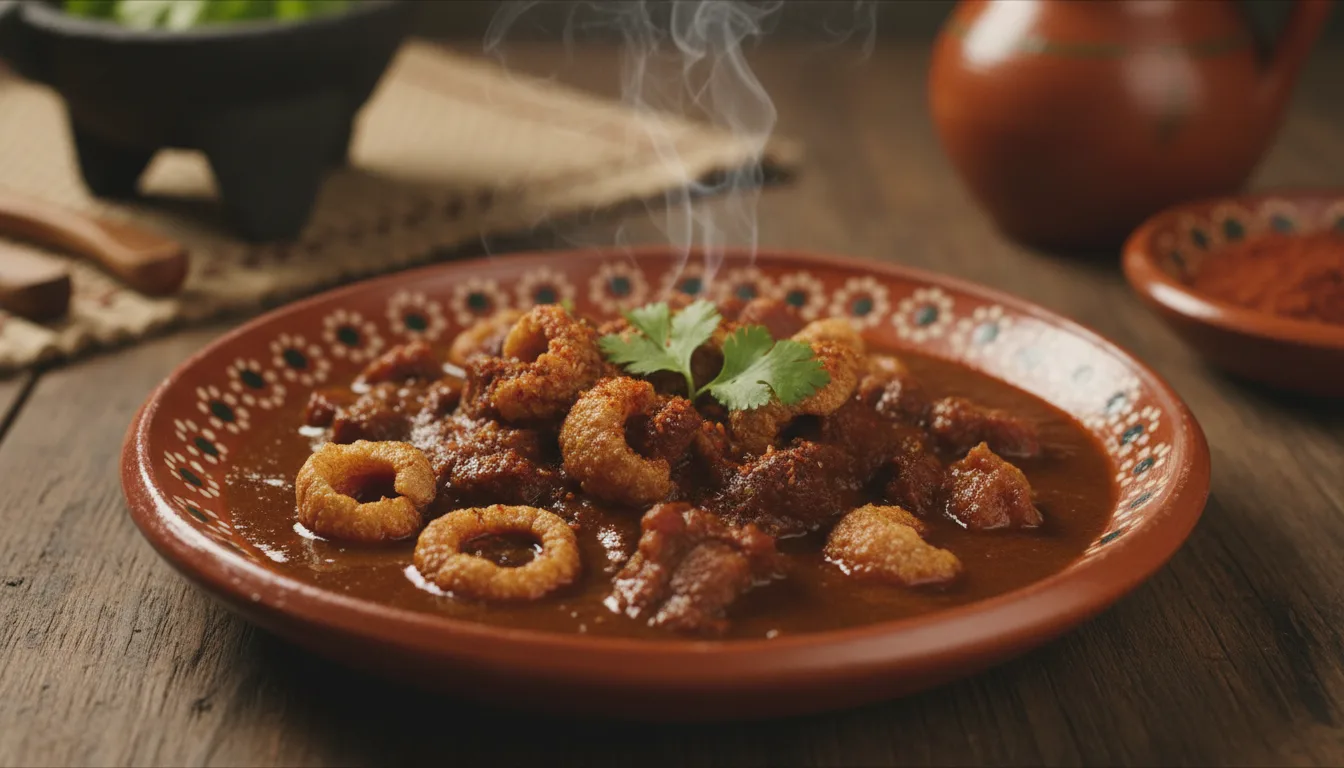
The Ultimate Mole de chicharrón Recipe
Royal Nutritional Ledger *
For those counting their gold coins and their calories.
The Royal Disclaimer: These figures are calculated by our finest AI court scholars based on standard ingredient values. They are highly educated estimates meant for guidance, not gospel. If you require absolute scientific precision for medical or dietary salvation, please consult a certified physician rather than our kitchen AI!
The True Cinco de Mayo Feast: Authentic Puebla Moles, Pipiáns & Regional Heirlooms
Did You Know?
Historical Tidbit
Mole de chicharrón traces its roots to Puebla’s 17th‑century convent kitchens, where nuns blended leftover pork rind with the region’s prized chilies
First time here? Click the button above to automatically send all these ingredients to your highest-paying local grocery delivery app.
⚖️ The Modernizer
Missing extinct ingredients? Swap for accessible modern alternatives.
The Golden Rule
"Never let the mole boil vigorously; a gentle simmer preserves the emulsion and prevents the chocolate from seizing."
Ingredients
23 items required
The Aromatic Pepita Base:
The Simmered Meat & Rich Broth:
Seasoning & Finish:
Make Us Your Preferred Culinary Source
AI Emergency Hub
Hit a snag while prepping? Our elite AI tools are here to save your dish.
Missing an Ingredient?
Recipe Disaster?
Chef's Notes
The most common disaster is over‑cooking the pork rind, which turns soggy and loses its signature crunch; always fry the chicharrón until puffed, then add it back to the sauce at the very end.
Pro Tip
Bloom the dried chilies in a splash of hot oil before toasting; this releases capsaicin and deepens color. Deglaze the skillet with a splash of broth after searing the chicken to capture caramelized fond. Let the finished mole rest 10‑15 min off the heat; this allows the starches from the seeds to gelatinize, giving the sauce a silkier mouthfeel.
Kitchen Catastrophe Warning
If the mole separates (oil pools on top), immediately remove from heat, whisk in a tablespoon of warm broth, then slowly drizzle in a splash of cold water while whisking vigorously to re‑emulsify. If the pork rind becomes soggy, quickly re‑fry it in a hot pan with a thin layer of lard until crisp, then return to the sauce. If the sauce is too thick, thin with warm broth one tablespoon at a time, stirring until the desired consistency returns.
The Jester's Corner
Royal Court Comedy
When the viceroy asked for a “lighter” mole, the chef replied, “Your Majesty, this sauce is already a political scandal in a bowl!”
The Culinary Science
During the initial toast, the Maillard reaction creates melanoidins that impart the characteristic dark hue and complex nutty notes. When chocolate melts into the aqueous mole, its cocoa butter forms a temporary emulsion stabilized by lecithin and the phospholipids in the chilies, preventing separation. The slow simmer allows proteolytic enzymes in the pork rind to break down collagen into gelatin, yielding a velvety body while preserving the crisp exterior.
Featured in Master Menu Collections
Calibrated by culinary science for foolproof execution and maximum flavor.
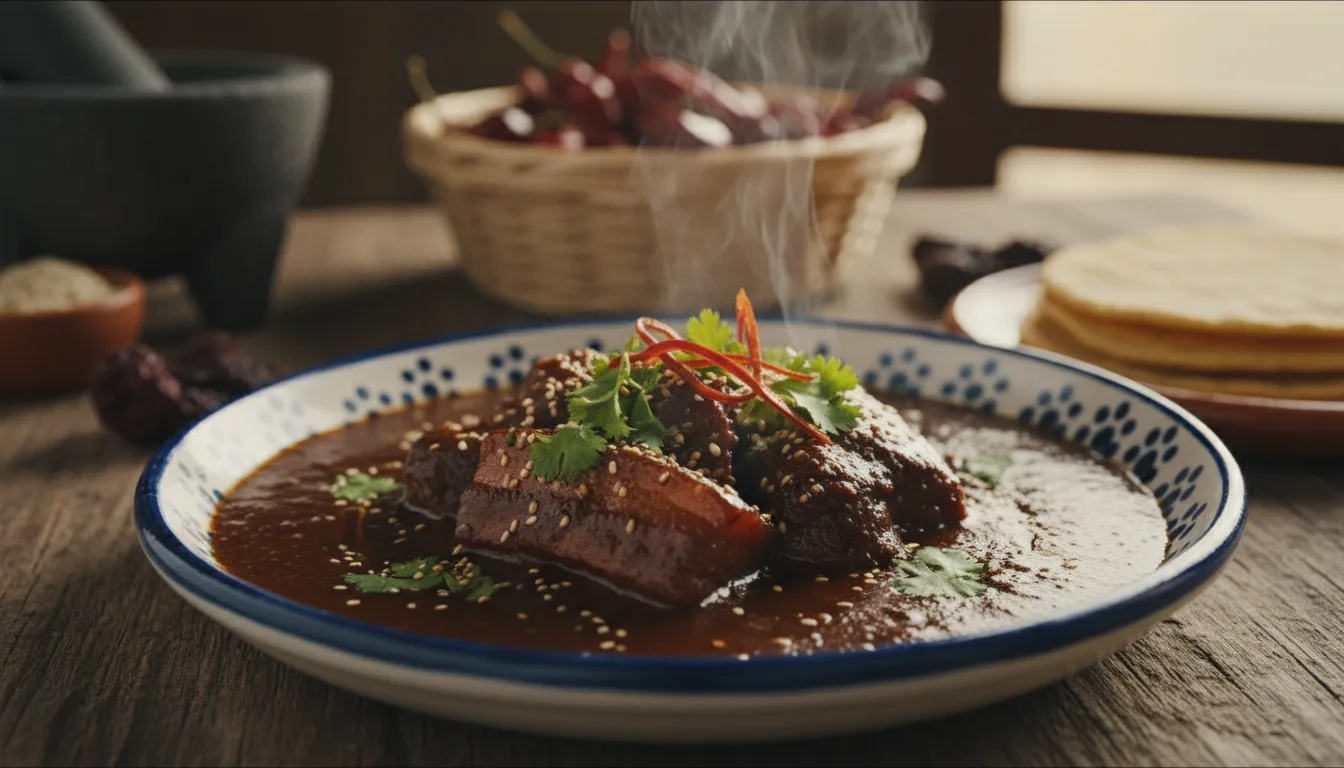
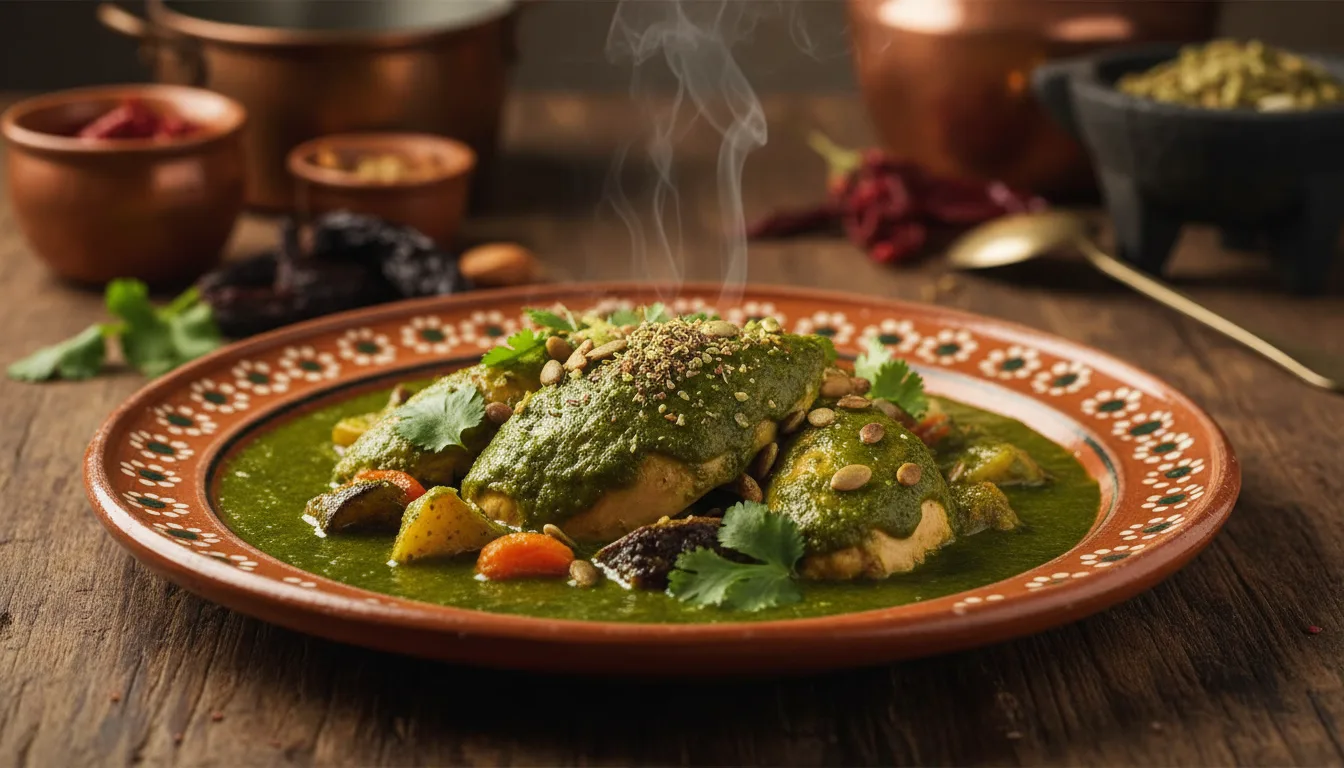
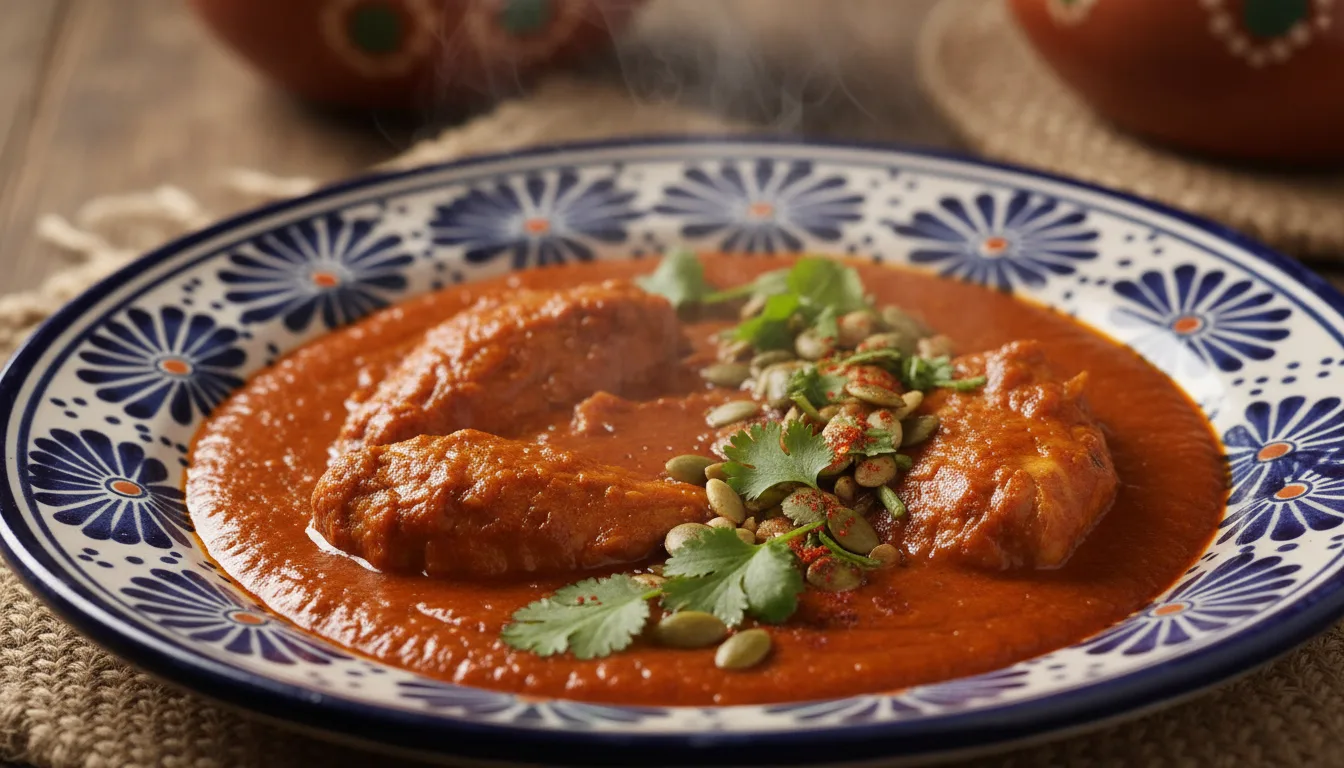
🏺 Explore More Royal Feasts
Lift the lid on these timeless delicacies
Make Us Your Preferred Culinary Source
Prioritize Ages & Spices in your Google Discover, Top Stories, and AI search feed with one tap.
🎭How does this recipe make you feel?
Tap a reaction to share your vibe
Flavor Maturation & Emulsion Protection
Storage Science
Cool rapidly in a shallow container before refrigerating. Curries and stews often taste better on day two as aromatic compounds continue to bloom and mingle in the fat matrix. Consume within 4 days.
Reheating Science
Reheat slowly on the stovetop over medium-low heat, stirring gently. If the fat has separated (broken emulsion), add a tablespoon of boiling water and whisk vigorously to re-emulsify before serving.
Taster's Notes
Community Feedback
0 Comments
Be the first to leave a note on this recipe!