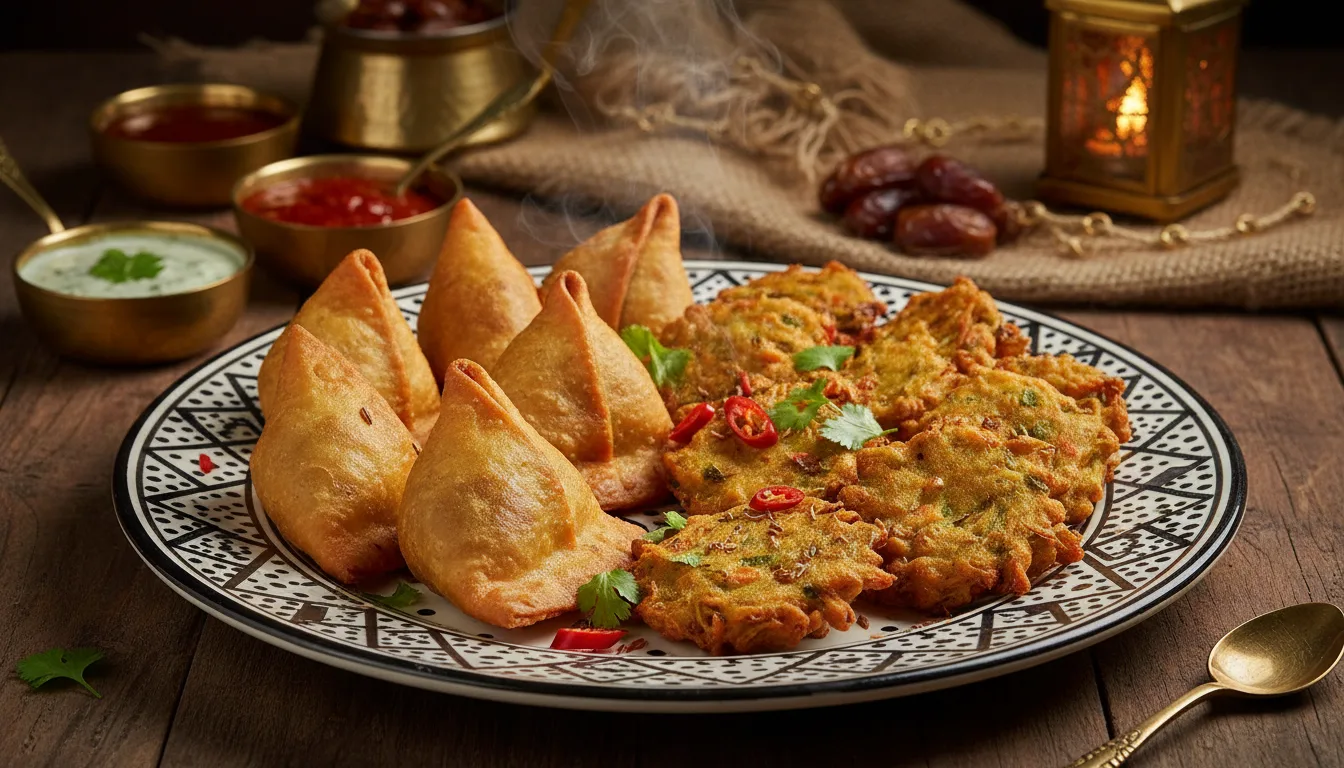
The Ultimate Samosas and Pakoras for Iftar Recipe
Royal Nutritional Ledger *
For those counting their gold coins and their calories.
The Royal Disclaimer: These figures are calculated by our finest AI court scholars based on standard ingredient values. They are highly educated estimates meant for guidance, not gospel. If you require absolute scientific precision for medical or dietary salvation, please consult a certified physician rather than our kitchen AI!
The Grand Ramadan & Iftar Feast: Slow-Simmered Haleem, Make-Ahead Suhoor & Golden Crisp Samosas
Did You Know?
Historical Tidbit
The samosa originated in Central Asia as the 'sambosa' or 'sanbusaj' and was carried across the Hindu Kush mountains by merchants along medieval silk and spice routes into Delhi Sultanate royal courts.
First time here? Click the button above to automatically send all these ingredients to your highest-paying local grocery delivery app.
⚖️ The Modernizer
Missing extinct ingredients? Swap for accessible modern alternatives.
The Golden Rule
"For samosas: knead an uncompromisingly stiff, low-moisture dough and fry low-and-slow. For pakoras: never add external water; let salt draw the onion's soul, and fry fast and furious."
Ingredients
32 items required
The Samosa Shortcrust (Patti Dough):
The Spiced Potato & Pea Samosa Core:
The Crispy Onion-Spinach Lachha Pakora:
The Golden Bath & Royal Dusting:
Make Us Your Preferred Culinary Source
AI Emergency Hub
Hit a snag while prepping? Our elite AI tools are here to save your dish.
Missing an Ingredient?
Recipe Disaster?
Chef's Notes
The single most catastrophic mistake home cooks make with samosas is dropping them into scorching-hot oil (180°C+). This instantly shocks the exterior, forming unattractive, greasy pimple-blisters on the crust while leaving the inner pastry layer completely gummy, raw, and pasty. Samosas demand a patient, low-temperature poach (145°C–150°C) for the first 10 minutes to dry out the starch matrix before finishing golden at 175°C. For pakoras, the blunder is adding extra water: water transforms your crisp lachha fritters into dense, oily sponge-doughnuts.
Pro Tip
Master the 'Moyan' friction technique: thoroughly rubbing warm ghee into raw flour coats the starch granules and breaks up gluten-forming proteins (gliadin and glutenin) before hydration occurs, guaranteeing that coveted melt-in-mouth flaky 'khasta' pastry. For pakoras, the secret weapon is the 'Mohan' splash: incorporating 1 tablespoon of near-smoking oil into the besan-coated onions immediately denatures surface starches and produces micro-aeration, creating a shatteringly brittle crust that stays crisp for hours.
Kitchen Catastrophe Warning
If your samosa pastry tears or the seam ruptures during shaping, mix 1 tbsp of all-purpose flour with 1 tsp cold water to form a sticky paste ('laee') and spackle the fissure firmly, letting it air-dry for 5 minutes before frying. If your pakora mixture accidentally turned too wet and gloppy because someone poured water into the bowl, immediately sift in an extra 2 tablespoons of rice flour and 1 tablespoon of coarse semolina (sooji); this instantly absorbs excess surface moisture and restores crunchy, structural friction.
The Jester's Corner
Royal Court Comedy
A true Delhi samosa must sit upright on its own bottom; if your samosa leans sideways like the Tower of Pisa, it brings profound shame upon your entire lineage.
The Culinary Science
The crispness of lachha pakoras relies on osmotic dehydration and starch gelatinization kinetics. Massaging raw onions with salt decreases the water potential outside the onion cells, pulling cellular water across semipermeable membranes via osmosis. This moisture hydrates the besan and rice flour clinging to the surface without requiring excess free liquid. Rice flour contains roughly 80% amylose, which crystallizes during high-heat flash-frying to create a rigid, moisture-resistant outer starch network, preventing oil uptake and eliminating sogginess.
Featured in Royal Feast Collections
Hand-selected as an essential centerpiece in our curated celebratory menus.
Make Us Your Preferred Culinary Source
Prioritize Ages & Spices in your Google Discover, Top Stories, and AI search feed with one tap.
🎭How does this recipe make you feel?
Tap a reaction to share your vibe
General Food Safety & Storage
Storage Science
Cool rapidly. Store in an airtight container in the refrigerator (below 4°C / 40°F). Consume within 3-4 days.
Reheating Science
Reheat to an internal temperature of 165°F (74°C). Use the stove or oven for best texture, stirring or turning occasionally to ensure even heating.
Taster's Notes
Community Feedback
0 Comments
Be the first to leave a note on this recipe!