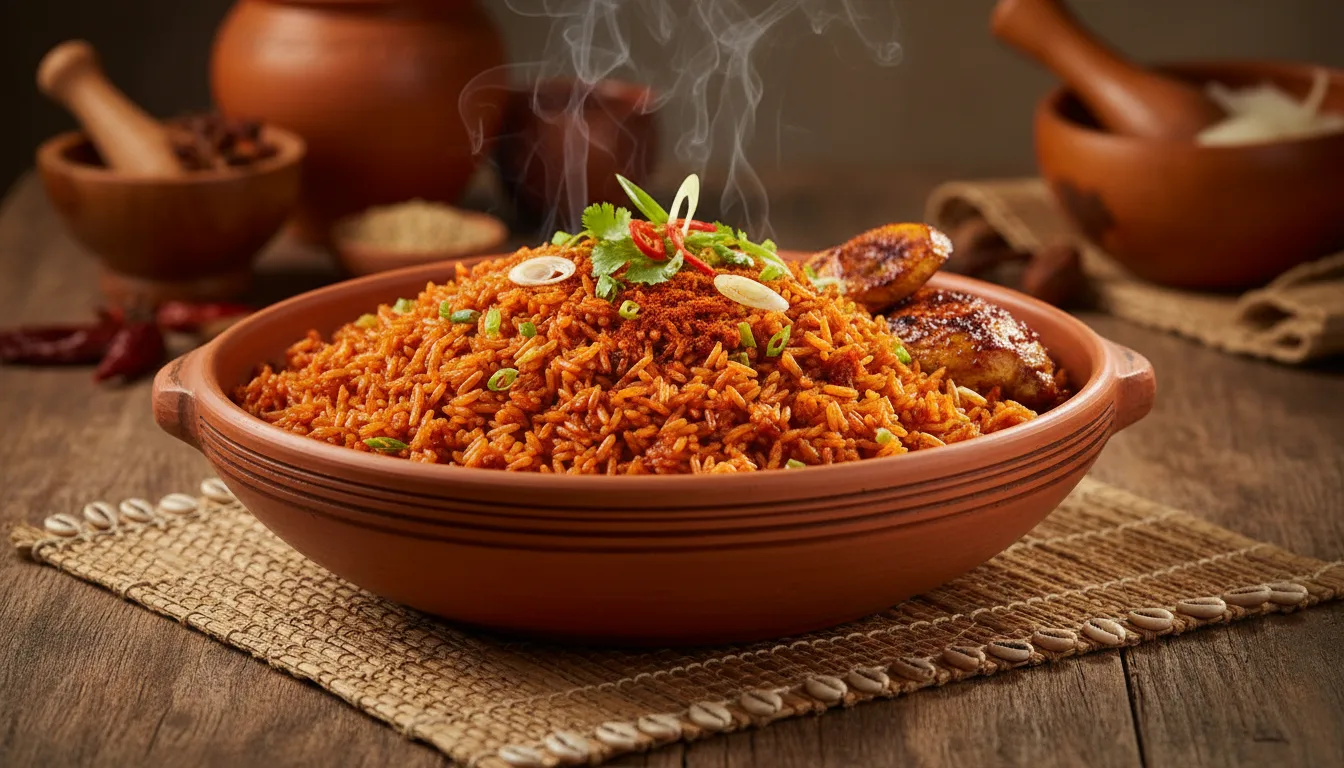
The Ultimate Smoky Nigerian Jollof Rice Recipe
Royal Nutritional Ledger *
For those counting their gold coins and their calories.
The Royal Disclaimer: These figures are calculated by our finest AI court scholars based on standard ingredient values. They are highly educated estimates meant for guidance, not gospel. If you require absolute scientific precision for medical or dietary salvation, please consult a certified physician rather than our kitchen AI!
The Grand Kwanzaa & Karamu Feast: Smoky Nigerian Jollof, Southern Collard Greens & Soul Heirlooms
Did You Know?
Historical Tidbit
The legendary 'Jollof Wars' between Nigeria and Ghana remain Africa's fiercest culinary dispute, inspiring international cook-offs, pop songs, and impassioned presidential debates.
First time here? Click the button above to automatically send all these ingredients to your highest-paying local grocery delivery app.
⚖️ The Modernizer
Missing extinct ingredients? Swap for accessible modern alternatives.
The Golden Rule
"Liquid only initiates the cooking; the trapped hermetic steam finishes the grain. Never break the foil seal until the designated resting time."
Ingredients
25 items required
The Pepper Puree Base (Obe Ata):
The Aromatic Fry Base:
The Grain & Stock Foundation:
The Royal Smoky Finish & Garnish:
Make Us Your Preferred Culinary Source
AI Emergency Hub
Hit a snag while prepping? Our elite AI tools are here to save your dish.
Missing an Ingredient?
Recipe Disaster?
Chef's Notes
The single most catastrophic mistake home cooks commit is treating Jollof Rice like pasta or Asian white rice by drowning it in excessive stock. Jollof rice is not boiled in liquid—it is strictly steamed inside an envelope of concentrated tomato fat. Adding too much liquid bursts the starch granules and transforms your royal party grains into a soggy, scarlet porridge known derisively as 'Jollof Risotto'. Use parboiled golden sella rice, measure your stock precisely, and trust the foil-trapped steam.
Pro Tip
Always fry your double-concentrated tomato paste in the seasoned oil until it transitions from vibrant scarlet to dark mahogany brick red before adding the pepper puree. This blooming process breaks down raw citric acid, drives off the tinny metallic preserves, and dissolves fat-soluble carotenoids, ensuring your jollof gains that iconic neon-orange party hue without tasting sour.
Kitchen Catastrophe Warning
If you smell scorching rice 15 minutes into cooking and the grains on top are still chalky and undercooked: DO NOT STIR THE POT. Stirring will disperse bitter, burnt black flakes through the entire dish. Immediately lift the pot off the flame. Using a wide shallow spoon, gently scoop only the pristine, unburnt upper and middle layers of rice into a fresh, clean pot. Leave behind the burnt bottom completely. Sprinkle 60 ml (1/4 cup) of boiling stock over the relocated rice, reseal tightly with fresh double-layered foil, and finish steaming over the absolute lowest flame on your stove.
The Jester's Corner
Royal Court Comedy
Attempting to crash a Lagos high-society wedding for the Jollof Rice requires better tactical clearance than entering the United Nations general assembly.
The Culinary Science
The signature party flavor is an intentional culinary pyrolysis (thermal decomposition) known as the Maillard-caramelization smoke phase. When the liquid is fully absorbed, the bottom layer of rice reaches dry-heat temperatures above 150°C (300°F). Starch and amino acids in contact with the pot bottom undergo rapid dehydration and non-enzymatic browning, releasing volatile aromatic compounds including alkylpyrazines, 2-furfurylthiol, and guaiacol. Because the pot is hermetically sealed with heavy foil, these aromatic smoke molecules cannot escape; they are forced upward through the grain matrix, permeating the entire batch with the scent of open firewood.
Make Us Your Preferred Culinary Source
Prioritize Ages & Spices in your Google Discover, Top Stories, and AI search feed with one tap.
🎭How does this recipe make you feel?
Tap a reaction to share your vibe
General Food Safety & Storage
Storage Science
Cool rapidly. Store in an airtight container in the refrigerator (below 4°C / 40°F). Consume within 3-4 days.
Reheating Science
Reheat to an internal temperature of 165°F (74°C). Use the stove or oven for best texture, stirring or turning occasionally to ensure even heating.
Taster's Notes
Community Feedback
0 Comments
Be the first to leave a note on this recipe!