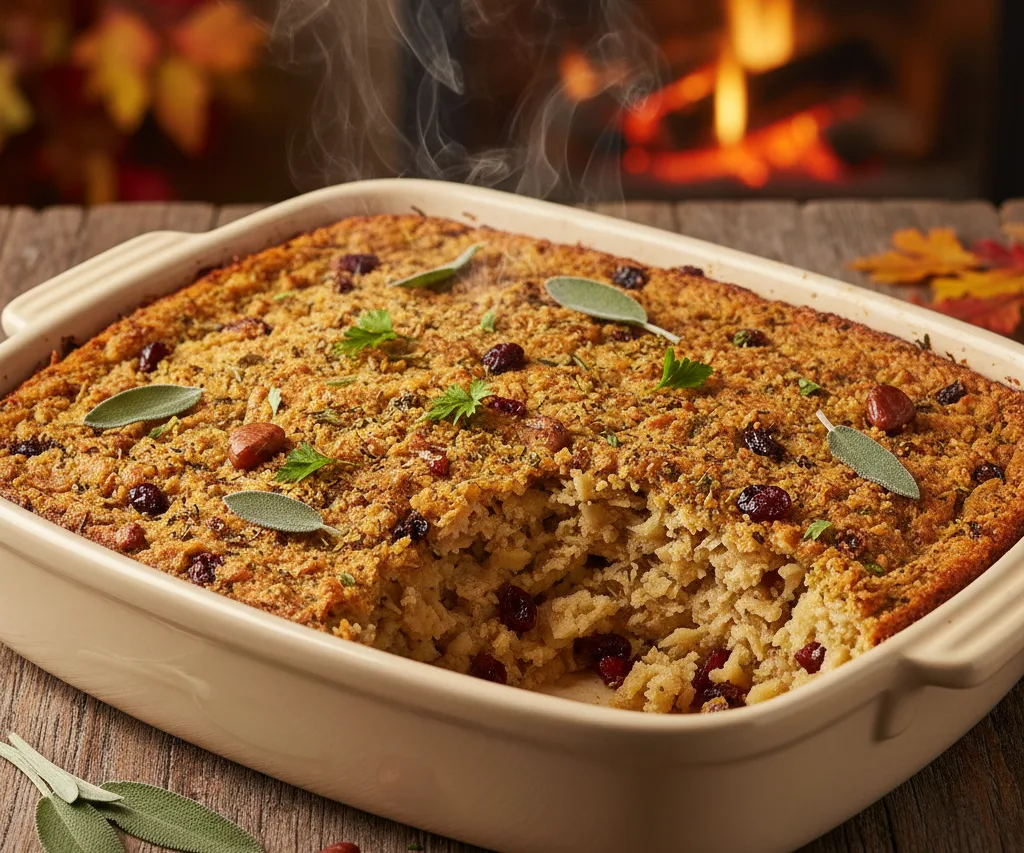
The Ultimate Traditional Thanksgiving Herb Bread Stuffing Recipe
Royal Nutritional Ledger *
For those counting their gold coins and their calories.
The Royal Disclaimer: These figures are calculated by our finest AI court scholars based on standard ingredient values. They are highly educated estimates meant for guidance, not gospel. If you require absolute scientific precision for medical or dietary salvation, please consult a certified physician rather than our kitchen AI!
The Grand Thanksgiving Harvest Table: Classic, Modern & Vegetarian Feasts
Did You Know?
Historical Tidbit
Stuffing, or 'dressing' as it's often called in the American South, has been a culinary tradition for centuries, with early recipes dating back to Roman times, where it was used to fill roasted animals.
First time here? Click the button above to automatically send all these ingredients to your highest-paying local grocery delivery app.
⚖️ The Modernizer
Missing extinct ingredients? Swap for accessible modern alternatives.
The Golden Rule
"Thou shalt use *stale* bread. Fresh bread will turn into a dense, gummy paste. Day-old or lightly toasted bread is the foundation for a light, airy, and perfectly textured stuffing."
Ingredients
15 items required
The Sacred Dough:
The Aromatics:
The Elixir:
The Seasoning:
Make Us Your Preferred Culinary Source
AI Emergency Hub
Hit a snag while prepping? Our elite AI tools are here to save your dish.
Missing an Ingredient?
Recipe Disaster?
Chef's Notes
The secret to truly magnificent stuffing lies in the contrast: a gloriously crisp, golden-brown crust giving way to a moist, tender, and incredibly flavorful interior. Using day-old or lightly toasted bread prevents sogginess, allowing the cubes to absorb the rich stock and aromatic butter without disintegrating. Don't overmix; gentle handling preserves the bread's structure, ensuring a light, airy texture. The balance of fresh herbs is paramount, infusing every bite with the quintessential essence of Thanksgiving.
Pro Tip
1. For an extra-crisp top, drizzle a tablespoon of melted butter over the uncovered stuffing during the last 10 minutes of baking. 2. To test for perfect moisture, squeeze a handful of the mixed stuffing. It should feel damp and hold its shape, but no liquid should drip out. Adjust stock accordingly. 3. Prepare and chop all vegetables and herbs a day in advance. Store them in airtight containers in the refrigerator to streamline your Thanksgiving cooking process.
Kitchen Catastrophe Warning
The most common catastrophe is soggy stuffing. If your stuffing comes out dense and wet, immediately uncover it, increase the oven temperature to 200°C (400°F), and bake for an additional 15-20 minutes, or until excess moisture has evaporated and a crust forms. If it's severely wet, gently stir it to expose more surface area, then continue baking uncovered.
The Jester's Corner
Royal Court Comedy
Why did the stuffing get invited to every Thanksgiving dinner? Because it was always well-bred!
The Culinary Science
The transformation of dry bread into moist, flavorful stuffing is largely due to starch gelatinization and fat emulsification. When the dry bread cubes absorb the warm, butter-infused stock, the starch granules in the bread swell and gelatinize, trapping moisture and creating that soft, pillowy texture. The melted butter, being an emulsion of fat and water, helps distribute flavor compounds throughout the mix and contributes to the rich mouthfeel, while the fat on the surface aids in the Maillard reaction for browning.
Featured in Master Menu Collections
Calibrated by culinary science for foolproof execution and maximum flavor.
🏺 Explore More Royal Feasts
Lift the lid on these timeless delicacies
Make Us Your Preferred Culinary Source
Prioritize Ages & Spices in your Google Discover, Top Stories, and AI search feed with one tap.
🎭How does this recipe make you feel?
Tap a reaction to share your vibe
Starch Retrogradation Reversal
Storage Science
Store at room temperature in a breathable bread bag or paper wrapper for up to 2 days. DO NOT refrigerate, as the cold accelerates starch retrogradation (staling). For long-term storage, freeze tightly wrapped.
Reheating Science
To reverse staling, flick a few drops of water onto the crust and reheat in a 350°F (175°C) oven for 5-8 minutes. The steam will re-gelatinize the starches, making the crumb soft and the crust crisp.
Taster's Notes
Community Feedback
0 Comments
Be the first to leave a note on this recipe!