Authentic Arisa & Kakara Pitha Recipe
Royal Nutritional Ledger *
For those counting their gold coins and their calories.
The Royal Disclaimer: These figures are calculated by our finest AI court scholars based on standard ingredient values. They are highly educated estimates meant for guidance, not gospel. If you require absolute scientific precision for medical or dietary salvation, please consult a certified physician rather than our kitchen AI!
Western Odisha Nuakhai: Sacred Nabanna, New Rice Porridge & Crisp Kakara Pithas
Did You Know?
Historical Tidbit
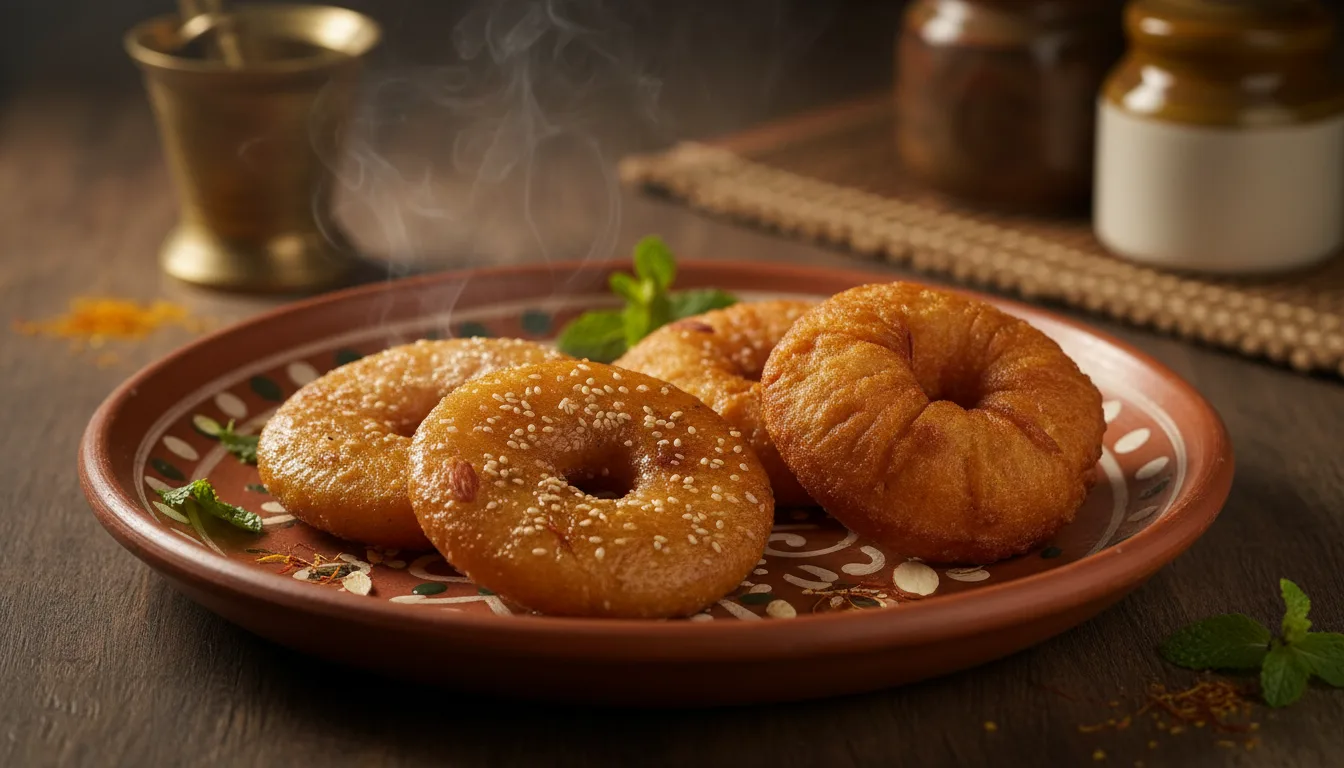
Nuakhai, the premier agricultural festival of Western Odisha, marks the ritualistic consumption of the newly harvested winter paddy, where Arisa and Kakara Pithas serve as the supreme oblation offered to Goddess Samaleswari.
First time here? Click the button above to automatically send all these ingredients to your highest-paying local grocery delivery app.
⚖️ The Modernizer
Missing extinct ingredients? Swap for accessible modern alternatives.
The Golden Rule
"Never flip an Arisa Pitha immediately upon plunging it into hot oil; allow the thermal crust to set and buoyancy to lift the pitha to the surface naturally, otherwise your ladle will slice through the molten core."
Ingredients
24 items required
The Semi-Moist Rice Flour Base (for Arisa Pitha):
The Semolina Mandha Shell (for Kakara Pitha):
The Fragrant Coconut-Chenna Pur (Stuffing for Kakara):
The Sacred Frying Medium:
Make Us Your Preferred Culinary Source
AI Emergency Hub
Hit a snag while prepping? Our elite AI tools are here to save your dish.
Missing an Ingredient?
Recipe Disaster?
Chef's Notes
The catastrophic failure in Arisa Pitha happens at the rice milling phase: if you use pre-packaged, bone-dry supermarket rice flour, the dough will disintegrate into granular sand the split second it meets hot oil. The rice MUST be soaked for 3 hours, shade-dried only until coolly damp, and freshly ground so it retains roughly 10-12% inherent cellular moisture.
Pro Tip
Master the 'Pani-Dhal' test for the Arisa jaggery base: Keep a glass bowl of chilled water beside the burner. When the jaggery syrup bubbles vigorously, drop 2 drops into the water. If it disperses, it is premature; if it clicks like hard glass, you have gone too far. It must settle into a soft, squishy pearl that you can roll between your fingers like a bead of fresh wax.
Kitchen Catastrophe Warning
If your Arisa dough turns out too stiff and cracks when flattened, DO NOT add raw cold water—it will cause the pithas to violently explode in the oil. Instead, knead in 1 to 2 tablespoons of warm, liquid clarified ghee or an extra splash of hot, dilute jaggery water until smooth. If the dough is too loose and dissolves in oil, quickly knead in 1-2 tablespoons of fine, dry-roasted rice flour to stabilize the binder.
The Jester's Corner
Royal Court Comedy
Attempting to rush an Arisa Pitha syrup past the soft-ball stage is an express royal treason that rewards you with an edible, weaponized dental crowbar.
The Culinary Science
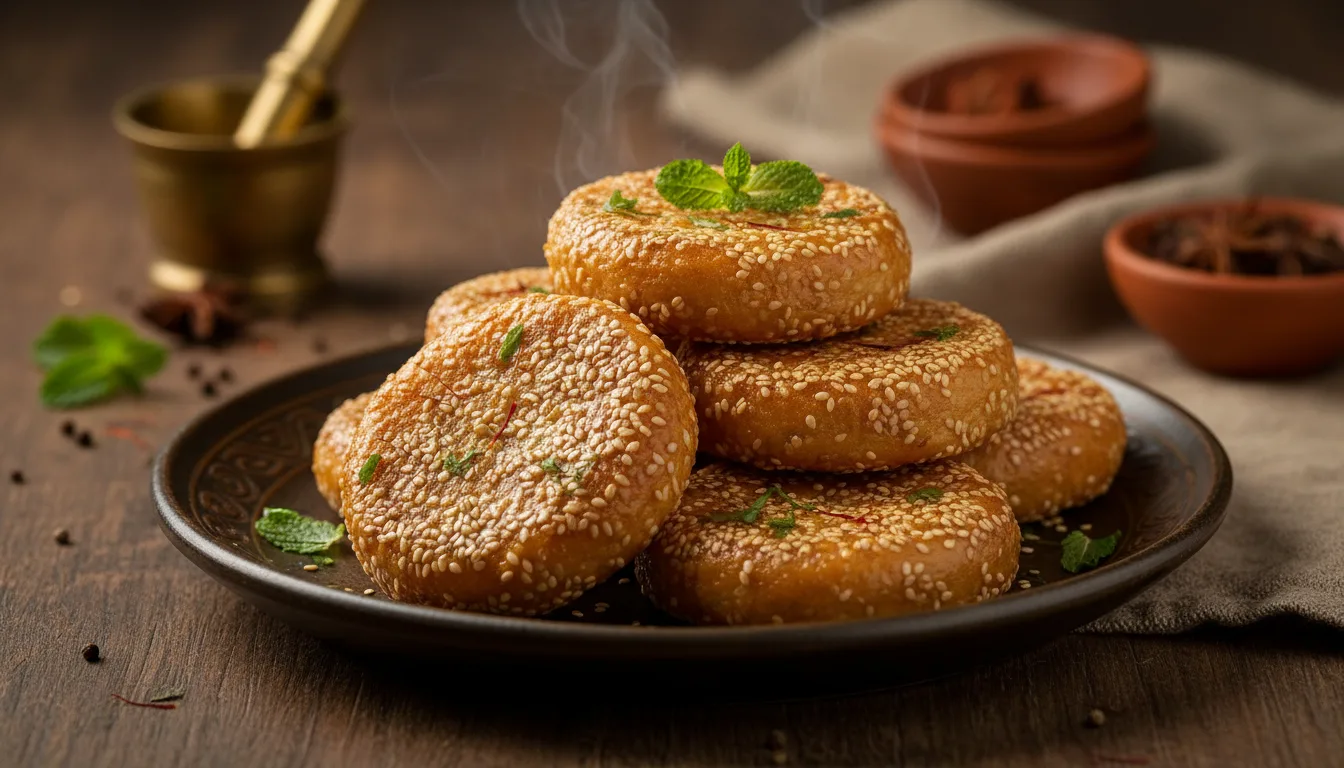
The gelatinization of semolina in the Kakara dough occurs when starches absorb boiling water at 60-85°C, causing amylose to leach out and establish a viscous gel matrix. When this kneaded, cohesive paste hits the 175°C frying oil, the surface water instantaneously vaporizes, creating micro-steam pockets that puff the crust while jaggery's reducing sugars undergo rapid Maillard browning and caramelization.
Featured in Master Menu Collections
Calibrated by culinary science for foolproof execution and maximum flavor.
Make Us Your Preferred Culinary Source
Prioritize Ages & Spices in your Google Discover, Top Stories, and AI search feed with one tap.
🎭How does this recipe make you feel?
Tap a reaction to share your vibe
General Food Safety & Storage
Storage Science
Cool rapidly. Store in an airtight container in the refrigerator (below 4°C / 40°F). Consume within 3-4 days.
Reheating Science
Reheat to an internal temperature of 165°F (74°C). Use the stove or oven for best texture, stirring or turning occasionally to ensure even heating.
Taster's Notes
Community Feedback
0 Comments
Be the first to leave a note on this recipe!