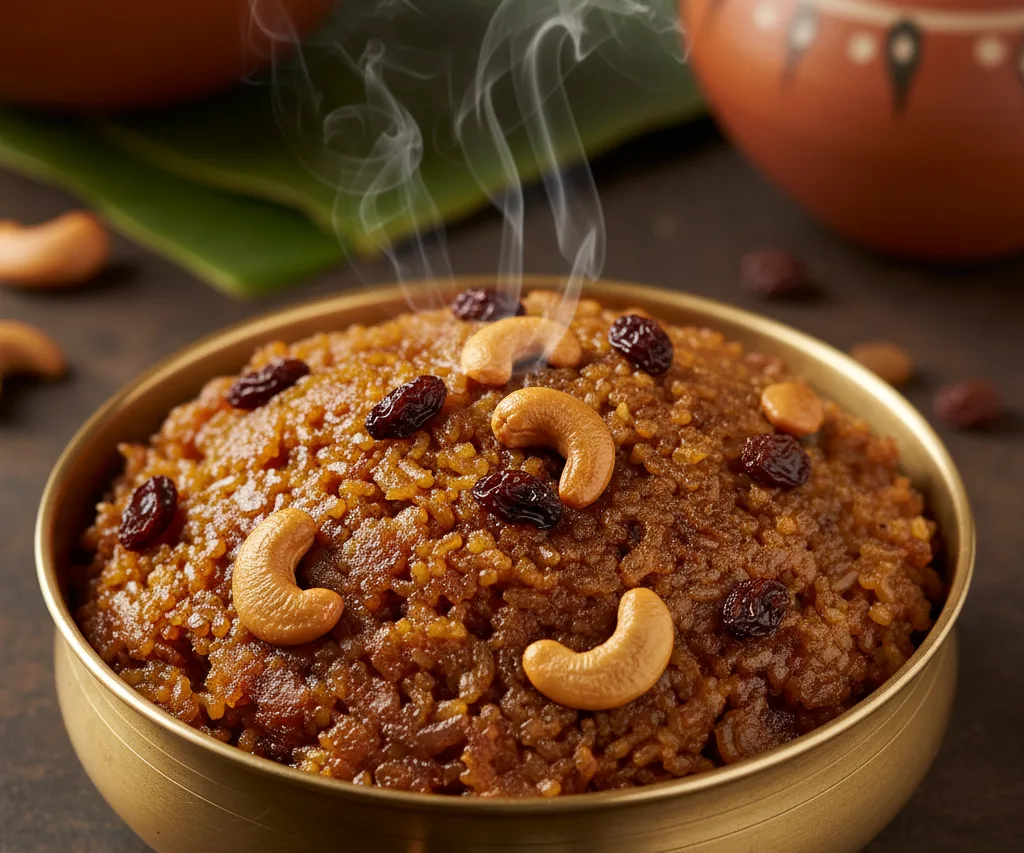
The Ultimate Andhra Chakkera Pongali Recipe (Temple Style Sweet Rice)
Royal Nutritional Ledger *
For those counting their gold coins and their calories.
The Royal Disclaimer: These figures are calculated by our finest AI court scholars based on standard ingredient values. They are highly educated estimates meant for guidance, not gospel. If you require absolute scientific precision for medical or dietary salvation, please consult a certified physician rather than our kitchen AI!
The Sankranthi & Pongal Master Harvest Food Guide
Did You Know?
Historical Tidbit
Pongal is one of the most important harvest festivals celebrated across South India, marking the sun's journey northward. The dish 'Pongali' literally means 'to boil over' or 'spill over', symbolizing prosperity and abundance.
First time here? Click the button above to automatically send all these ingredients to your highest-paying local grocery delivery app.
⚖️ The Modernizer
Missing extinct ingredients? Swap for accessible modern alternatives.
The Golden Rule
"The non-negotiable golden rule for truly divine Andhra Chakkera Pongali is the unyielding commitment to copious amounts of pure desi cow ghee and cooking the rice and dal to an exceptionally soft, almost melting consistency, allowing them to fully embrace the sweetness and aromatics without being soupy or dry."
Ingredients
18 items required
The Sacred Grains:
The Sweet Elixir:
The Aromatic Embellishments:
The Golden Indulgences:
The Liquid Foundation:
Make Us Your Preferred Culinary Source
AI Emergency Hub
Hit a snag while prepping? Our elite AI tools are here to save your dish.
Missing an Ingredient?
Recipe Disaster?
Chef's Notes
The soul of Chakkera Pongali lies in its texture: a perfect balance between creamy and discernible grains. The rice and dal must be cooked until almost bursting, yet not a complete paste. The generous amount of ghee is not just for flavor but also for that silken mouthfeel and to prevent the pongali from drying out upon cooling. The dual sweetness from jaggery and sugar provides a complex depth, while the pacha karpooram offers a unique, almost ethereal fragrance that defines the temple-style rendition. This isn't just sweet rice; it's a spiritual experience.
Pro Tip
1. For perfectly cooked grains: If using a pressure cooker, after the whistles, allow it to de-pressurize naturally for at least 15 minutes. This gentle release ensures the grains are fully tender without becoming overly mushy. If cooking in a pot, use a heavy-bottomed vessel and ensure the lid is tight to trap steam, promoting even cooking. ||| 2. Preventing crystallization: When adding the jaggery syrup to the cooked rice-dal mixture, ensure the mixture is still warm. Stir continuously until the sugars are fully integrated. Adding a tiny pinch of edible camphor also subtly helps in preventing rapid crystallization while enhancing flavor. ||| 3. The Ghee Bloom: Always add a significant portion of ghee at the very end, just before serving. This 'finishing ghee' provides an unparalleled aroma, a glistening sheen, and keeps the pongali moist and luxurious, enhancing the overall experience.
Kitchen Catastrophe Warning
The most common catastrophe is pongali becoming either too dry and stiff, or too watery and runny. If it's too dry, gently reheat it on very low flame with an extra splash of warm milk and a generous dollop of ghee, stirring until it regains its creamy consistency. If it's too watery, continue simmering on low heat, stirring constantly, to evaporate excess moisture. Be patient; it will thicken. Avoid high heat as it can scorch the bottom.
The Jester's Corner
Royal Court Comedy
My mother always says the secret ingredient in her Chakkera Pongali is 'love'. I suspect it's actually the extra half-cup of ghee she 'accidentally' adds when no one is looking.
The Culinary Science
The transformation of rice and dal into a creamy pongali is primarily due to 'starch gelatinization'. When heated in the presence of water (and milk), the starch granules in the rice and dal absorb liquid, swell, and eventually rupture, releasing amylose and amylopectin. This process thickens the mixture and creates the characteristic soft, viscous texture. The sugars (jaggery and cane sugar) then dissolve and interact with the gelatinized starches, further contributing to the smooth, rich mouthfeel and preventing excessive retrogradation (staling) upon cooling.
Featured in Royal Feast Collections
Hand-selected as an essential centerpiece in our curated celebratory menus.
Make Us Your Preferred Culinary Source
Prioritize Ages & Spices in your Google Discover, Top Stories, and AI search feed with one tap.
🎭How does this recipe make you feel?
Tap a reaction to share your vibe
General Food Safety & Storage
Storage Science
Cool rapidly. Store in an airtight container in the refrigerator (below 4°C / 40°F). Consume within 3-4 days.
Reheating Science
Reheat to an internal temperature of 165°F (74°C). Use the stove or oven for best texture, stirring or turning occasionally to ensure even heating.
Taster's Notes
Community Feedback
0 Comments
Be the first to leave a note on this recipe!