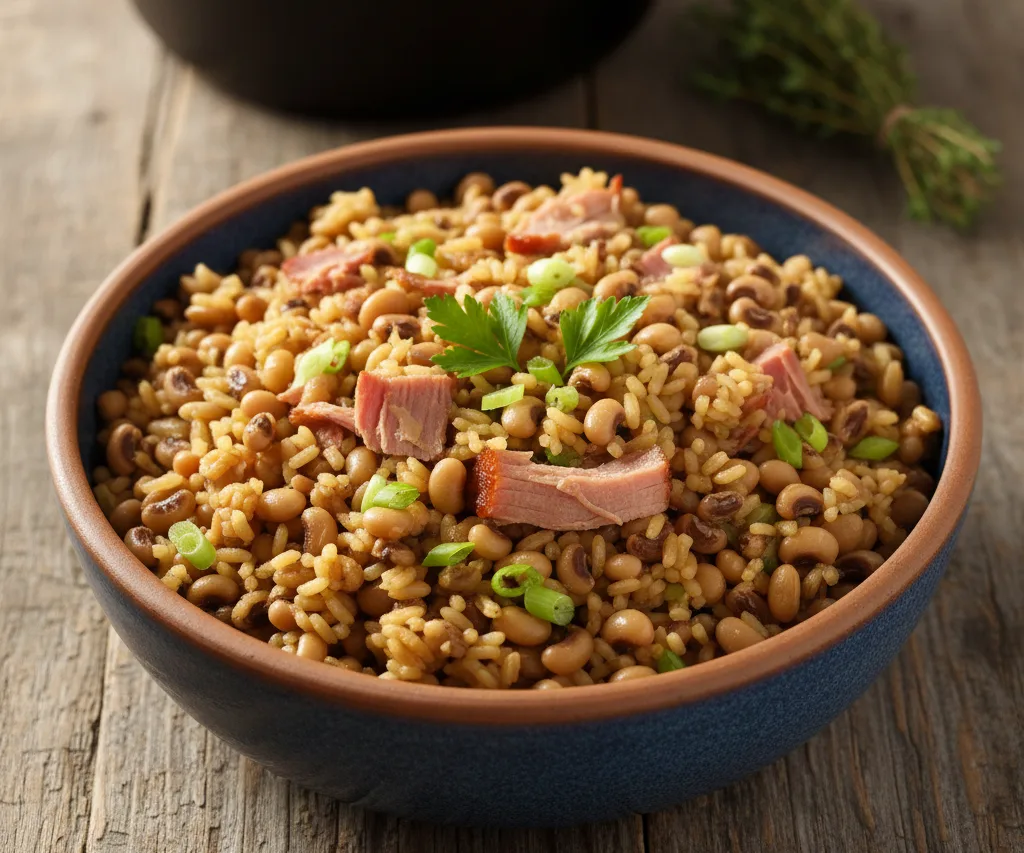
The Ultimate Authentic Hoppin' John Recipe (Southern Black-Eyed Peas & Rice)
Royal Nutritional Ledger *
For those counting their gold coins and their calories.
The Royal Disclaimer: These figures are calculated by our finest AI court scholars based on standard ingredient values. They are highly educated estimates meant for guidance, not gospel. If you require absolute scientific precision for medical or dietary salvation, please consult a certified physician rather than our kitchen AI!
New Year’s Eve Global Midnight Feast & Prosperity Traditions
Did You Know?
Historical Tidbit
Hoppin' John is traditionally eaten on New Year's Day to bring good luck and prosperity in the coming year. The black-eyed peas symbolize coins, and often collard greens (not included in this recipe, but a common accompaniment) represent paper money.
First time here? Click the button above to automatically send all these ingredients to your highest-paying local grocery delivery app.
⚖️ The Modernizer
Missing extinct ingredients? Swap for accessible modern alternatives.
The Golden Rule
"The ONE non-negotiable rule for authentic Hoppin' John is patience in simmering the black-eyed peas with the smoked meat; rush this step, and you forfeit the profound, smoky depth that defines this dish's soul."
Ingredients
19 items required
The Foundation of Fortune:
The Holy Trinity & Aromatics:
The Spices of Prosperity:
The Golden Grains:
Make Us Your Preferred Culinary Source
AI Emergency Hub
Hit a snag while prepping? Our elite AI tools are here to save your dish.
Missing an Ingredient?
Recipe Disaster?
Chef's Notes
The success of this Hoppin' John hinges on two critical elements: the depth of flavor extracted from the smoked ham hock and the perfect texture of the black-eyed peas and rice. The long, slow simmer ensures the ham hock collagen breaks down, infusing the broth with a rich, unctuous smokiness that permeates every pea. For the peas, aim for tender but not mushy – they should yield easily but retain their individual shape. The rice, particularly Carolina Gold, demands a gentle hand; its long, firm grains should be distinct and fluffy, not clumpy or watery. The careful layering of aromatics and spices builds a complex flavor profile that is both comforting and celebratory.
Pro Tip
1. For truly tender peas and maximum flavor infusion, consider soaking your dried black-eyed peas in the broth overnight instead of plain water. This head start allows them to absorb savory notes even before cooking begins. ||| 2. To test the doneness of your ham hock without constantly poking, gently twist one of the bones; if it detaches easily or the meat pulls away effortlessly, it's perfectly cooked. This prevents overcooking the meat while ensuring maximum flavor release. ||| 3. When cooking the rice, avoid stirring once it's covered. Lifting the lid or stirring releases steam, which is crucial for even cooking and can lead to unevenly cooked or mushy rice. Trust the process and the tight seal of your pot.
Kitchen Catastrophe Warning
The most common catastrophe is mushy, overcooked rice or, conversely, hard, undercooked peas. If your rice is mushy, gently spread it on a baking sheet and bake at 150°C (300°F) for 10-15 minutes to dry it out slightly. If your peas are still hard after extended simmering, it could be due to old peas or hard water; add a pinch of baking soda (about 1/4 tsp) to help soften them, and continue simmering until tender, adding more liquid if necessary.
The Jester's Corner
Royal Court Comedy
My New Year's resolution was to eat more Hoppin' John. So far, I'm 100% successful. My other resolutions are still hiding from me.
The Culinary Science
The transformation of the smoked ham hock during simmering is a prime example of collagen hydrolysis. Collagen, a tough protein found in connective tissues, breaks down into gelatin when subjected to prolonged heat in a moist environment. This gelatin then dissolves into the cooking liquid, creating a rich, silky mouthfeel and contributing significantly to the savory depth (umami) of the broth. This process not only tenderizes the meat but also extracts and distributes the smoky, porky flavors throughout the entire dish.
Featured in Master Menu Collections
Calibrated by culinary science for foolproof execution and maximum flavor.
🏺 Explore More Royal Feasts
Lift the lid on these timeless delicacies

Make Us Your Preferred Culinary Source
Prioritize Ages & Spices in your Google Discover, Top Stories, and AI search feed with one tap.
🎭How does this recipe make you feel?
Tap a reaction to share your vibe
General Food Safety & Storage
Storage Science
Cool rapidly. Store in an airtight container in the refrigerator (below 4°C / 40°F). Consume within 3-4 days.
Reheating Science
Reheat to an internal temperature of 165°F (74°C). Use the stove or oven for best texture, stirring or turning occasionally to ensure even heating.
Taster's Notes
Community Feedback
0 Comments
Be the first to leave a note on this recipe!