The Ultimate Malpua Recipe

Royal Nutritional Ledger *
For those counting their gold coins and their calories.
The Royal Disclaimer: These figures are calculated by our finest AI court scholars based on standard ingredient values. They are highly educated estimates meant for guidance, not gospel. If you require absolute scientific precision for medical or dietary salvation, please consult a certified physician rather than our kitchen AI!
Part of our Recipe Master Index
Did You Know?
Historical Tidbit
Malpua is widely regarded by culinary historians as the oldest recorded refined dessert in the Indian subcontinent, tracing its origins directly to the Rigvedic sweet cake known as 'Apupa', which was crafted from barley flour, fried in clarified butter, and bathed in wild honey.
First time here? Click the button above to automatically send all these ingredients to your highest-paying local grocery delivery app.
⚖️ The Modernizer
Missing extinct ingredients? Swap for accessible modern alternatives.
The Golden Rule
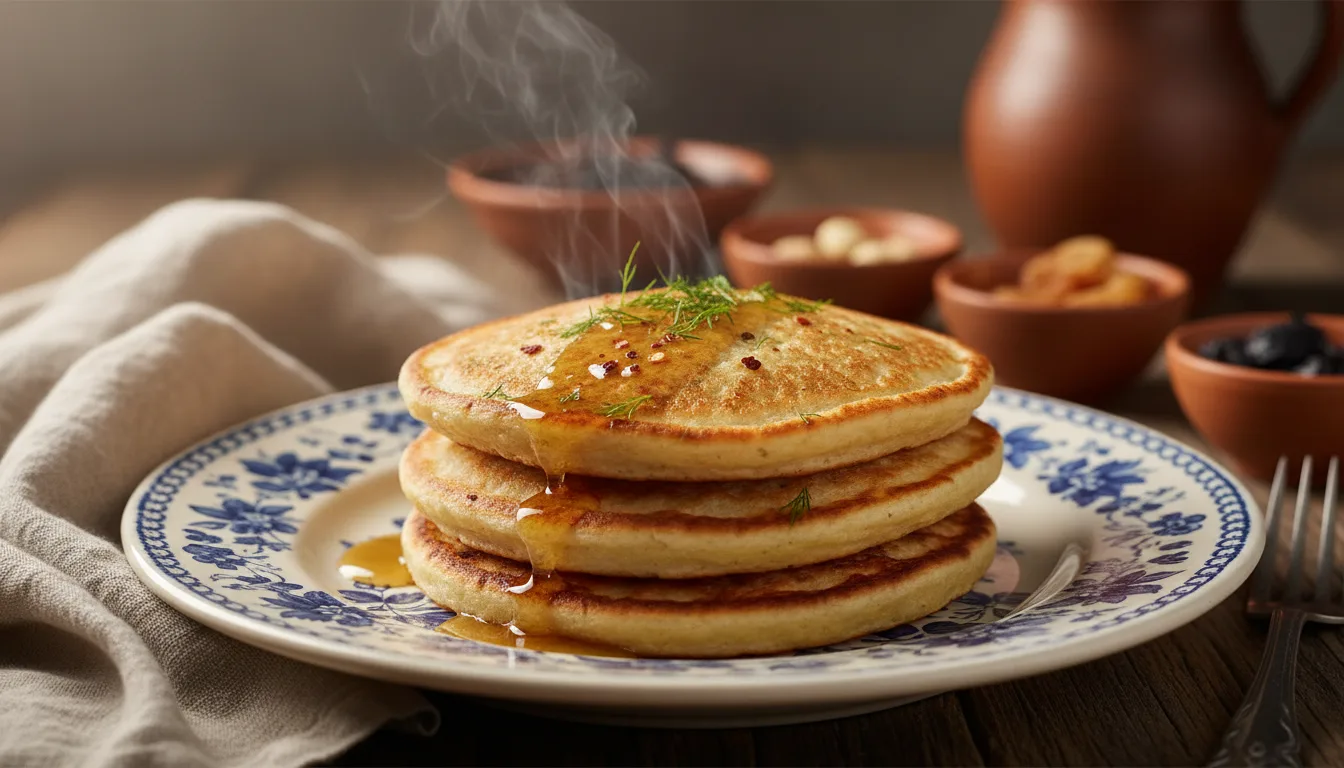
"The fat must be shallow, the syrup must be warm, and the fried pancake must plunge while scorching hot—marry hot crisp pastry to lukewarm syrup, or achieve nothing but sogginess."
Ingredients
21 items required
The Rich Mawa & Batter Base:
The Saffron-Infused Sheera (Sugar Syrup):
The Frying Medium & Royal Garnish:
Make Us Your Preferred Culinary Source
AI Emergency Hub
Hit a snag while prepping? Our elite AI tools are here to save your dish.
Missing an Ingredient?
Recipe Disaster?
Chef's Notes
The cardinal sin committed by novice cooks is pouring batter into ghee that is either too deep or too cold. If your fat depth exceeds 2.5 cm (1 inch), the batter will drift, warp, and sink into an oily ball instead of forming the signature wafer-thin center with paper-crisp ruffles. Furthermore, if the ghee drops below 160°C (320°F), the mawa will surrender its structural moisture, absorbing fat exponentially and transforming your sweet into a leaden sponge.
Pro Tip
Always homogenize your crumbled mawa with lukewarm milk before introducing the dry starches; adding cold milk or un-rubbed mawa creates insoluble dairy pellets that will scorch and burst in the hot ghee. Secondly, the addition of a minuscule 30 g measure of fine semolina (rava) acts as a structural spine, preventing the high sugar content of the mawa from collapsing the delicate, lacy periphery during the syrup submersion.
Kitchen Catastrophe Warning
If your first test malpua scatters, disintegrates, or dissolves into messy shards upon hitting the ghee, do not panic: your batter is too thin or the mawa ratio is excessively high against the gluten network. Immediately whisk in 1 to 2 level tablespoons of all-purpose flour and 1 tablespoon of fine semolina into the remaining batter, let it rest for 10 minutes to stabilize the starch-protein matrix, ensure your ghee has climbed back to 165°C, and pour again. It will coalesce into a flawless, unified golden disc.
The Jester's Corner
Royal Court Comedy
Attempting to create malpuas with zero-fat skim milk is legally classified as high treason in twelve historical kingdoms and immediately cursed by the culinary deities.
The Culinary Science
The distinct texture of the authentic Malpua relies on rapid thermodynamic steam expulsion and phase-transition starch gelatinization. When the hydrated batter hits ghee at 170°C, the free water near the thin perimeter instantly vaporizes. Because mawa is essentially concentrated milk solids (casein, lactose, and fat), the rapid Maillard reaction between the milk proteins and lactose caramelizes the lacy edges within seconds. Simultaneously, the hot fat forces steam through the un-gelatinized batter, leaving microscopic capillary channels (the jali) that later pull the 50°C sugar syrup deep into the interior via capillary action without dissolving the external crisp crust.
Make Us Your Preferred Culinary Source
Prioritize Ages & Spices in your Google Discover, Top Stories, and AI search feed with one tap.
🎭How does this recipe make you feel?
Tap a reaction to share your vibe
General Food Safety & Storage
Storage Science
Cool rapidly. Store in an airtight container in the refrigerator (below 4°C / 40°F). Consume within 3-4 days.
Reheating Science
Reheat to an internal temperature of 165°F (74°C). Use the stove or oven for best texture, stirring or turning occasionally to ensure even heating.
Taster's Notes
Community Feedback
0 Comments
Be the first to leave a note on this recipe!