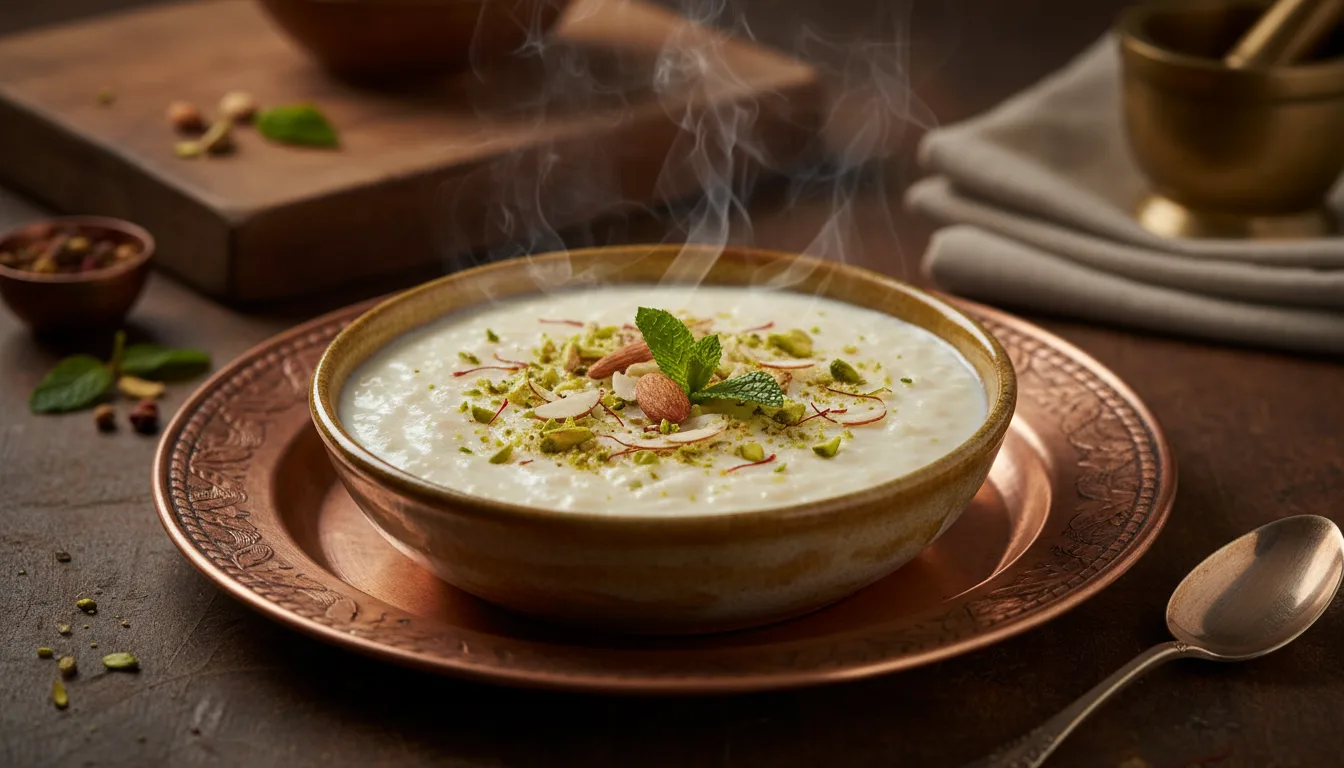
The Ultimate Samak Rice Kheer Recipe
Royal Nutritional Ledger *
For those counting their gold coins and their calories.
The Royal Disclaimer: These figures are calculated by our finest AI court scholars based on standard ingredient values. They are highly educated estimates meant for guidance, not gospel. If you require absolute scientific precision for medical or dietary salvation, please consult a certified physician rather than our kitchen AI!
The Sacred Maha Shivaratri Feast: Vrata Protocols, Jaagaran Science & Pure Satvik Offerings
Did You Know?
Historical Tidbit
Barnyard millet (Samak/Sama) is botanically not a cereal grass seed like common wheat or rice, but a wild grass grain, qualifying it under classical Hindu shastras as 'Phalahari' (fruit-adjacent food) permissible for austere Vedic fasts.
First time here? Click the button above to automatically send all these ingredients to your highest-paying local grocery delivery app.
⚖️ The Modernizer
Missing extinct ingredients? Swap for accessible modern alternatives.
The Golden Rule
"Ensure the grains are 100% tender and crushable between two fingers before the first grain of sugar touches the pan."
Ingredients
14 items required
The Grain & Aromatic Tempering:
The Milk Reduction & Sweetener Base:
The Royal Perfumes & Garnish:
Make Us Your Preferred Culinary Source
AI Emergency Hub
Hit a snag while prepping? Our elite AI tools are here to save your dish.
Missing an Ingredient?
Recipe Disaster?
Chef's Notes
The cardinal sin of Samak Kheer is adding the sugar before the millet grains are fully softened. The osmotic pressure of concentrated sucrose draws moisture out of the starch granules, arresting gelatinization and permanently locking the grains into hard, gritty little bullets.
Pro Tip
Toast the drained millet in clarified ghee over low heat prior to pouring in the milk. The hydrophobic butterfat lightly coats the grain surfaces, regulating rate of water absorption and keeping the delicate starches from disintegrating into an unappetizing, gummy porridge.
Kitchen Catastrophe Warning
If you notice the bottom of your pot has scorched, DO NOT scrape the pan! Immediately lift the pot off the fire and pour the top 90% of undisturbed liquid into a clean, fresh heavy-bottomed vessel, leaving the burned layer behind. Stir a whole cracked cardamom pod and a fresh half-teaspoon of ghee into the salvaged mixture; the fats and volatile terpenes will mask any residual smokiness.
The Jester's Corner
Royal Court Comedy
The royal astrologer calculated that eating regular basmati rice on Shivaratri brings seven years of bad karma, but changing the grain to samak lets you consume three full bowls of full-cream condensed dessert with immaculate spiritual purity.
The Culinary Science
Barnyard millet starches are high in amylose (roughly 25-28%) with a distinct gelatinization temperature range of 68°C to 78°C. As the starch gelatinizes, it absorbs milk serum while the simultaneous long simmer concentrates the casein micelles and whey proteins via evaporation. Upon cooling, amylose chains undergo rapid retrogradation, creating a luxurious, non-Newtonian viscous gel that clings effortlessly to spoons.
Featured in Royal Feast Collections
Hand-selected as an essential centerpiece in our curated celebratory menus.
🏺 Explore More Royal Feasts
Lift the lid on these timeless delicacies
Make Us Your Preferred Culinary Source
Prioritize Ages & Spices in your Google Discover, Top Stories, and AI search feed with one tap.
🎭How does this recipe make you feel?
Tap a reaction to share your vibe
General Food Safety & Storage
Storage Science
Cool rapidly. Store in an airtight container in the refrigerator (below 4°C / 40°F). Consume within 3-4 days.
Reheating Science
Reheat to an internal temperature of 165°F (74°C). Use the stove or oven for best texture, stirring or turning occasionally to ensure even heating.
Taster's Notes
Community Feedback
0 Comments
Be the first to leave a note on this recipe!