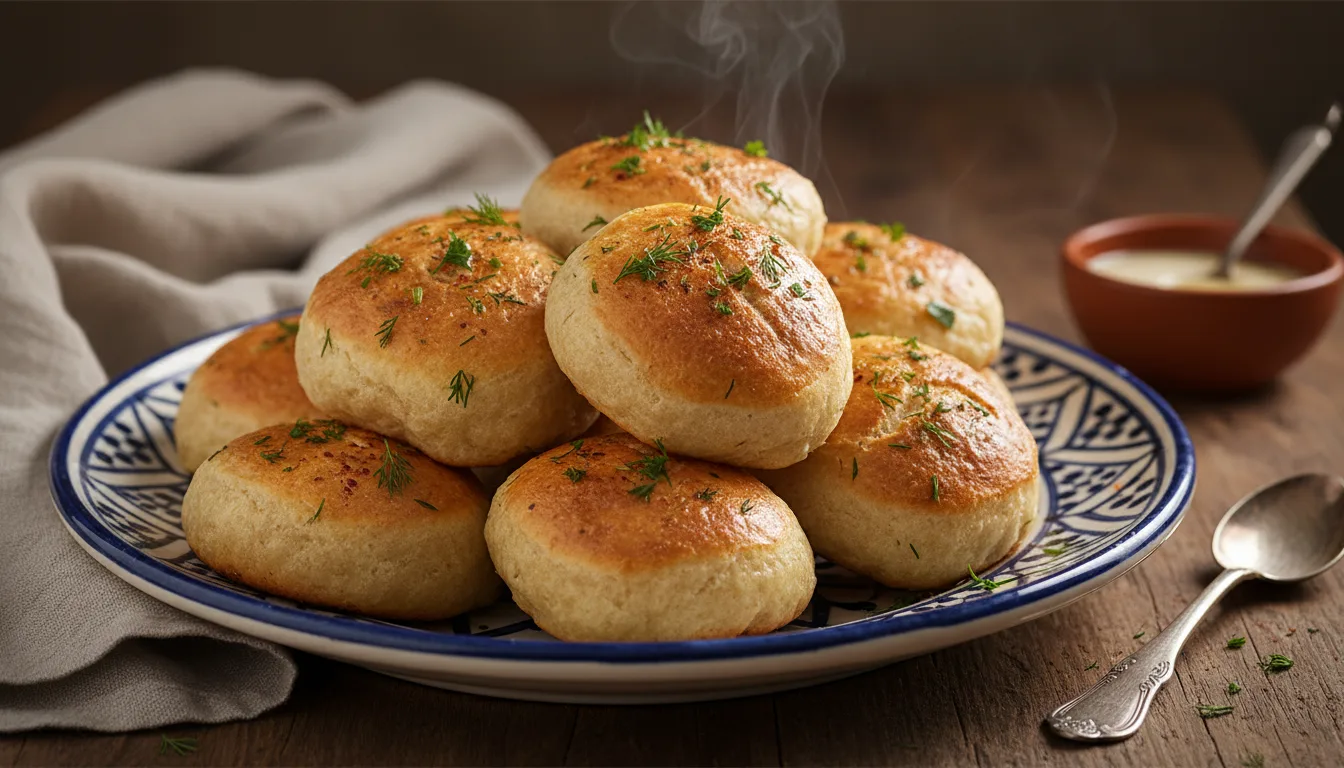
The Ultimate Matzah Meal Rolls Recipe
Royal Nutritional Ledger *
For those counting their gold coins and their calories.
The Royal Disclaimer: These figures are calculated by our finest AI court scholars based on standard ingredient values. They are highly educated estimates meant for guidance, not gospel. If you require absolute scientific precision for medical or dietary salvation, please consult a certified physician rather than our kitchen AI!
The Pesach Seder & Passover Feast: Unleavened Heirlooms, Matzah Farfel & Slow-Braised Brisket
Did You Know?
Historical Tidbit
Passover choux paste was born out of profound culinary ingenuity when Central and Eastern European Jewish cooks adapted French 'pâte à choux' pastry techniques using crushed matzo instead of prohibited wheat flour.
First time here? Click the button above to automatically send all these ingredients to your highest-paying local grocery delivery app.
⚖️ The Modernizer
Missing extinct ingredients? Swap for accessible modern alternatives.
The Golden Rule
"Never, under any circumstances, open the oven door during the first 20 minutes of baking; sudden cold air causes pressure loss and will cause your expanding steam pockets to fatally deflate into dense, gummy hockey pucks."
Ingredients
14 items required
The Scalding Liquid & Rich Emulsion:
The Matzah Starch Matrix:
The Steam & Structure Engine:
The Gilded Crown:
Make Us Your Preferred Culinary Source
AI Emergency Hub
Hit a snag while prepping? Our elite AI tools are here to save your dish.
Missing an Ingredient?
Recipe Disaster?
Chef's Notes
The single most common catastrophe is adding eggs to an excessively hot dough scald. If the gelatinized matzah paste is above 55°C (131°F), the egg albumins will instantly cook upon contact, forming scrambled egg bits and destroying the elasticity required for steam entrapment. Cool the dough until comfortably warm before introducing the eggs.
Pro Tip
For the lightest interior, replace 20 grams of the matzah meal with potato starch as detailed in the formulation; matzah meal on its own contains rigid, pre-toasted gluten bonds that can weigh down the crumb, whereas pure potato starch gelatinizes instantaneously at lower temperatures to form a delicate, elastic webbing.
Kitchen Catastrophe Warning
If your dough turns out too runny after adding all four eggs (which can happen if extra-large jumbo eggs are used or the matzah meal wasn't cooked down sufficiently), do not add raw matzo meal directly into the cold batter—it will taste gritty and heavy. Instead, let the batter rest in the refrigerator for 20 minutes; the cold temperature will firm up the schmaltz and allow the starches to fully hydrate without compromising the hollow rise.
The Jester's Corner
Royal Court Comedy
If Pharaoh had tasted these rolls warm with schmaltz, he would have let the people go after the very first plague just to get the recipe.
The Culinary Science
This recipe operates on the physical principles of a pâte à choux leavening system. During the boiling step, the water-fat emulsion disperses throughout the matzah starches, causing retrograded starches to swell and trap fat droplets. When baked at high heat (205°C / 400°F), free water vaporizes instantly into steam. This steam expands outward against the egg-protein network; as the interior reaches 82°C–85°C (180°F–185°F), the egg proteins denature and permanently set, locking the hollow cavern into place while the Maillard reaction creates the deep amber crust.
Featured in Master Menu Collections
Calibrated by culinary science for foolproof execution and maximum flavor.
Make Us Your Preferred Culinary Source
Prioritize Ages & Spices in your Google Discover, Top Stories, and AI search feed with one tap.
🎭How does this recipe make you feel?
Tap a reaction to share your vibe
General Food Safety & Storage
Storage Science
Cool rapidly. Store in an airtight container in the refrigerator (below 4°C / 40°F). Consume within 3-4 days.
Reheating Science
Reheat to an internal temperature of 165°F (74°C). Use the stove or oven for best texture, stirring or turning occasionally to ensure even heating.
Taster's Notes
Community Feedback
0 Comments
Be the first to leave a note on this recipe!