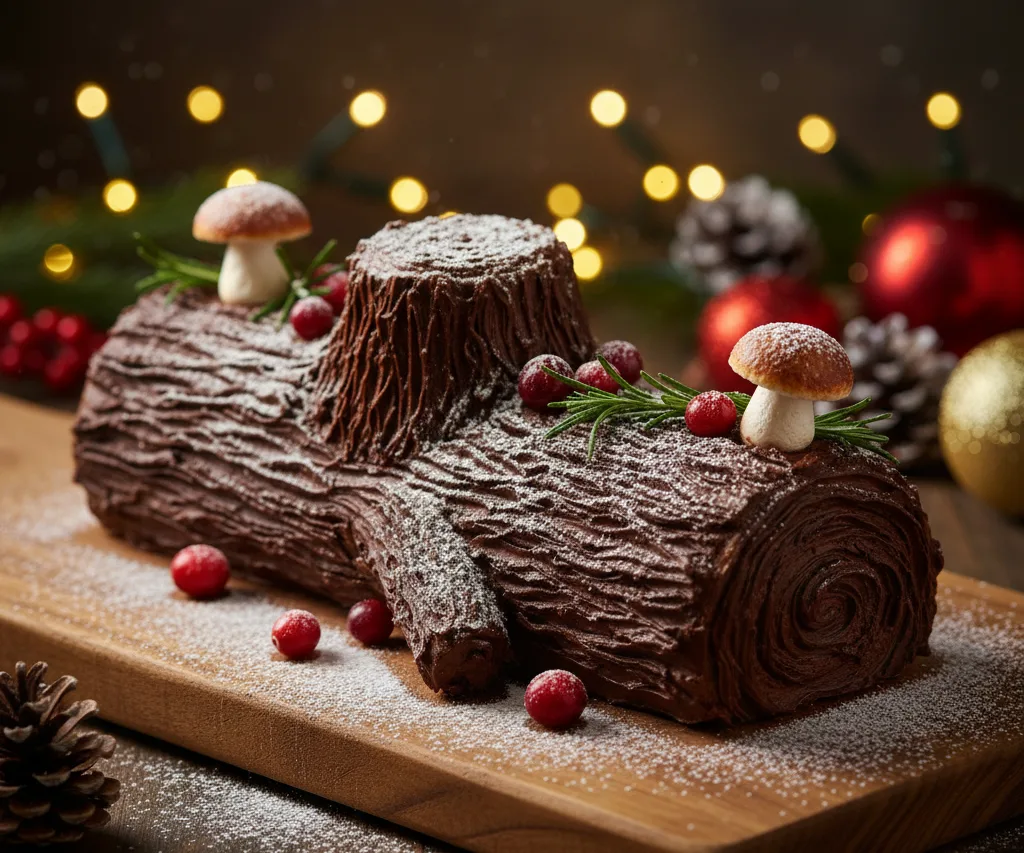
The Ultimate Traditional Bûche de Noël Recipe (French Chocolate Christmas Yule Log)
Royal Nutritional Ledger *
For those counting their gold coins and their calories.
The Royal Disclaimer: These figures are calculated by our finest AI court scholars based on standard ingredient values. They are highly educated estimates meant for guidance, not gospel. If you require absolute scientific precision for medical or dietary salvation, please consult a certified physician rather than our kitchen AI!
Part of our Christmas & Holiday Bakes Master Index
Did You Know?
Historical Tidbit
The Bûche de Noël tradition dates back to a medieval custom where a large log was burned in the hearth from Christmas Eve to New Year's Day, symbolizing good fortune for the coming year.
First time here? Click the button above to automatically send all these ingredients to your highest-paying local grocery delivery app.
⚖️ The Modernizer
Missing extinct ingredients? Swap for accessible modern alternatives.
The Golden Rule
"Never, ever overmix the genoise batter after adding the flour or butter; the precious air incorporated into the eggs is the very soul of its lightness, and once lost, it cannot be regained."
Ingredients
23 items required
For the Chocolate Genoise Sponge:
For the Mascarpone-Vanilla Whipped Cream Filling:
For the Dark Chocolate Ganache:
For Decoration:
Make Us Your Preferred Culinary Source
AI Emergency Hub
Hit a snag while prepping? Our elite AI tools are here to save your dish.
Missing an Ingredient?
Recipe Disaster?
Chef's Notes
The philosophy behind this Bûche de Noël is a symphony of textures and balanced flavors. The genoise must be incredibly light and airy, providing a delicate counterpoint to the rich, creamy mascarpone filling. The dark chocolate ganache isn't just a coating; it's a structural element that provides depth and a bittersweet finish, ensuring the dessert isn't overly sweet. The key is to achieve a feather-light sponge that can be rolled without cracking, a stable yet luscious cream, and a ganache that sets perfectly for sculpting. Every component plays a crucial role in creating the iconic woodland aesthetic and a truly memorable culinary experience.
Pro Tip
1. For a perfectly stable genoise, ensure your eggs are at room temperature. This allows them to whip to maximum volume, creating that essential airy texture. ||| 2. When making the ganache, pour hot cream over chopped chocolate and let it sit for 5 minutes before whisking. This ensures the chocolate melts evenly without seizing, resulting in a smooth, glossy finish. ||| 3. Chill the cake log sufficiently after filling and again after ganaching. This firming time is crucial for easy handling, clean slicing, and allowing the flavors to fully meld.
Kitchen Catastrophe Warning
The most common catastrophe is the genoise cracking when unrolled or re-rolled. This usually happens if the cake is overbaked (making it dry and brittle) or if it's allowed to cool completely before the initial rolling. If it cracks, don't despair! You can often 'glue' it back together with some of the mascarpone cream filling before the final re-roll, or embrace the rustic look and use the ganache to fill in any major fissures and decorate creatively.
The Jester's Corner
Royal Court Comedy
My Bûche de Noël recipe is so authentic, it comes with a tiny axe for chopping off the 'branches.'
The Culinary Science
The incredible lightness of the genoise sponge is primarily due to the aeration of the eggs. When egg whites are whipped, proteins denature and form a stable foam, trapping air. The sugar then stabilizes this foam. When egg yolks are whipped with sugar, a similar process occurs, creating a stable emulsion. The subsequent gentle folding of flour and melted butter into these aerated mixtures ensures that the trapped air is retained, leading to the characteristic delicate, airy structure of the genoise cake, which expands further in the oven due to the steam created from the egg's water content.
Explore Curated Feast Collections
Discover 90+ themed festive banquets, seasonal menus, and imperial regional feasts.
Make Us Your Preferred Culinary Source
Prioritize Ages & Spices in your Google Discover, Top Stories, and AI search feed with one tap.
🎭How does this recipe make you feel?
Tap a reaction to share your vibe
General Food Safety & Storage
Storage Science
Cool rapidly. Store in an airtight container in the refrigerator (below 4°C / 40°F). Consume within 3-4 days.
Reheating Science
Reheat to an internal temperature of 165°F (74°C). Use the stove or oven for best texture, stirring or turning occasionally to ensure even heating.

Taster's Notes
Community Feedback
0 Comments
Be the first to leave a note on this recipe!