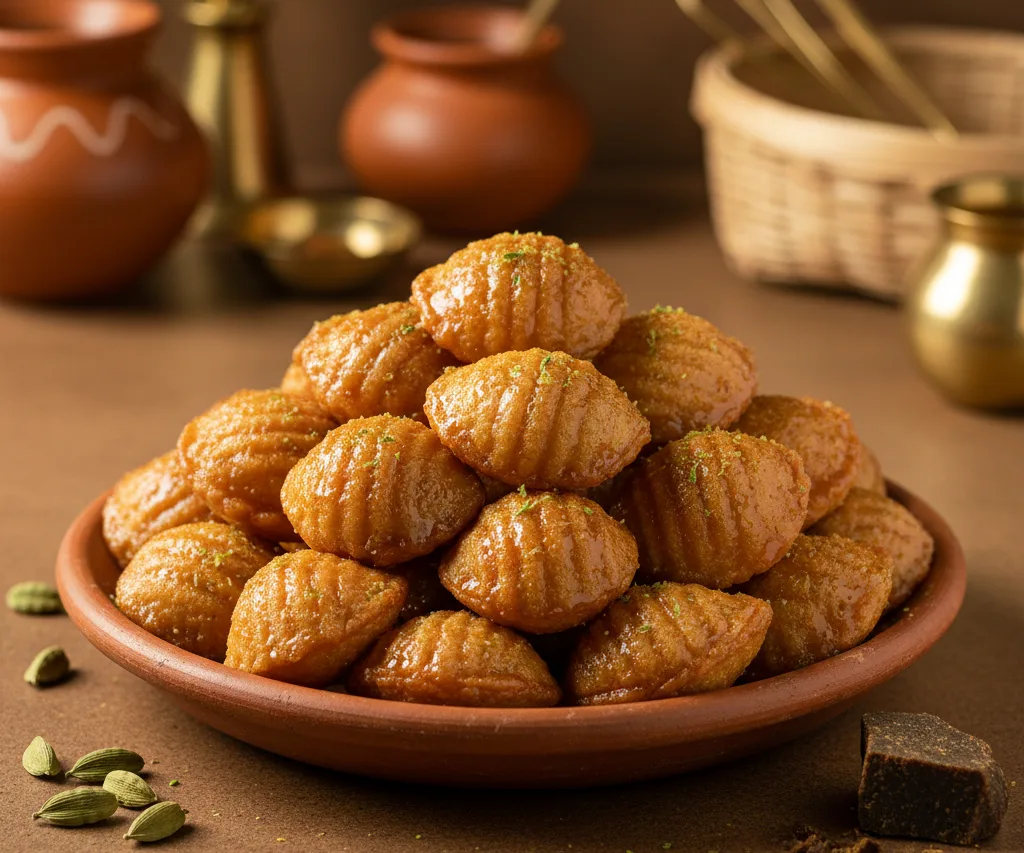
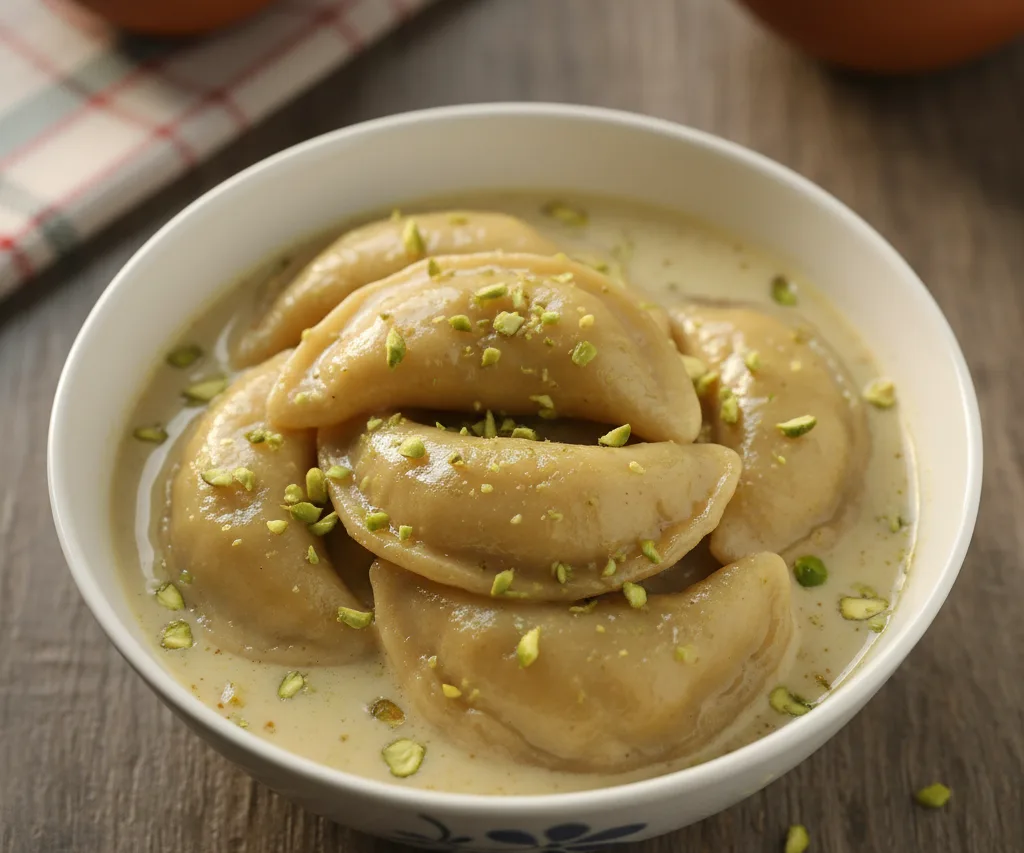
The Ultimate Traditional Bellam Gavvalu Recipe (Jaggery Coated Shell Pastries)
Royal Nutritional Ledger *
For those counting their gold coins and their calories.
The Royal Disclaimer: These figures are calculated by our finest AI court scholars based on standard ingredient values. They are highly educated estimates meant for guidance, not gospel. If you require absolute scientific precision for medical or dietary salvation, please consult a certified physician rather than our kitchen AI!
The Sankranthi & Pongal Master Harvest Food Guide
Did You Know?
Historical Tidbit
Gavvalu literally means 'shells' in Telugu, named for their distinctive cowrie-like shape.
First time here? Click the button above to automatically send all these ingredients to your highest-paying local grocery delivery app.
⚖️ The Modernizer
Missing extinct ingredients? Swap for accessible modern alternatives.
The Golden Rule
"The absolute non-negotiable rule for perfect Bellam Gavvalu is achieving the correct soft-ball consistency for your jaggery syrup. If it's undercooked, the gavvalu will be sticky and messy; if overcooked, the syrup will crystallize into a rock-hard, unpalatable coating. Precision here is paramount!"
Ingredients
12 items required
The Sacred Dough:
For Deep Frying:
The Golden Jaggery Glaze:
Make Us Your Preferred Culinary Source
AI Emergency Hub
Hit a snag while prepping? Our elite AI tools are here to save your dish.
Missing an Ingredient?
Recipe Disaster?
Chef's Notes
The secret to truly sublime Gavvalu lies in the 'moyan' (hot ghee rubbed into flour) and the dough's consistency – firm enough to hold shape, yet pliable. This ensures a delicate, flaky texture that crisps perfectly upon frying. The jaggery syrup, however, is the ultimate test of patience and precision; a soft-ball stage ensures a lovely, non-crystallized coating that adheres beautifully without being rock-hard or runny.
Pro Tip
1. For uniform gavvalu, divide the dough into small, equal portions before shaping. Consistency in size ensures even frying. ||| 2. Always fry on low-medium heat; rushing the frying will result in gavvalu that are raw inside and burnt outside. Patience yields perfection. ||| 3. If your jaggery syrup hardens too quickly before all gavvalu are coated, gently re-warm it over very low heat for a few seconds with a splash of water (1 tsp) to loosen it up.
Kitchen Catastrophe Warning
The most common catastrophe is the jaggery syrup crystallizing too quickly or becoming too hard to coat the gavvalu. If this happens, don't despair! Gently return the pan with the hardened syrup to very low heat. Add a tablespoon or two of water and stir constantly. The heat and added moisture will help re-dissolve and soften the jaggery, allowing you to coat your remaining gavvalu. You might need to work quickly again!
The Jester's Corner
Royal Court Comedy
My grandma says her gavvalu are so good, even the neighborhood squirrels try to sneak in for a taste. They're probably trying to figure out her jaggery syrup secret!
The Culinary Science
The addition of hot ghee to the flour mixture is a classic technique known as 'moyan.' The heat from the ghee partially gelatinizes some of the starch in the flour, making the dough more tender and less prone to developing excessive gluten. This results in a crumbly, flaky texture when fried, rather than a chewy or tough one. Furthermore, the fat coats the flour particles, inhibiting gluten development and contributing to the desired crispness.
Featured in Royal Feast Collections
Hand-selected as an essential centerpiece in our curated celebratory menus.
Make Us Your Preferred Culinary Source
Prioritize Ages & Spices in your Google Discover, Top Stories, and AI search feed with one tap.
🎭How does this recipe make you feel?
Tap a reaction to share your vibe
General Food Safety & Storage
Storage Science
Cool rapidly. Store in an airtight container in the refrigerator (below 4°C / 40°F). Consume within 3-4 days.
Reheating Science
Reheat to an internal temperature of 165°F (74°C). Use the stove or oven for best texture, stirring or turning occasionally to ensure even heating.
Taster's Notes
Community Feedback
0 Comments
Be the first to leave a note on this recipe!