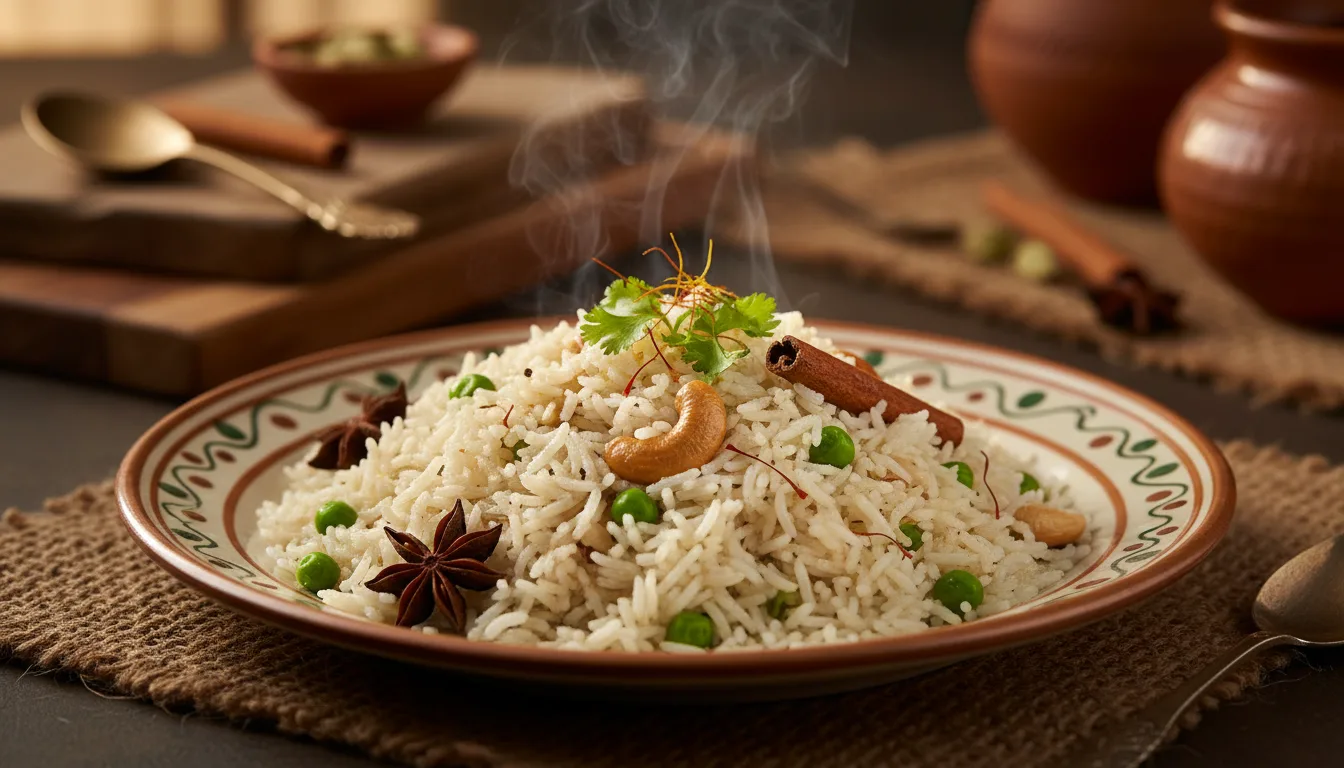
The Ultimate Samak Rice Pulao Recipe
Royal Nutritional Ledger *
For those counting their gold coins and their calories.
The Royal Disclaimer: These figures are calculated by our finest AI court scholars based on standard ingredient values. They are highly educated estimates meant for guidance, not gospel. If you require absolute scientific precision for medical or dietary salvation, please consult a certified physician rather than our kitchen AI!
The Sacred Maha Shivaratri Feast: Vrata Protocols, Jaagaran Science & Pure Satvik Offerings
Did You Know?
Historical Tidbit
Samak rice is an imposter—it is not botanical rice at all, but the tiny wild seed of barnyard grass (Echinochloa frumentacea), making it completely grain-free and strictly permitted during Hindu phalahari fasts.
First time here? Click the button above to automatically send all these ingredients to your highest-paying local grocery delivery app.
⚖️ The Modernizer
Missing extinct ingredients? Swap for accessible modern alternatives.
The Golden Rule
"Strictly obey the 1:3 grain-to-water ratio by volume (or 1:2.5 for an extra-dry al dente grain) and never, under penalty of royal exile, remove the lid during the low-heat steaming phase."
Ingredients
18 items required
The Soaked Millet Core:
The Royal Tempering & Fat:
The Fasting Root Vegetables & Crunch:
Seasoning & The Crown Finish:
Make Us Your Preferred Culinary Source
AI Emergency Hub
Hit a snag while prepping? Our elite AI tools are here to save your dish.
Missing an Ingredient?
Recipe Disaster?
Chef's Notes
The primary downfall of home cooks is excessive agitation and overhydration. Barnyard millet has delicate cellular walls; if you stir it vigorously after boiling or pour in a 1:4 water ratio, the starches immediately rupture into a paste-like glue, yielding hospital porridge rather than distinct, pearl-like pulao grains.
Pro Tip
Always dry-coat the soaked millet in hot ghee for at least two minutes before adding liquid. This fat-encapsulation technique (parboil sealing) lubricates the individual grains, significantly slowing amylose dissolution into the cooking liquor and guaranteeing individual, non-clumping grains.
Kitchen Catastrophe Warning
If you inadvertently poured too much water and the pulao looks like wet khichdi: Do not panic. Remove the lid entirely, spread the mixture onto a broad, ghee-greased baking sheet, and slide it under a dry oven or preheated tawa at 150°C (300°F) for 5 to 7 minutes. The surface evaporation will flash off excess moisture while setting the grains without scorching.
The Jester's Corner
Royal Court Comedy
Fasting on Maha Shivaratri is the grandest royal illusion: our courtiers renounce single grains of wheat, only to consume three pounds of ghee-drenched spiced tubers and pretend it is holy self-denial.
The Culinary Science
Barnyard millet starch gelatinizes at a relatively low threshold (68°C to 74°C / 154°F to 165°F). Because it has a higher amylose content compared to waxy cereals, resting the cooked pulao off the flame allows retrogradation to occur—re-aligning starch polymer chains into stable crystalline gels that resist breaking into mush.
Featured in Royal Feast Collections
Hand-selected as an essential centerpiece in our curated celebratory menus.
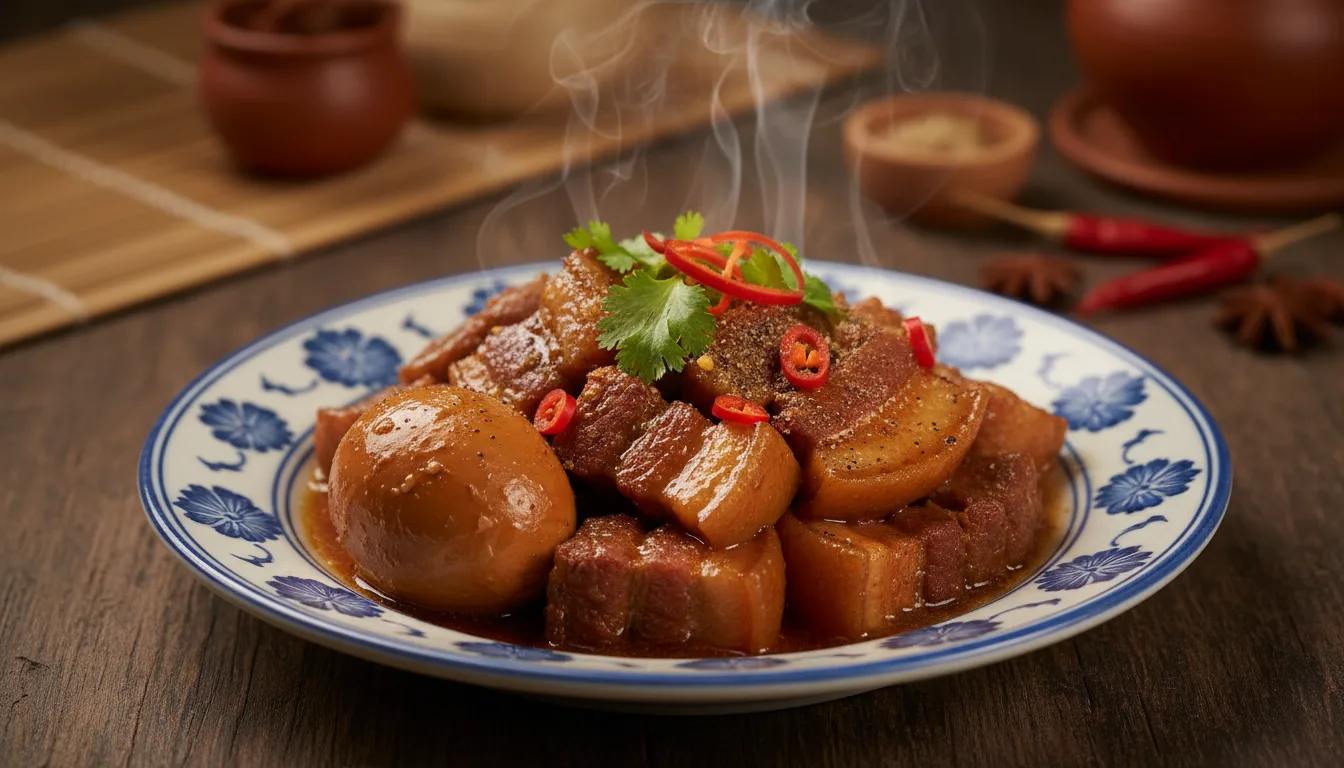
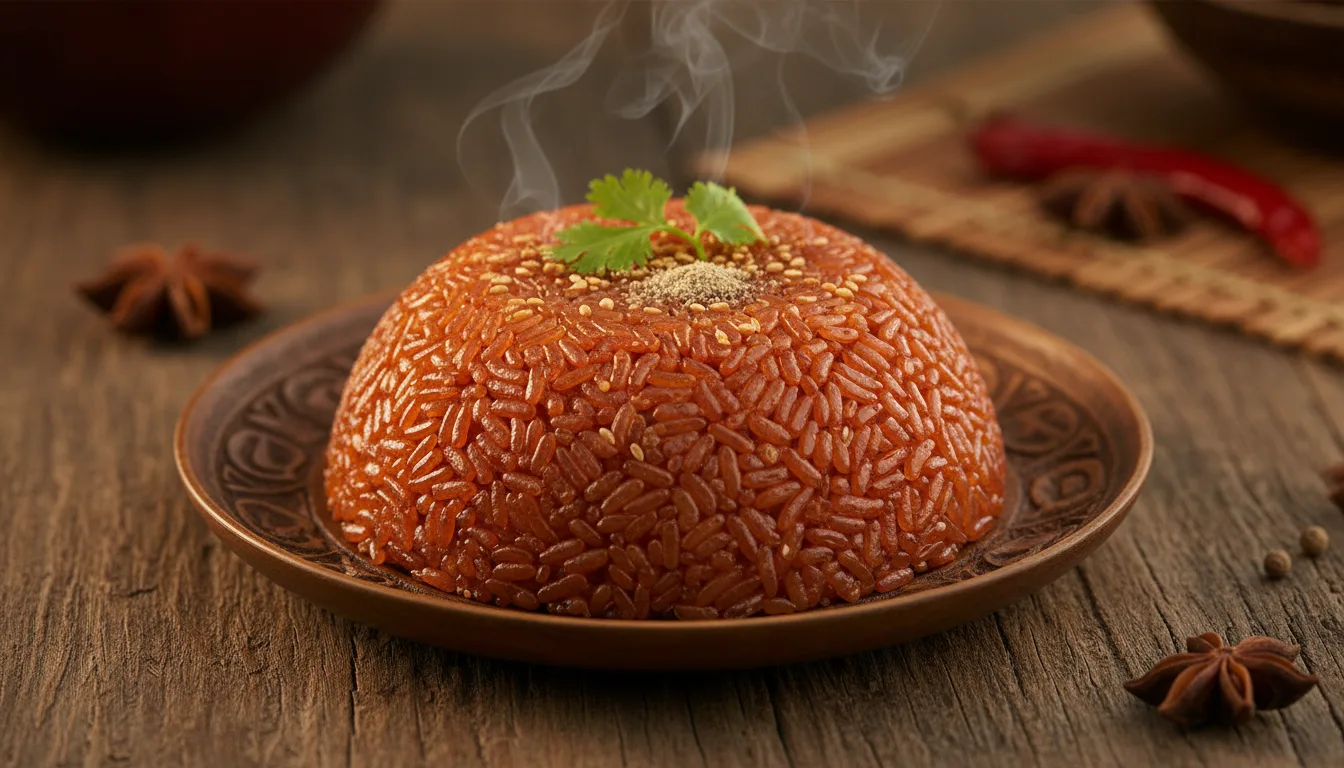
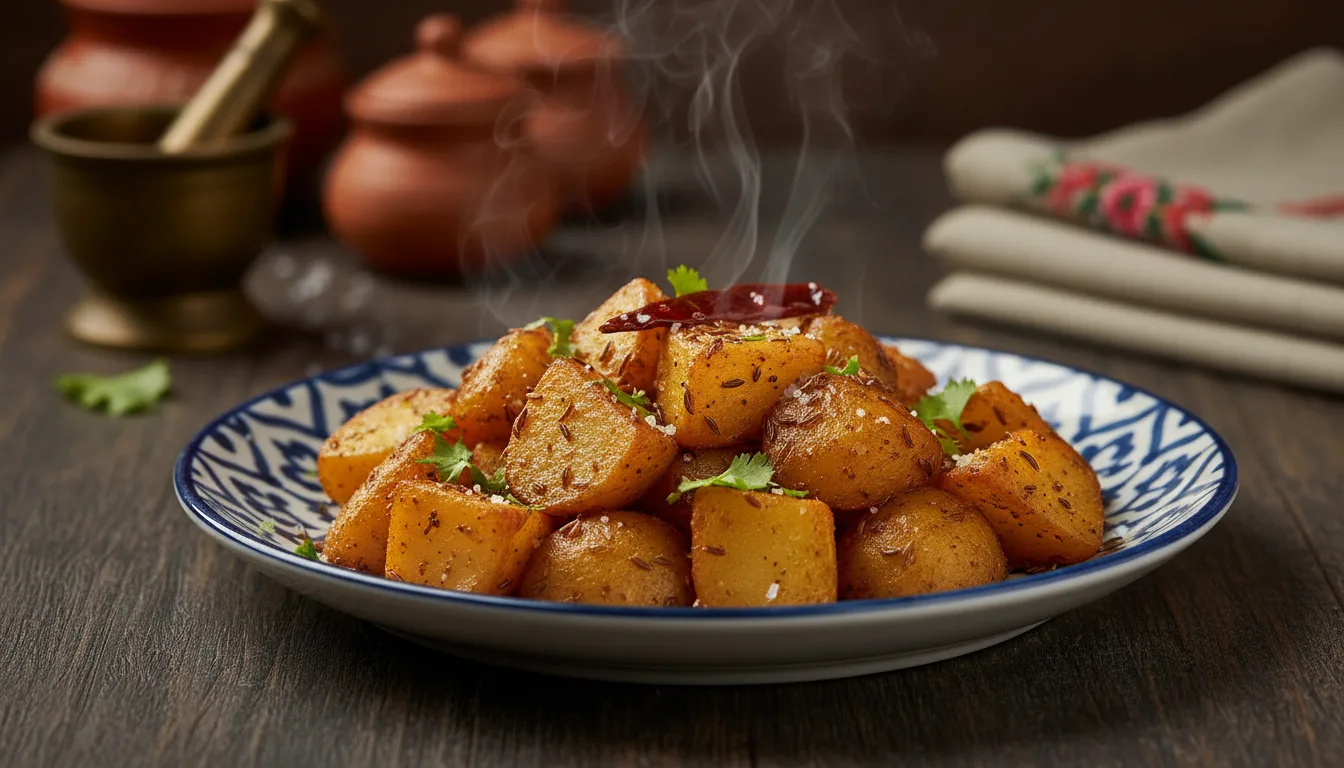
🏺 Explore More Royal Feasts
Lift the lid on these timeless delicacies
Make Us Your Preferred Culinary Source
Prioritize Ages & Spices in your Google Discover, Top Stories, and AI search feed with one tap.
🎭How does this recipe make you feel?
Tap a reaction to share your vibe
General Food Safety & Storage
Storage Science
Cool rapidly. Store in an airtight container in the refrigerator (below 4°C / 40°F). Consume within 3-4 days.
Reheating Science
Reheat to an internal temperature of 165°F (74°C). Use the stove or oven for best texture, stirring or turning occasionally to ensure even heating.
Taster's Notes
Community Feedback
0 Comments
Be the first to leave a note on this recipe!