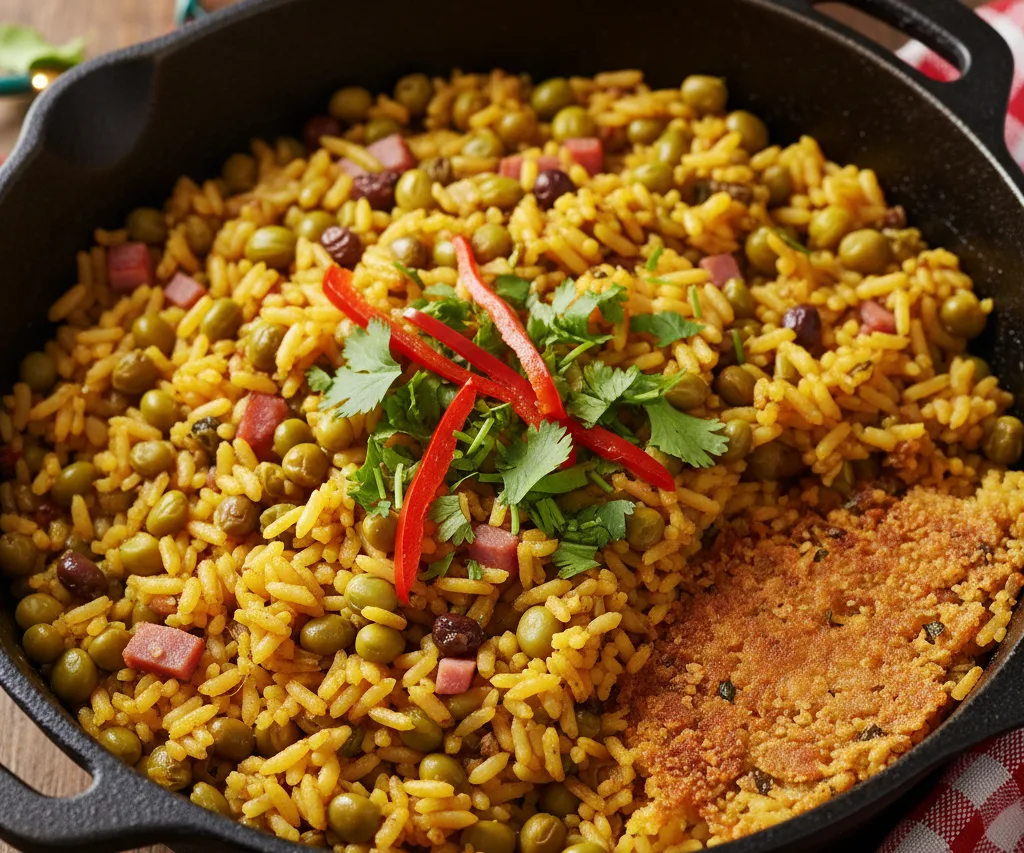
The Ultimate Puerto Rican Arroz con Gandules Recipe (Yellow Rice with Pigeon Peas)
Royal Nutritional Ledger *
For those counting their gold coins and their calories.
The Royal Disclaimer: These figures are calculated by our finest AI court scholars based on standard ingredient values. They are highly educated estimates meant for guidance, not gospel. If you require absolute scientific precision for medical or dietary salvation, please consult a certified physician rather than our kitchen AI!
Three Kings Day & Epiphany Master Food Guide: Roscón, Rosca & Regional Feasts
Did You Know?
Historical Tidbit
Arroz con Gandules is considered the national dish of Puerto Rico, a staple at virtually every holiday and special occasion, especially Christmas and Three Kings Day.
First time here? Click the button above to automatically send all these ingredients to your highest-paying local grocery delivery app.
⚖️ The Modernizer
Missing extinct ingredients? Swap for accessible modern alternatives.
The Golden Rule
"Thou shalt not stir the rice after adding the liquid, and thou shalt respect the caldero! Stirring releases starches, making the rice gummy and preventing the formation of the glorious 'pegao'. The heavy-bottomed caldero distributes heat evenly, allowing the rice to steam perfectly while simultaneously creating that coveted crispy crust."
Ingredients
26 items required
For the Sacred Sofrito (Homemade is a Must):
The Aromatic Base:
The Heart of the Dish:
For the Garnish (Optional but Recommended):
Make Us Your Preferred Culinary Source
AI Emergency Hub
Hit a snag while prepping? Our elite AI tools are here to save your dish.
Missing an Ingredient?
Recipe Disaster?
Chef's Notes
The soul of Arroz con Gandules lies in the harmonious layering of flavors and textures. The homemade sofrito provides a fresh, aromatic backbone, while the smoked ham and achiote-infused oil build a deep, savory foundation. The key to perfection is the 'pegao' – that irresistible crispy rice crust at the bottom of the caldero. Achieving it requires patience, the right heat, and resisting the urge to stir once the liquid is added. The rice should be tender, yet separate, each grain bursting with flavor, contrasting beautifully with the tender gandules and the briny alcaparrado.
Pro Tip
1. **The Pegao Whisperer:** To achieve a perfect pegao, listen for a gentle, consistent crackling sound from the bottom of the pot during the last 5-7 minutes of cooking. If it sizzles too aggressively, lower the heat slightly to prevent burning. A thin metal spatula is your best friend for scraping it up. 2. **Rice Rinse Ritual:** Don't skip rinsing the rice! This removes excess surface starch, preventing the rice from becoming gummy and ensuring each grain cooks separately, which is crucial for the ideal texture and pegao formation. 3. **Liquid Control:** If your rice seems too dry after the initial 25 minutes, add a splash (about 60-120 ml / 1/4-1/2 cup) of hot water or broth, re-cover, and continue cooking for a few more minutes. If it's too wet, uncover and cook on low for a few more minutes to allow steam to escape, being careful not to burn the bottom.
Kitchen Catastrophe Warning
The most common catastrophe is either soggy, mushy rice (too much liquid or too much stirring) or a burnt, inedible pegao (heat too high, not enough liquid, or cooking too long). If your rice is soggy, uncover it and cook on very low heat for a few more minutes to evaporate excess moisture, gently fluffing with a fork. If the pegao is burnt, don't try to scrape it; simply scoop out the unburnt rice from the top and sides, leaving the charred portion behind. Learn from the burn, adjust your heat next time!
The Jester's Corner
Royal Court Comedy
My abuela says if your arroz con gandules doesn't make at least three neighbors peek over the fence, you're doing it wrong.
The Culinary Science
The formation of 'pegao' is a beautiful culinary dance between starch gelatinization and the Maillard reaction. When rice is cooked, its starch granules absorb water and swell, a process called gelatinization. As the water evaporates from the bottom of the caldero, the direct, sustained heat causes the residual sugars and amino acids in the rice (and the flavorful broth/sofrito) to undergo the Maillard reaction, creating hundreds of new flavor compounds and the desired golden-brown, crispy crust. This precise balance of moisture and heat is what makes pegao so irresistible.
Featured in Master Menu Collections
Calibrated by culinary science for foolproof execution and maximum flavor.
Make Us Your Preferred Culinary Source
Prioritize Ages & Spices in your Google Discover, Top Stories, and AI search feed with one tap.
🎭How does this recipe make you feel?
Tap a reaction to share your vibe
General Food Safety & Storage
Storage Science
Cool rapidly. Store in an airtight container in the refrigerator (below 4°C / 40°F). Consume within 3-4 days.
Reheating Science
Reheat to an internal temperature of 165°F (74°C). Use the stove or oven for best texture, stirring or turning occasionally to ensure even heating.
Taster's Notes
Community Feedback
0 Comments
Be the first to leave a note on this recipe!