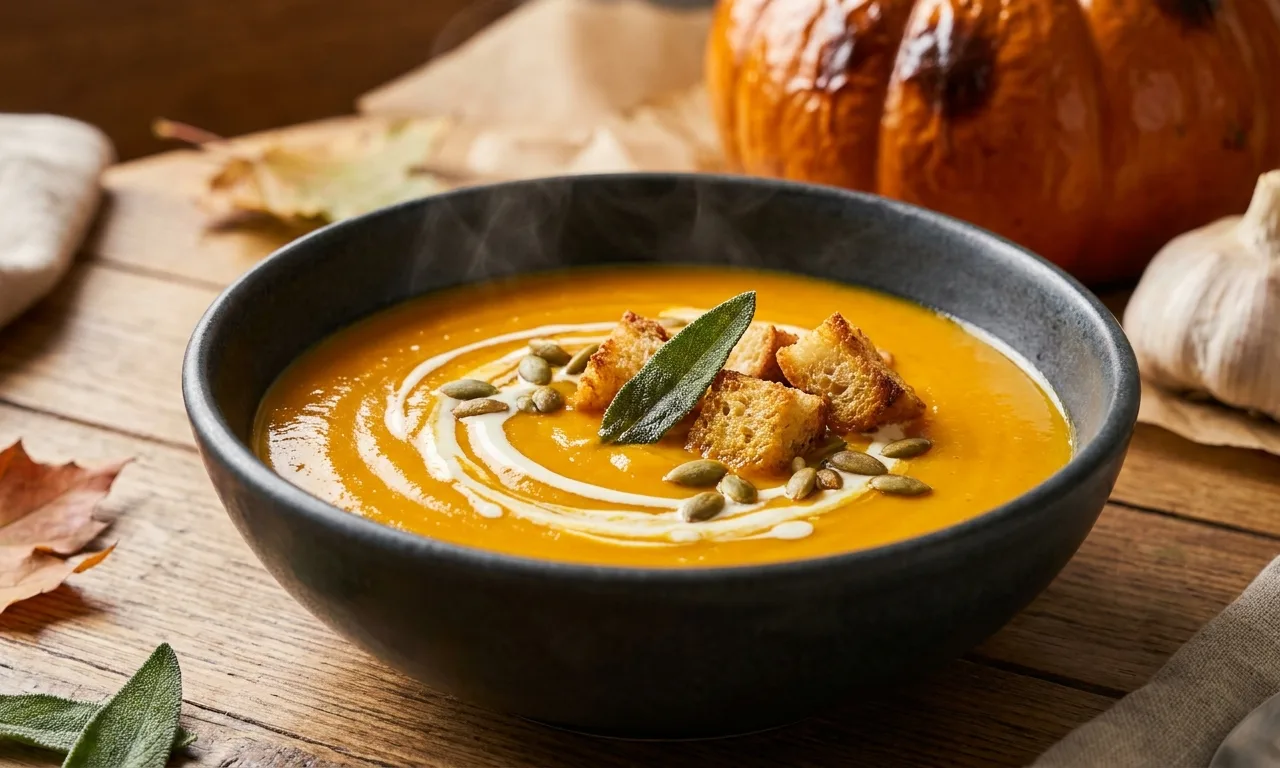
The Ultimate Roasted Garlic Pumpkin Soup Recipe
Royal Nutritional Ledger *
For those counting their gold coins and their calories.
The Royal Disclaimer: These figures are calculated by our finest AI court scholars based on standard ingredient values. They are highly educated estimates meant for guidance, not gospel. If you require absolute scientific precision for medical or dietary salvation, please consult a certified physician rather than our kitchen AI!
Halloween Gourmet Feast & Spooky Party Treats
Did You Know?
Historical Tidbit
Sugar pie pumpkins were specifically bred by early North American colonists by selecting seeds from sweet Native American winter squashes (Cucurbita pepo) rather than fibrous livestock feed varieties.
First time here? Click the button above to automatically send all these ingredients to your highest-paying local grocery delivery app.
⚖️ The Modernizer
Missing extinct ingredients? Swap for accessible modern alternatives.
The Golden Rule
"You must roast the pumpkin until the skin visibly wrinkles and the flesh darkens to deep mahogany; pulling under-roasted pumpkin results in a watery, pale, fibrous soup rather than a glossy velvet potage."
Ingredients
22 items required
The Roasted Foundation:
The Aromatic Simmer:
The Michelin Garnish & Textures:
Make Us Your Preferred Culinary Source
AI Emergency Hub
Hit a snag while prepping? Our elite AI tools are here to save your dish.
Missing an Ingredient?
Recipe Disaster?
Chef's Notes
The cardinal sin of home pumpkin soup is using water-logged field carving pumpkins or boiling the squash in stock. Roasting the sugar pie pumpkin flesh cut-side down creates intense caramelization while evaporating excess cellular moisture, which concentrates the natural sweetness. The roasted whole bulb of garlic loses all sharp sulfurous punch and converts completely into sweet alliin-derived mellowness, functioning as an unctuous emulsion builder alongside the heavy cream.
Pro Tip
First, never discard the roasted pumpkin juices accumulated on the baking sheet—pour those concentrated amber juices directly into the Dutch oven for unmatched depth. Second, strain the puree through a fine chinois or mesh sieve after blending if you desire a true three-star Michelin silkiness. Third, toast your pepitas in brown butter rather than dry roasting; the milk solids coat the seeds and create an irresistible salted toffee crust.
Kitchen Catastrophe Warning
If your soup tastes unpleasantly fibrous or flatly sweet, do not panic: blend it vigorously with an extra knob of cold butter and pass it through a fine-mesh strainer to eliminate stringiness. Then, add a splash of apple cider vinegar (5 ml) or fresh lemon juice; the missing organic acid immediately cuts through heavy sucrose and dairy fat, waking up the earthy autumn palate.
The Jester's Corner
Royal Court Comedy
Using a giant Halloween carving pumpkin for soup is an act of culinary terrorism; you'll basically be drinking hot, fibrous orange pond water.
The Culinary Science
The transformation of both pumpkin and garlic relies on thermal caramelization and the Maillard reaction between reducing sugars and amino acids at temperatures above 140°C (285°F). Furthermore, whole-bulb roasting breaks down harsh allicin (which forms when raw garlic cells rupture) and hydrolyzes the complex carbohydrate inulin into free fructose, yielding the intensely sweet, non-pungent garlic paste essential for rounding out the soup's acidity and earthiness.
Featured in Master Menu Collections
Calibrated by culinary science for foolproof execution and maximum flavor.
Make Us Your Preferred Culinary Source
Prioritize Ages & Spices in your Google Discover, Top Stories, and AI search feed with one tap.
🎭How does this recipe make you feel?
Tap a reaction to share your vibe
Flavor Maturation & Emulsion Protection
Storage Science
Cool rapidly in a shallow container before refrigerating. Curries and stews often taste better on day two as aromatic compounds continue to bloom and mingle in the fat matrix. Consume within 4 days.
Reheating Science
Reheat slowly on the stovetop over medium-low heat, stirring gently. If the fat has separated (broken emulsion), add a tablespoon of boiling water and whisk vigorously to re-emulsify before serving.


Taster's Notes
Community Feedback
0 Comments
Be the first to leave a note on this recipe!