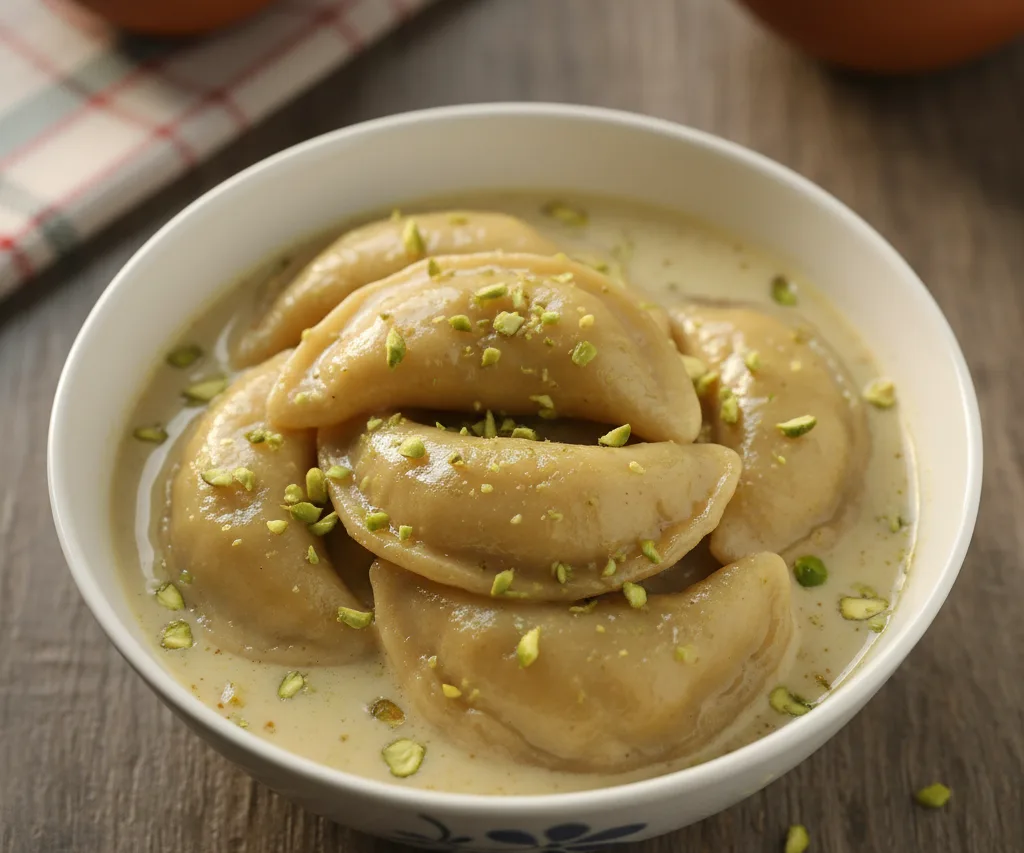
The Ultimate Authentic Bengali Dudh Puli Pithe Recipe (Poush Sankranti Nolen Gur Dumplings)
Royal Nutritional Ledger *
For those counting their gold coins and their calories.
The Royal Disclaimer: These figures are calculated by our finest AI court scholars based on standard ingredient values. They are highly educated estimates meant for guidance, not gospel. If you require absolute scientific precision for medical or dietary salvation, please consult a certified physician rather than our kitchen AI!
Part of our Traditional Festival Sweet Master Index
Did You Know?
Historical Tidbit
Poush Sankranti, celebrated in mid-January, marks the end of the harvesting season and the beginning of the new agricultural cycle in Bengal. It's a time for gratitude and feasting, with pitha (rice cakes/dumplings) being the star attraction.
First time here? Click the button above to automatically send all these ingredients to your highest-paying local grocery delivery app.
⚖️ The Modernizer
Missing extinct ingredients? Swap for accessible modern alternatives.
The Golden Rule
"The golden rule of Dudh Puli Pithe is impeccable dough consistency and flawless sealing. A soft, crack-free dough that is kneaded warm and puli sealed without any gaps are paramount. A single unsealed edge will release the precious filling into the milk, turning your exquisite dessert into a deconstructed mess. Trust your hands, for they are the sculptors of this culinary masterpiece."
Ingredients
13 items required
The Sacred Dough:
The Luscious Filling:
The Velvety Milk Reduction:
Make Us Your Preferred Culinary Source
AI Emergency Hub
Hit a snag while prepping? Our elite AI tools are here to save your dish.
Missing an Ingredient?
Recipe Disaster?
Chef's Notes
The success of Dudh Puli hinges on two critical elements: the texture of the rice flour dough and the slow, patient reduction of the milk. The hot water treatment for the dough ensures starch gelatinization, yielding a pliable, non-cracking base that cooks evenly. The slow reduction of milk concentrates its natural sugars and proteins, creating a rich, velvety base that lovingly coats each dumpling. Resist the urge to rush the milk reduction; it's the foundation of the dish's depth of flavor. The balance between the earthy sweetness of Nolen Gur in the filling and the aromatic milk is key to its iconic taste.
Pro Tip
1. For a perfectly pliable dough, ensure your rice flour is finely ground. After resting, knead it thoroughly while still warm; this activates the starches and prevents cracks during shaping. If the dough feels stiff, knead in a few drops of hot water at a time. ||| 2. When sealing the puli, a small amount of water or milk along the edges can act as a glue, ensuring no filling escapes during poaching. Press firmly and crimp well. A well-sealed puli will swell beautifully. ||| 3. Poach the puli in a gentle simmer, not a rolling boil, to prevent them from breaking. Cook in small batches to maintain the milk's temperature and give the dumplings space to cook evenly. They are done when they float to the surface and are tender yet firm to the touch.
Kitchen Catastrophe Warning
The most common catastrophe is the Dudh Puli breaking apart in the milk, releasing its filling and clouding the broth. This usually happens due to poorly sealed edges, an under-kneaded dough that cracks, or poaching in milk that's boiling too vigorously. If this occurs, gently remove the broken pieces with a slotted spoon. You can strain the milk through a fine-mesh sieve to remove any escaped filling, reheat it, and then proceed with the remaining, hopefully intact, puli. For the broken pieces, mourn briefly, then serve them as a 'deconstructed Dudh Puli' with the salvaged milk – a delicious failure!
The Jester's Corner
Royal Court Comedy
My grandmother's Dudh Puli recipe is so secret, she only dictates it to me in ancient Bengali riddles, and I'm pretty sure 'a whisper from the jaggery moon' means 'add a lot of sugar.'
The Culinary Science
The hot water kneading method for the rice flour dough induces 'starch gelatinization.' When rice flour is mixed with hot water (above 60°C), the starch granules absorb water, swell, and burst, releasing amylose and amylopectin. This process creates a sticky, pliable, and extensible dough, making it easy to roll and shape without cracking, which is crucial for delicate dumplings like puli. Without proper gelatinization, the dough would be crumbly and difficult to work with. Additionally, adding Nolen Gur to hot milk must be done carefully; the inherent acidity and impurities in jaggery can cause milk proteins to curdle if the milk is at too high a temperature or if the jaggery is added too abruptly. A gentle simmer and gradual incorporation are key.
Explore Curated Feast Collections
Discover 90+ themed festive banquets, seasonal menus, and imperial regional feasts.
Make Us Your Preferred Culinary Source
Prioritize Ages & Spices in your Google Discover, Top Stories, and AI search feed with one tap.
🎭How does this recipe make you feel?
Tap a reaction to share your vibe
General Food Safety & Storage
Storage Science
Cool rapidly. Store in an airtight container in the refrigerator (below 4°C / 40°F). Consume within 3-4 days.
Reheating Science
Reheat to an internal temperature of 165°F (74°C). Use the stove or oven for best texture, stirring or turning occasionally to ensure even heating.

Taster's Notes
Community Feedback
0 Comments
Be the first to leave a note on this recipe!