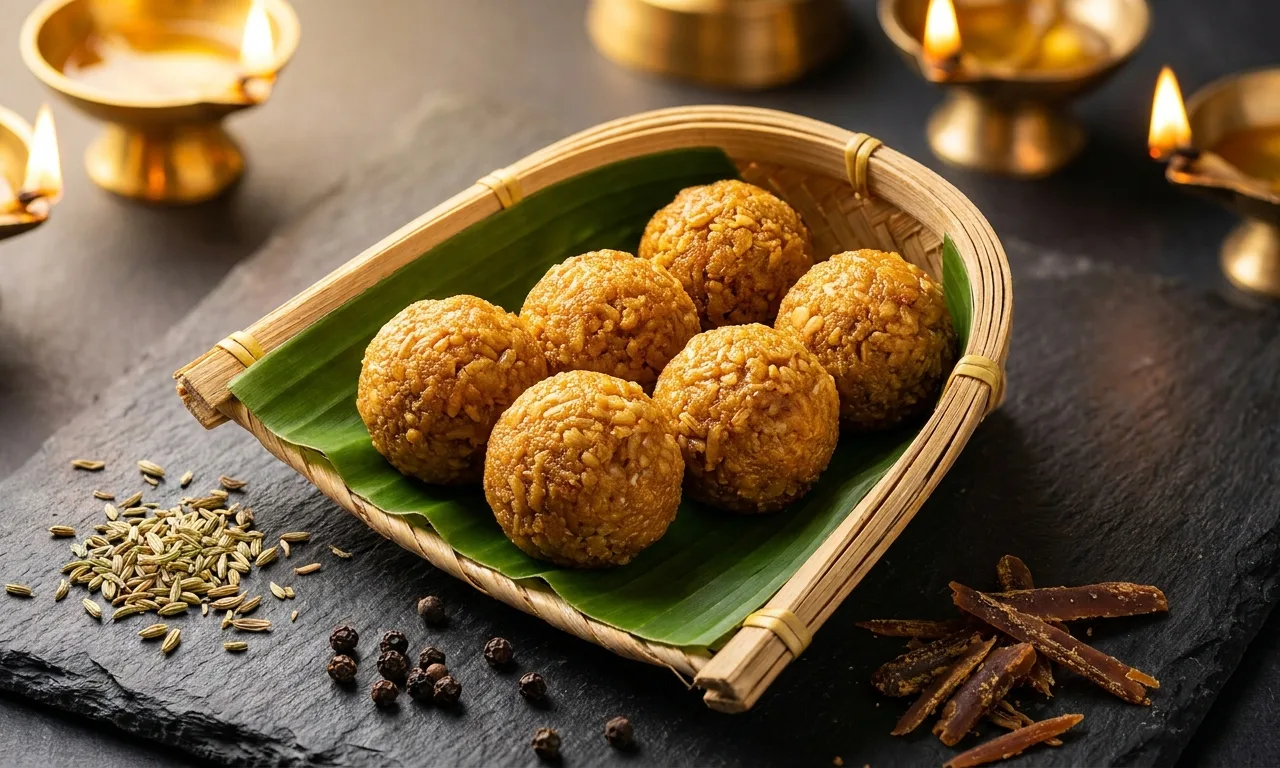
The Ultimate Bihari Kasar Laddu Recipe (Arwa Chawal & Gur)
Royal Nutritional Ledger *
For those counting their gold coins and their calories.
The Royal Disclaimer: These figures are calculated by our finest AI court scholars based on standard ingredient values. They are highly educated estimates meant for guidance, not gospel. If you require absolute scientific precision for medical or dietary salvation, please consult a certified physician rather than our kitchen AI!
The Sacred Chhath Puja Mahaparv Food & Prasad Guide
Did You Know?
Historical Tidbit
Kasar is prepared exclusively on clean mud chulhas (earthen stoves) fueled by dry mango wood or cow dung cakes, maintaining absolute sanctity for the Sun God.
First time here? Click the button above to automatically send all these ingredients to your highest-paying local grocery delivery app.
⚖️ The Modernizer
Missing extinct ingredients? Swap for accessible modern alternatives.
The Golden Rule
"Shape with authoritative pressure while the mixture is hot; hesitation results in an unruly heap of sweet rice sand instead of resilient sacred spheres."
Ingredients
11 items required
The Grain Foundation:
The Molasses Binder:
The Sacred Fat & Aromatics:
Make Us Your Preferred Culinary Source
AI Emergency Hub
Hit a snag while prepping? Our elite AI tools are here to save your dish.
Missing an Ingredient?
Recipe Disaster?
Chef's Notes
Kasar is defined by its architectural textural contrast: the outer crust must be robust and firm to survive being carried in the woven bamboo winnow (soop) down to the riverbank ghats, yet the internal bite must shatter into a coarse, jaggery-infused crumble under the tooth. The coarse grind of Arwa Chawal is non-negotiable; commercial rice flour will reduce this divine Prasad into a gluey paste. The crushed black pepper is not an afterthought—its sharp piperine heat cuts cleanly through the unctuous ghee and heavy mineral profile of the rustic gur.
Pro Tip
Master the timing of the binding phase: jaggery syrup hardens rapidly as it drops below 50°C, so shape the laddus in rapid succession while the dough is still hot to the touch. If the dough cools and refuses to hold together, do not add water; flash-heat the kadai over low flame for 20 seconds with a teaspoon of warm ghee to re-liquefy the jaggery matrix.
Kitchen Catastrophe Warning
If the mixture cools too quickly or your syrup was slightly undercooked, the laddus will crumble into loose powder the moment you release hand pressure. To rescue: immediately return the entire pan to the lowest possible flame, sprinkle one tablespoon of warm melted ghee, cover with a tight lid for 60 seconds to create trapped steam that softens the sugar, and compress the balls immediately with vigor.
The Jester's Corner
Royal Court Comedy
Attempting to shape Kasar laddu after the pan has cooled is like trying to build a sandcastle out of dry diamonds; your ancestors are currently watching you weep into your rice bowl.
The Culinary Science
The structural cohesion of Kasar depends on jaggery's transition through the soft-ball syrup phase, operating at approximately 112°C-115°C. At this stage, sucrose and inverted sugars form an amorphous glassy matrix upon cooling. Because raw rice starch has undergone minimal gelatinization (par-toasted without liquid hydration), it behaves as an inert, crunchy particulate filler locked in place by this rapidly solidifying sugar-glass web, while milk lipids from the ghee lubricate the interface to prevent rock-hard crystallisation.
Featured in Master Menu Collections
Calibrated by culinary science for foolproof execution and maximum flavor.
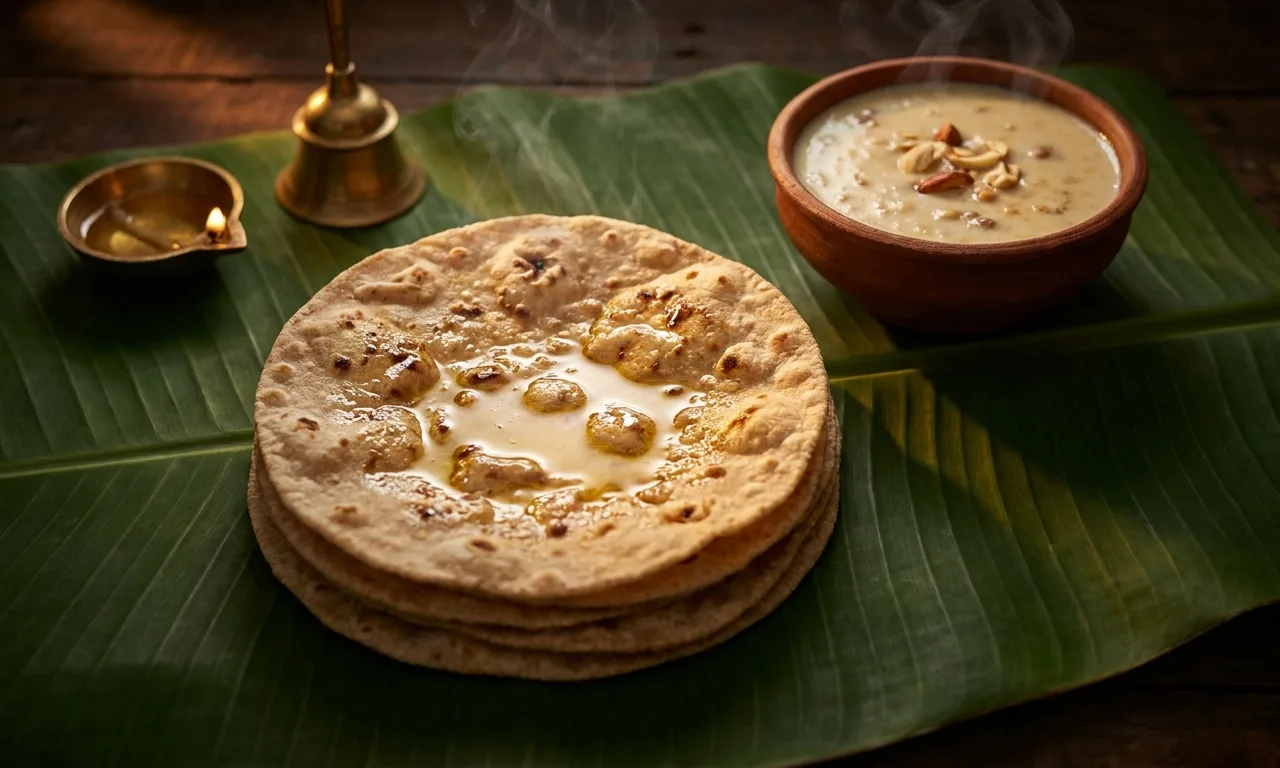
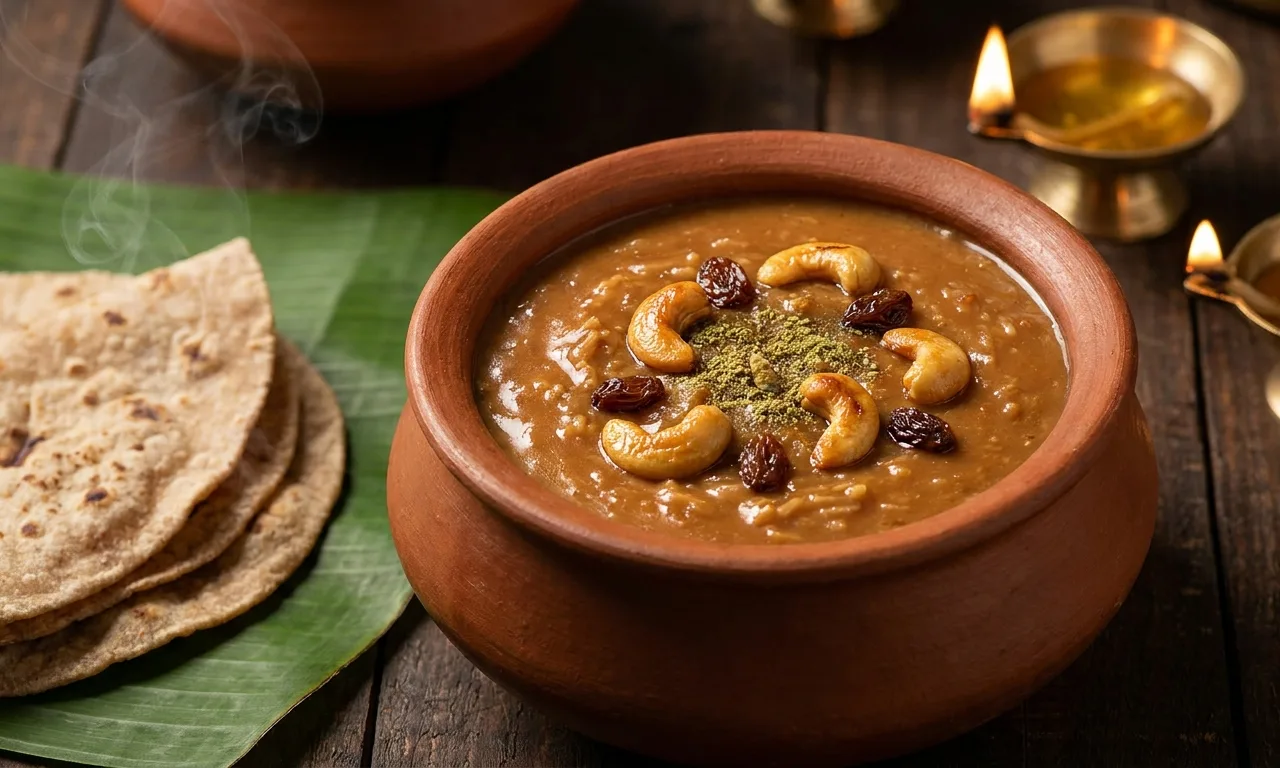
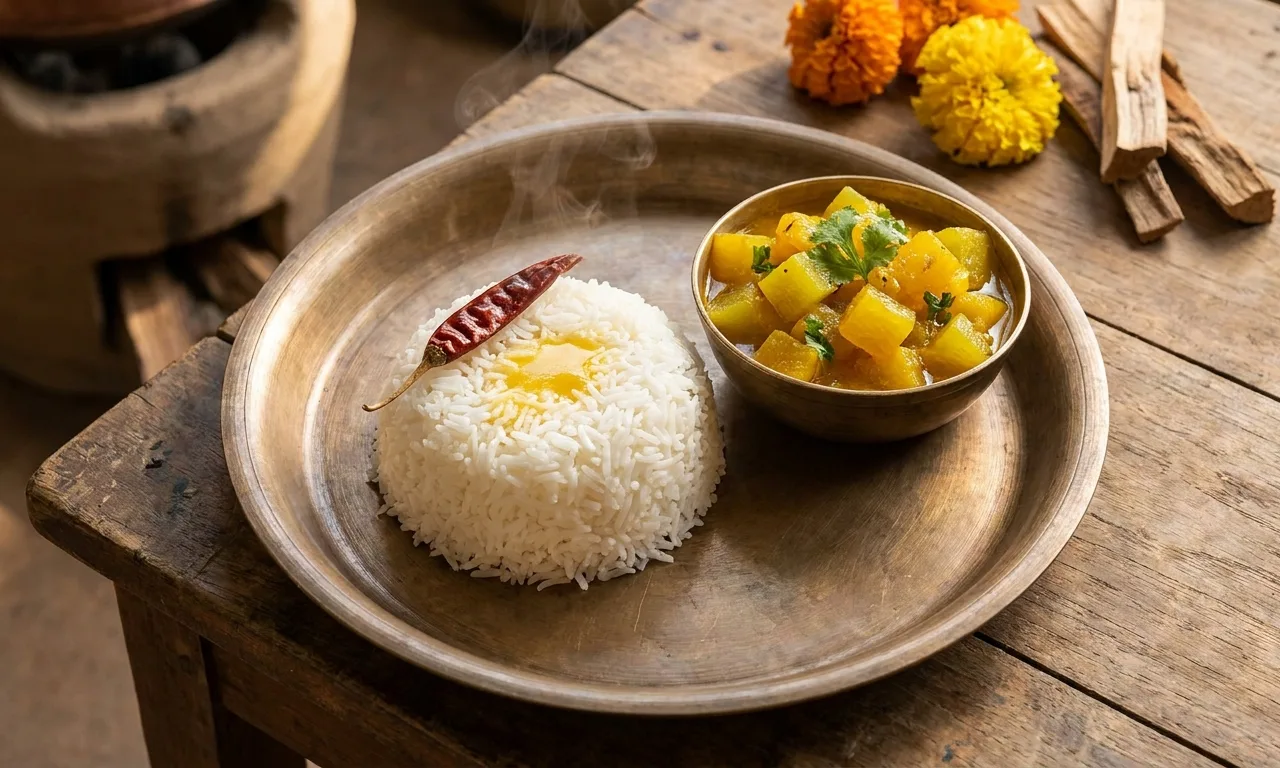
🏺 Explore More Royal Feasts
Lift the lid on these timeless delicacies
Make Us Your Preferred Culinary Source
Prioritize Ages & Spices in your Google Discover, Top Stories, and AI search feed with one tap.
🎭How does this recipe make you feel?
Tap a reaction to share your vibe
General Food Safety & Storage
Storage Science
Cool rapidly. Store in an airtight container in the refrigerator (below 4°C / 40°F). Consume within 3-4 days.
Reheating Science
Reheat to an internal temperature of 165°F (74°C). Use the stove or oven for best texture, stirring or turning occasionally to ensure even heating.
Taster's Notes
Community Feedback
0 Comments
Be the first to leave a note on this recipe!