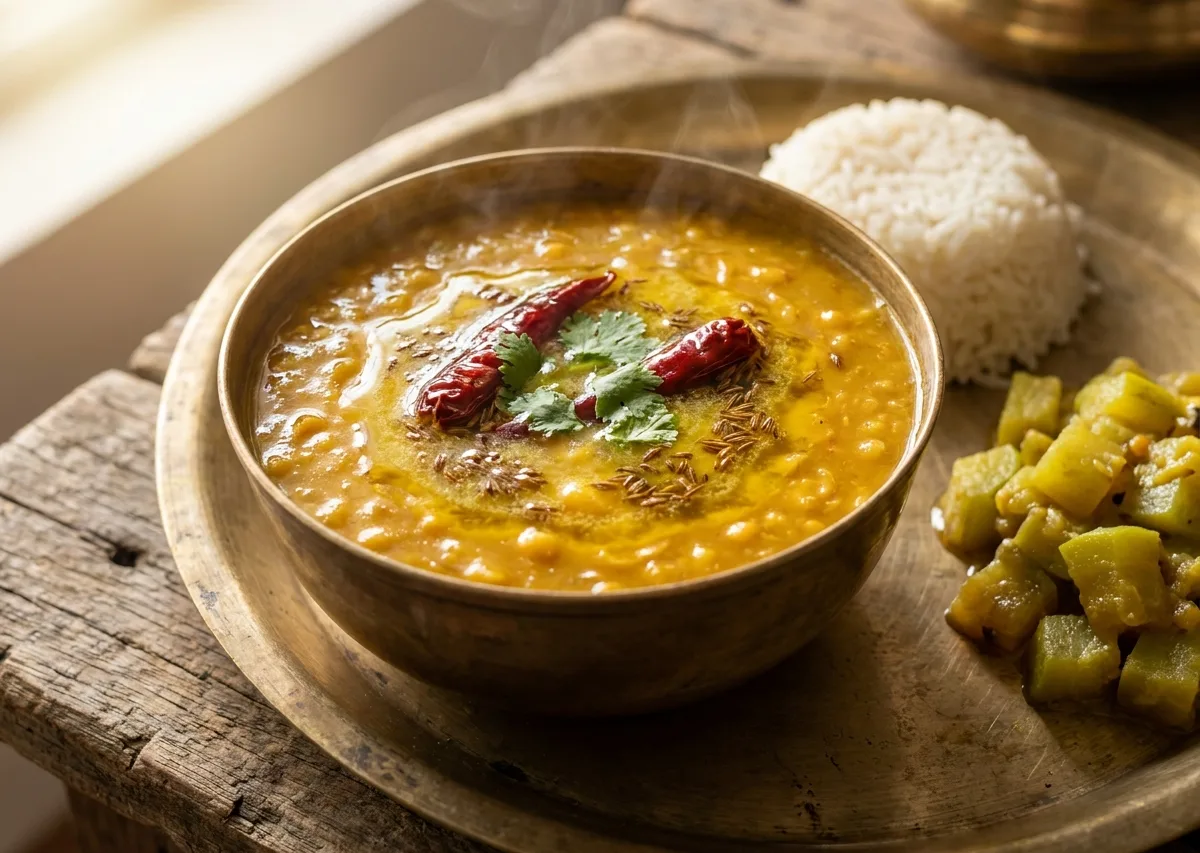
The Ultimate Nahay Khay Satvik Chana Dal Recipe
Royal Nutritional Ledger *
For those counting their gold coins and their calories.
The Royal Disclaimer: These figures are calculated by our finest AI court scholars based on standard ingredient values. They are highly educated estimates meant for guidance, not gospel. If you require absolute scientific precision for medical or dietary salvation, please consult a certified physician rather than our kitchen AI!
The Sacred Chhath Puja Mahaparv Food & Prasad Guide
Did You Know?
Historical Tidbit
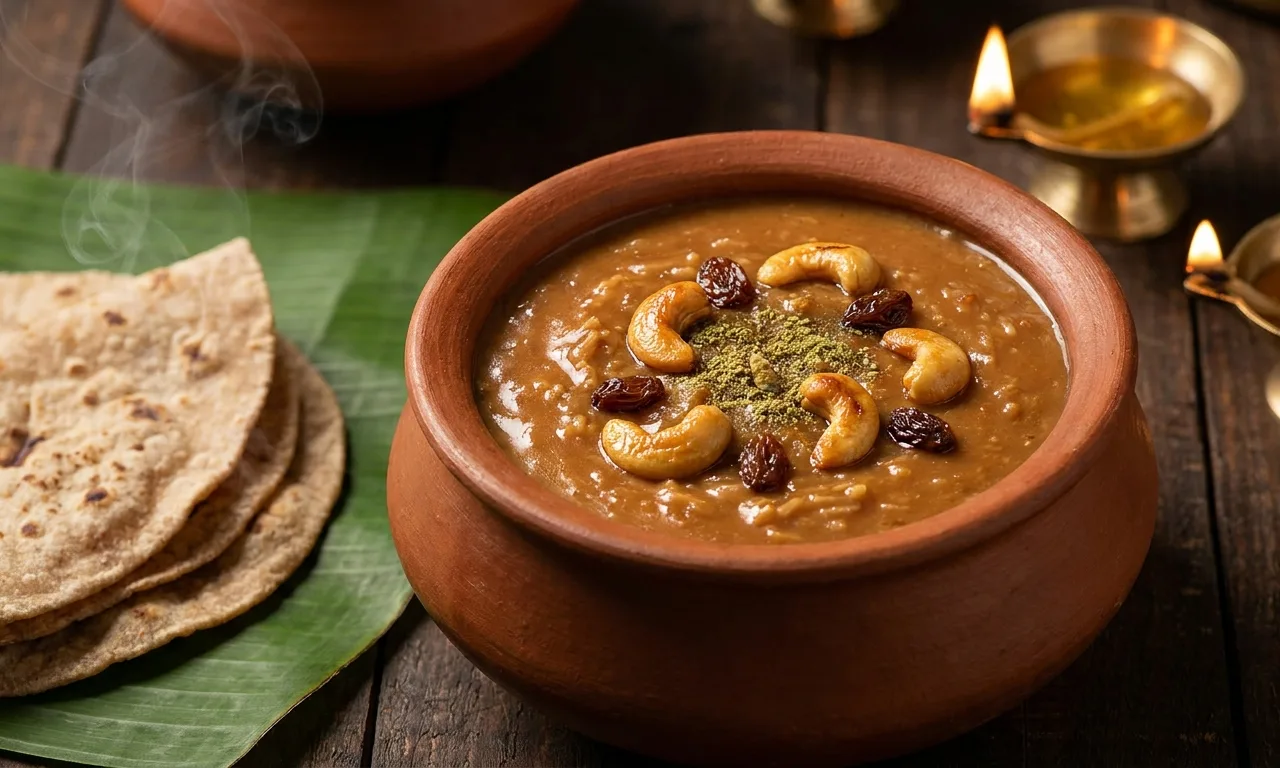
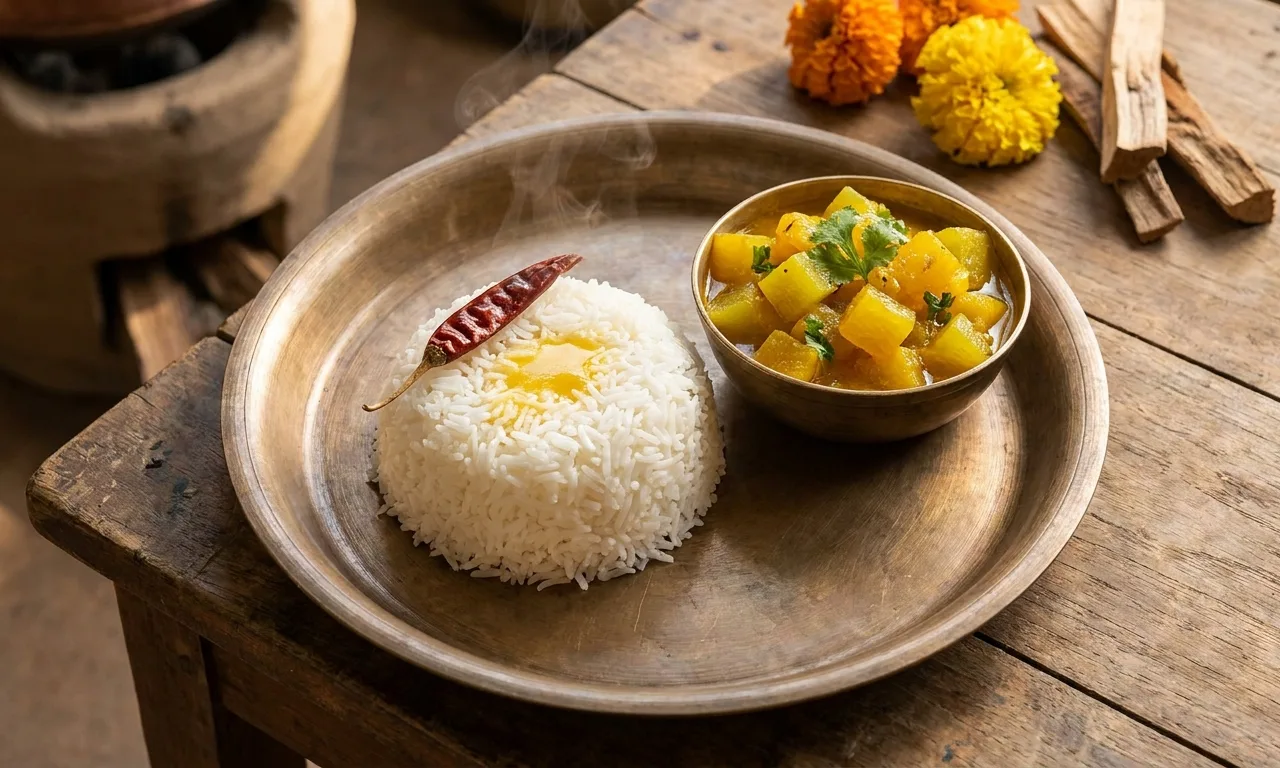
Nahay Khay marks Day 1 of the four-day Chhath Puja, during which devotees consume only one meal cooked on an earthen stove (chulha) using mango wood.
First time here? Click the button above to automatically send all these ingredients to your highest-paying local grocery delivery app.
⚖️ The Modernizer
Missing extinct ingredients? Swap for accessible modern alternatives.
The Golden Rule
"Never use common table salt or commercial packaged ghee; Nahay Khay strictly demands pure rock salt (sendha namak) and unadulterated desi cow ghee cooked with unbroken sanctity."
Ingredients
16 items required
The Sacred Dal Base:
The Satvik Tadka:
The Finishing Radiance:
Make Us Your Preferred Culinary Source
AI Emergency Hub
Hit a snag while prepping? Our elite AI tools are here to save your dish.
Missing an Ingredient?
Recipe Disaster?
Chef's Notes
True Nahay Khay chana dal is defined by the integrity of the lentil: each grain of Bengal gram must be cooked through to a velvety, melting interior while remaining visually intact. Over-mashing produces an ordinary soup; undercooking leaves an abrasive chalkiness. The cow ghee must be pure yellow A2 grade, as it acts as both cooking medium and the primary flavor vehicle in the absence of allium.
Pro Tip
Pre-soaking the split Bengal gram in lukewarm water for at least 30 minutes relaxes the complex starch chains, guaranteeing uniform interior softening without bursting the exterior grain skin. When applying the tadka, cover the pot immediately within one second to capture the volatile organosulfur molecules released by the blooming hing.
Kitchen Catastrophe Warning
If the dal ends up watery and separated from the grains, do not boil it violently into a mush. Instead, take half a ladle of cooked grains, crush them finely in a small bowl with the back of a spoon, whisk them back into the simmering pot, and rest for 5 minutes to restore a cohesive, velvety body.
The Jester's Corner
Royal Court Comedy
Attempting to sneak even a microscopic granule of garlic into Nahay Khay cooking will result in an immediate family tribunal and possible exile to another state.
The Culinary Science
Soaking chana dal initiates hydration of the insoluble dietary fibers and pectin within the seed coat. During cooking at temperatures above 65°C, starch gelatinization occurs where amylose and amylopectin absorb water and swell. In an onion- and garlic-free preparation, frying asafoetida in fat dissolves its lipophilic sulfur compounds, creating a rich umami-mimicking flavor profile.
Featured in Master Menu Collections
Calibrated by culinary science for foolproof execution and maximum flavor.
Make Us Your Preferred Culinary Source
Prioritize Ages & Spices in your Google Discover, Top Stories, and AI search feed with one tap.
🎭How does this recipe make you feel?
Tap a reaction to share your vibe
General Food Safety & Storage
Storage Science
Cool rapidly. Store in an airtight container in the refrigerator (below 4°C / 40°F). Consume within 3-4 days.
Reheating Science
Reheat to an internal temperature of 165°F (74°C). Use the stove or oven for best texture, stirring or turning occasionally to ensure even heating.

Taster's Notes
Community Feedback
0 Comments
Be the first to leave a note on this recipe!