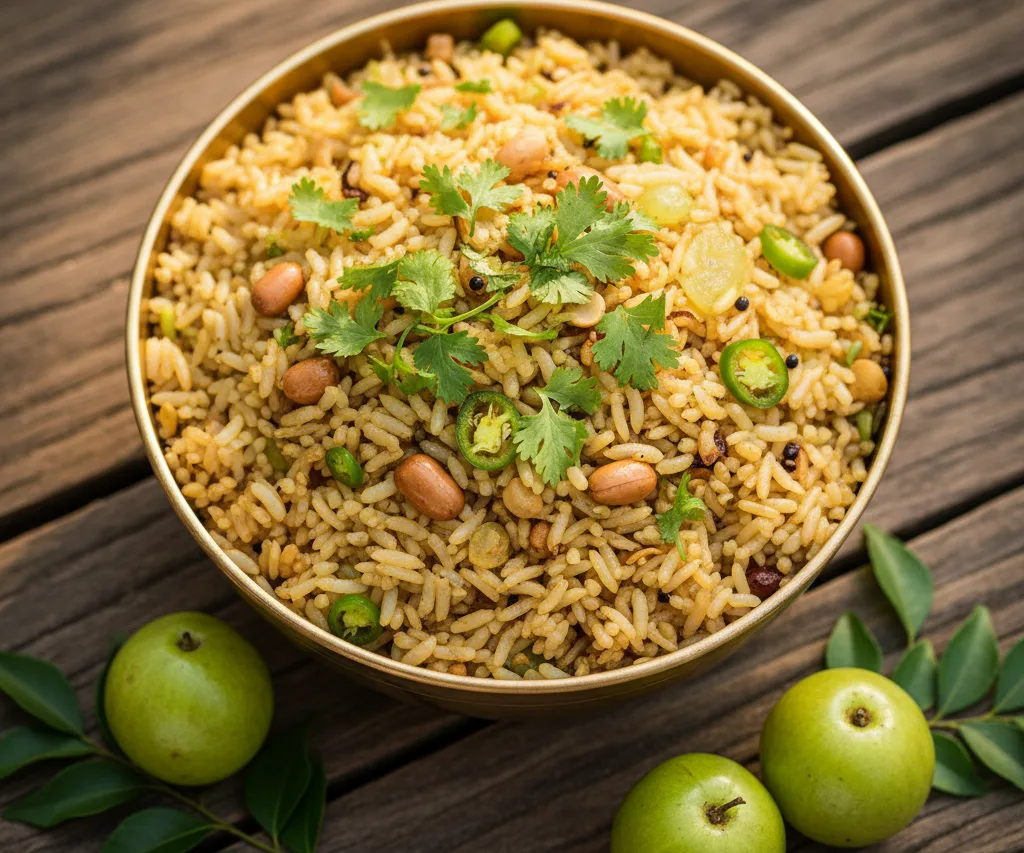
The Ultimate Karthika Usirikaya Annam Recipe (Andhra Amla Rice)
Royal Nutritional Ledger *
For those counting their gold coins and their calories.
The Royal Disclaimer: These figures are calculated by our finest AI court scholars based on standard ingredient values. They are highly educated estimates meant for guidance, not gospel. If you require absolute scientific precision for medical or dietary salvation, please consult a certified physician rather than our kitchen AI!
Karthika Purnima & Karthigai Deepam
Did You Know?
Historical Tidbit
The Amla (Indian Gooseberry) tree is considered sacred in Hinduism and is often associated with Goddess Lakshmi and Lord Vishnu.
First time here? Click the button above to automatically send all these ingredients to your highest-paying local grocery delivery app.
⚖️ The Modernizer
Missing extinct ingredients? Swap for accessible modern alternatives.
The Golden Rule
"The Golden Rule for Karthika Usirikaya Annam is to achieve perfectly separated, fluffy rice grains and a balanced, vibrant tang from the fresh amla. Never overcook the rice, and never over-sauté the amla; these are the twin pillars of its perfection."
Ingredients
20 items required
The Foundation (Cooked Rice):
The Amla Core:
The Aromatic Tempering:
Make Us Your Preferred Culinary Source
AI Emergency Hub
Hit a snag while prepping? Our elite AI tools are here to save your dish.
Missing an Ingredient?
Recipe Disaster?
Chef's Notes
The essence of a perfect Usirikaya Annam lies in the texture of the rice and the balance of tang. Always ensure your rice is cooked al dente and cooled completely before mixing; this prevents clumping and allows each grain to absorb the tempering beautifully. The grated amla should be sautéed just enough to mellow its raw edge but not so much that it loses its vibrant flavor or turns mushy. The distinct sourness of amla, combined with the warmth of the tempering, creates a dish that is both invigorating and comforting, a true celebration of the season's bounty.
Pro Tip
1. For perfectly separated rice grains, cook rice with slightly less water than usual and spread it out immediately after cooking to cool. A drop of oil added to the cooking water can also help. ||| 2. To enhance the amla's flavor without making it bitter, always grate it finely and sauté it briefly. Overcooking amla can release bitterness. ||| 3. Taste the amla before grating; if it's exceptionally sour, you might adjust the quantity slightly or balance with a tiny pinch of sugar (our secret!) in the tempering, though traditionally not used.
Kitchen Catastrophe Warning
The most common catastrophe is sticky, mushy rice or a bitter amla flavor. If your rice is mushy, there's little to be done for this batch, but for future, reduce water and cool thoroughly. If the amla tastes bitter, it's likely overcooked or from a particularly bitter batch. You can try to balance it by adding a tiny pinch of sugar or a squeeze of lime juice at the end, but this is a deviation from the authentic profile. A quick fix for slight bitterness can be to add a touch more roasted peanuts for texture and a hint of extra oil/ghee to mellow the flavor.
The Jester's Corner
Royal Court Comedy
My mother-in-law said my Usirikaya Annam was 'almost as good as hers.' I think that's a Michelin star in disguise!
The Culinary Science
The distinct tartness of amla (Indian gooseberry) is primarily due to its high concentration of Vitamin C (ascorbic acid) and various polyphenols like tannins. When sautéed briefly, the heat helps to soften the fruit's cell walls, allowing its flavorful compounds to be released and interact more effectively with the fats in the tempering. This process, combined with the slight oxidation, can mellow some of its astringency, making its vibrant sour notes more palatable and integrated into the dish.
Featured in Master Menu Collections
Calibrated by culinary science for foolproof execution and maximum flavor.
Make Us Your Preferred Culinary Source
Prioritize Ages & Spices in your Google Discover, Top Stories, and AI search feed with one tap.
🎭How does this recipe make you feel?
Tap a reaction to share your vibe
General Food Safety & Storage
Storage Science
Cool rapidly. Store in an airtight container in the refrigerator (below 4°C / 40°F). Consume within 3-4 days.
Reheating Science
Reheat to an internal temperature of 165°F (74°C). Use the stove or oven for best texture, stirring or turning occasionally to ensure even heating.



Taster's Notes
Community Feedback
0 Comments
Be the first to leave a note on this recipe!