The Ultimate Moist Vegan Banana Walnut Bread Recipe
Royal Nutritional Ledger *
For those counting their gold coins and their calories.
The Royal Disclaimer: These figures are calculated by our finest AI court scholars based on standard ingredient values. They are highly educated estimates meant for guidance, not gospel. If you require absolute scientific precision for medical or dietary salvation, please consult a certified physician rather than our kitchen AI!
World Vegan Day Global Plant-Based Feast & Everyday Guide
Did You Know?
Historical Tidbit
Banana bread gained immense popularity in the United States during the Great Depression, as resourceful home cooks sought ways to utilize overripe bananas, transforming potential waste into a delicious treat.
First time here? Click the button above to automatically send all these ingredients to your highest-paying local grocery delivery app.
⚖️ The Modernizer
Missing extinct ingredients? Swap for accessible modern alternatives.
The Golden Rule
"Thou shalt not overmix the batter! Once the dry ingredients are just incorporated into the wet, stop. Overmixing develops gluten, leading to a tough, chewy bread rather than the desired moist and tender crumb."
Ingredients
19 items required
The Ripe Essence:
The Liquid Gold:
The Dry Foundation:
The Flavor Symphony:
The Nutty Crunch:
Make Us Your Preferred Culinary Source
AI Emergency Hub
Hit a snag while prepping? Our elite AI tools are here to save your dish.
Missing an Ingredient?
Recipe Disaster?
Chef's Notes
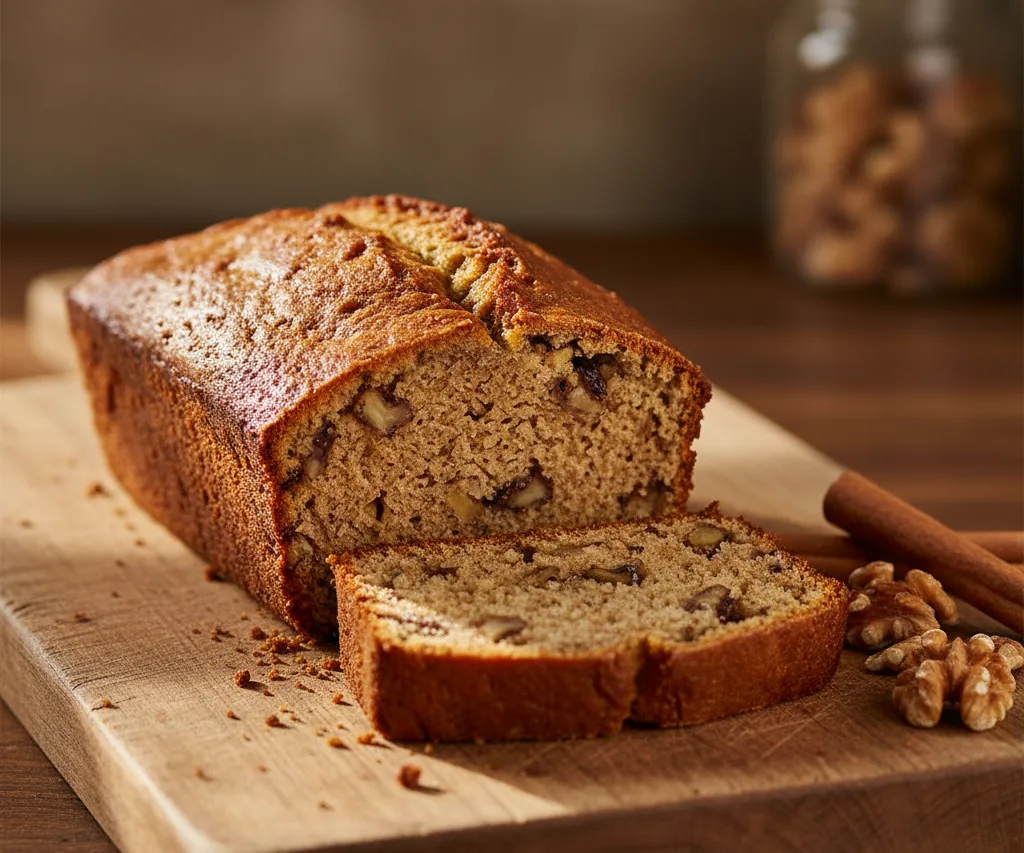
The secret to this bread's unparalleled moisture and tender crumb lies in the trifecta of overripe bananas, cold-pressed coconut oil, and the flax egg. Overripe bananas not only provide intense sweetness and flavor but also contribute significant moisture. Coconut oil, a stable saturated fat, ensures a rich texture without the need for dairy, while the flax egg acts as a powerful binder and emulsifier. The minimal mixing prevents gluten development, ensuring a soft, delicate structure that simply melts in the mouth. This is a bread designed for true indulgence, marrying robust flavor with a feather-light touch.
Pro Tip
1. **The Banana Blackness Test:** For optimal flavor and moisture, use bananas with at least 75% black spots on their skin. The darker, the sweeter and more fragrant they become. || 2. **The Skewer & Sight Check:** Beyond the skewer test, gently press the top of the loaf; if it springs back, it's likely done. The edges should also pull slightly away from the pan. || 3. **The Cooling Imperative:** Resist the urge to slice immediately. Cooling completely on a wire rack allows the starches to set and the internal moisture to redistribute, resulting in a perfectly firm yet moist slice.
Kitchen Catastrophe Warning
The dreaded 'sunken middle' is a common woe, often caused by underbaking, opening the oven door too early, or too much leavening. If your bread sinks, fear not! It's still delicious. Salvage it by transforming it into a 'banana bread pudding' with a warm vanilla sauce, or slice the good parts and serve with a generous dollop of vegan whipped cream or a rich chocolate ganache. No culinary mishap is beyond redemption for a true chef!
The Jester's Corner
Royal Court Comedy
Why did the banana go to the doctor? Because it wasn't peeling well!
The Culinary Science
The flaxseed meal, when mixed with water, forms a mucilaginous gel (often called a 'flax egg'). This gel mimics the binding and emulsifying properties of an egg due to its soluble fiber content. In baking, this mucilage traps moisture and helps bind ingredients, contributing to the bread's structure and preventing it from crumbling. Furthermore, the acidity in the overripe bananas reacts with the baking soda, producing carbon dioxide gas, which, along with baking powder, creates the airy, tender crumb through leavening.
Make Us Your Preferred Culinary Source
Prioritize Ages & Spices in your Google Discover, Top Stories, and AI search feed with one tap.
🎭How does this recipe make you feel?
Tap a reaction to share your vibe
Starch Retrogradation Reversal
Storage Science
Store at room temperature in a breathable bread bag or paper wrapper for up to 2 days. DO NOT refrigerate, as the cold accelerates starch retrogradation (staling). For long-term storage, freeze tightly wrapped.
Reheating Science
To reverse staling, flick a few drops of water onto the crust and reheat in a 350°F (175°C) oven for 5-8 minutes. The steam will re-gelatinize the starches, making the crumb soft and the crust crisp.


Taster's Notes
Community Feedback
0 Comments
Be the first to leave a note on this recipe!