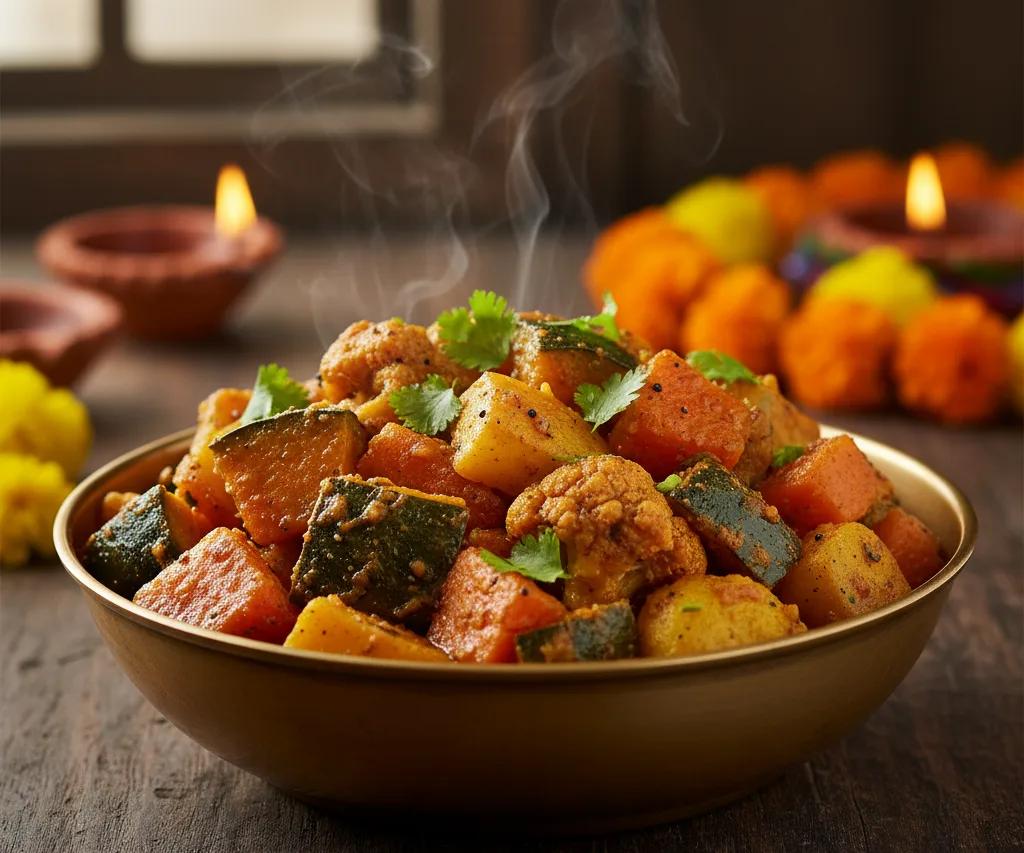
The Ultimate Traditional Annakut Ki Sabzi Recipe (Govardhan Puja 56-Bhog Mixed Vegetable)
Royal Nutritional Ledger *
For those counting their gold coins and their calories.
The Royal Disclaimer: These figures are calculated by our finest AI court scholars based on standard ingredient values. They are highly educated estimates meant for guidance, not gospel. If you require absolute scientific precision for medical or dietary salvation, please consult a certified physician rather than our kitchen AI!
Part of our Festive Master Index
Did You Know?
Historical Tidbit
Annakut literally means 'mountain of food' and commemorates Lord Krishna lifting the Govardhan Hill.
First time here? Click the button above to automatically send all these ingredients to your highest-paying local grocery delivery app.
⚖️ The Modernizer
Missing extinct ingredients? Swap for accessible modern alternatives.
The Golden Rule
"The Golden Rule for Annakut Ki Sabzi is 'Patience in the Pan, Purity in the Plate'. Do not rush the slow cooking process; allow the vegetables to gently release their flavors and meld with the spices. And always remember, this is a sacred bhog, so cook with a pure heart and intention, strictly adhering to the 'no onion, no garlic, no grain flour' tradition."
Ingredients
24 items required
The Sacred Medley (Vegetables):
The Divine Infusion (Aromatics & Spices):
The Sacred Garnish:
Make Us Your Preferred Culinary Source
AI Emergency Hub
Hit a snag while prepping? Our elite AI tools are here to save your dish.
Missing an Ingredient?
Recipe Disaster?
Chef's Notes
The philosophy behind Annakut Ki Sabzi is to celebrate the diversity of nature's bounty, not to create a uniform texture. Each vegetable should retain its unique identity and bite, contributing to a complex, harmonious flavor profile. The slow cooking ensures that the natural sugars caramelize slightly, enhancing the inherent sweetness of the vegetables, while the pure cow ghee provides a rich, unctuous mouthfeel that is essential for this sacred offering. Resist the urge to overcook to a mush; a delightful variance in texture is key.
Pro Tip
1. For perfect colocasia, boil it separately until just tender before adding to the sabzi. This prevents sliminess and ensures it cooks evenly with other vegetables. ||| 2. To intensify the cumin flavor, lightly toast the cumin seeds in a dry pan until fragrant before grinding them fresh. This makes a noticeable difference. ||| 3. Taste and adjust the balance of salt, sugar, and amchur at the very end. The slight sweetness balances the tang, creating a truly 'rasa' (flavorful) experience.
Kitchen Catastrophe Warning
The most common catastrophe is overcooking the vegetables into a watery, mushy mess. If your sabzi turns out too watery, remove the lid and increase the heat slightly for the last 5-10 minutes of cooking, stirring frequently, to allow the excess moisture to evaporate. If it's already too mushy, embrace it as a 'Bhagwan-style mash' and serve it with devotion, perhaps with a side of crispy papad to add textural contrast.
The Jester's Corner
Royal Court Comedy
My mother always said her Annakut Ki Sabzi was so good, even the cows on Govardhan Hill would've asked for seconds. I think she just wanted us to finish our greens.
The Culinary Science
The 'Maillard reaction' is a chemical reaction between amino acids and reducing sugars that gives browned food its distinctive flavor. While typically associated with browning meat, it also occurs in slow-cooked vegetables, particularly those rich in sugars like sweet potato and bottle gourd. This reaction contributes significantly to the deep, complex flavors and aromas developed during the long, gentle simmering of the Annakut Ki Sabzi, enriching its taste profile even without high heat searing.
Explore Curated Feast Collections
Discover 90+ themed festive banquets, seasonal menus, and imperial regional feasts.
Make Us Your Preferred Culinary Source
Prioritize Ages & Spices in your Google Discover, Top Stories, and AI search feed with one tap.
🎭How does this recipe make you feel?
Tap a reaction to share your vibe
General Food Safety & Storage
Storage Science
Cool rapidly. Store in an airtight container in the refrigerator (below 4°C / 40°F). Consume within 3-4 days.
Reheating Science
Reheat to an internal temperature of 165°F (74°C). Use the stove or oven for best texture, stirring or turning occasionally to ensure even heating.


Taster's Notes
Community Feedback
0 Comments
Be the first to leave a note on this recipe!