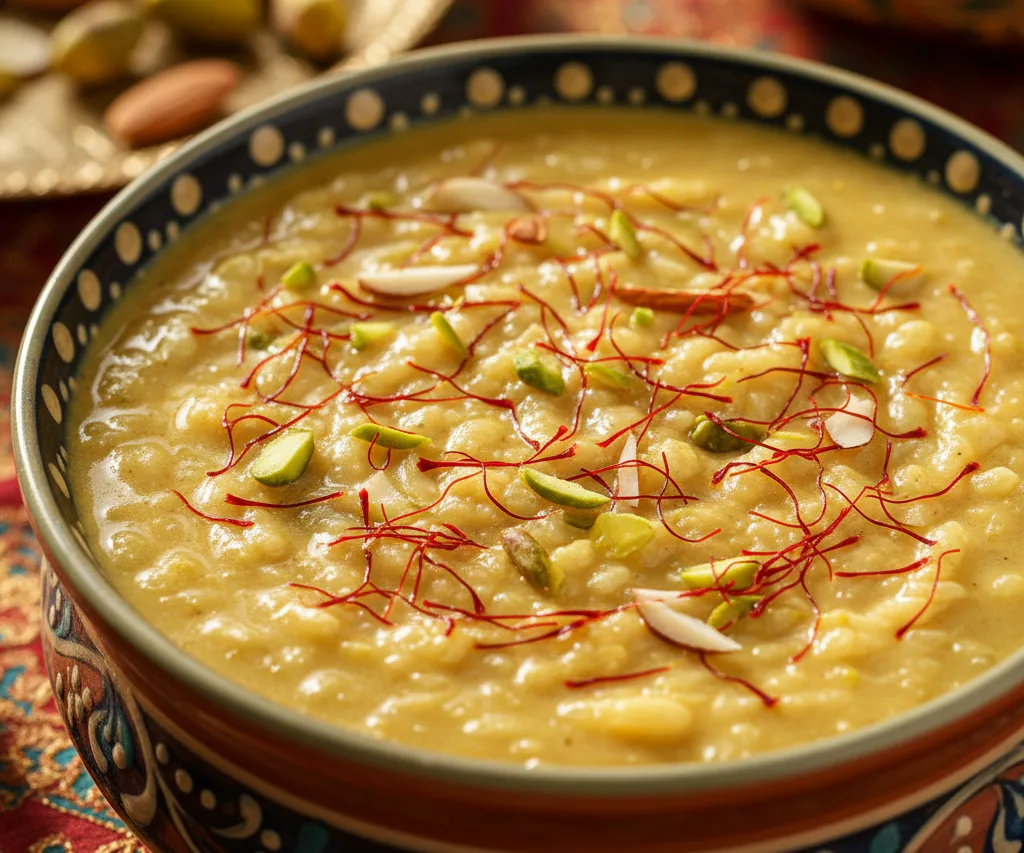
The Ultimate Vegan Cardamom Saffron Kheer Recipe (Plant-Based Payasam)
Royal Nutritional Ledger *
For those counting their gold coins and their calories.
The Royal Disclaimer: These figures are calculated by our finest AI court scholars based on standard ingredient values. They are highly educated estimates meant for guidance, not gospel. If you require absolute scientific precision for medical or dietary salvation, please consult a certified physician rather than our kitchen AI!
World Vegan Day Global Plant-Based Feast & Everyday Guide
Did You Know?
Historical Tidbit
Kheer, or Payasam, is one of the oldest known desserts from the Indian subcontinent, with mentions in ancient texts dating back over 2,000 years, often offered to deities.
First time here? Click the button above to automatically send all these ingredients to your highest-paying local grocery delivery app.
⚖️ The Modernizer
Missing extinct ingredients? Swap for accessible modern alternatives.
The Golden Rule
"Thou shalt not leave thy kheer unattended! Constant, gentle stirring, especially after adding the milks, is the non-negotiable commandment to prevent scorching, ensure even cooking, and achieve that silken, smooth consistency."
Ingredients
16 items required
The Star Grains:
The Creamy Base:
The Aromatic Foundation:
The Sweetener:
The Garnish Jewels:
The Essential Elixir:
Make Us Your Preferred Culinary Source
AI Emergency Hub
Hit a snag while prepping? Our elite AI tools are here to save your dish.
Missing an Ingredient?
Recipe Disaster?
Chef's Notes
The philosophy behind this vegan kheer is to achieve the quintessential creamy, comforting texture and aromatic profile without a drop of dairy. The combination of homemade almond milk provides a delicate, nutty base, while full-fat coconut cream delivers the luxurious richness and mouthfeel traditionally associated with full-cream milk. The rice should be tender but still retain a slight bite, not mushy. The key is slow, patient simmering and constant stirring to prevent scorching and ensure an even, velvety consistency.
Pro Tip
1. For ultimate creaminess, use fresh, homemade almond milk. Store-bought versions can sometimes be too thin or contain unwanted additives. || 2. To test for doneness, rub a grain of cooked rice between your fingers; it should be completely soft but not disintegrated. The kheer should coat the back of your spoon thickly. || 3. If the kheer becomes too thick upon cooling, gently warm it with a splash of extra almond milk or water until it reaches your preferred consistency.
Kitchen Catastrophe Warning
The most common and disheartening catastrophe is scorched kheer stuck to the bottom of the pot, imparting a burnt flavor. If this happens, immediately transfer the unburnt portion to a clean pot, leaving the scorched layer behind. Do NOT scrape the bottom. Add a little extra almond milk and continue cooking. A slight burnt aroma might linger, but it's often salvageable for a humble feast, if not a royal one.
The Jester's Corner
Royal Court Comedy
My grandmother said this vegan kheer was 'almost as good as hers.' That's practically a Michelin star endorsement in our family!
The Culinary Science
The transformation of Basmati rice into a creamy kheer is a prime example of starch gelatinization. As the rice grains absorb water and plant-based milks under heat, the starch granules swell and rupture, releasing amylose and amylopectin. This process thickens the liquid, creating the characteristic viscous, creamy texture of the kheer. The continuous stirring aids in evenly distributing these released starches and prevents them from clumping or sticking to the pot.
Featured in Clean Eating & High-Protein Guides
Calibrated by nutritional science for balanced macros and effortless meal prep.
Make Us Your Preferred Culinary Source
Prioritize Ages & Spices in your Google Discover, Top Stories, and AI search feed with one tap.
🎭How does this recipe make you feel?
Tap a reaction to share your vibe
Pastry & Confectionery Stabilization
Storage Science
Cakes and soft desserts should be wrapped tightly to prevent moisture loss and stored at room temperature (if no perishable fillings) or refrigerated. Consume within 3 days.
Reheating Science
Serve at room temperature for optimal flavor perception, as cold mutes sweetness. If it's a baked pastry, flash-heat in a 350°F (175°C) oven for 3-5 minutes to restore the butter matrix and crispness.


Taster's Notes
Community Feedback
0 Comments
Be the first to leave a note on this recipe!